
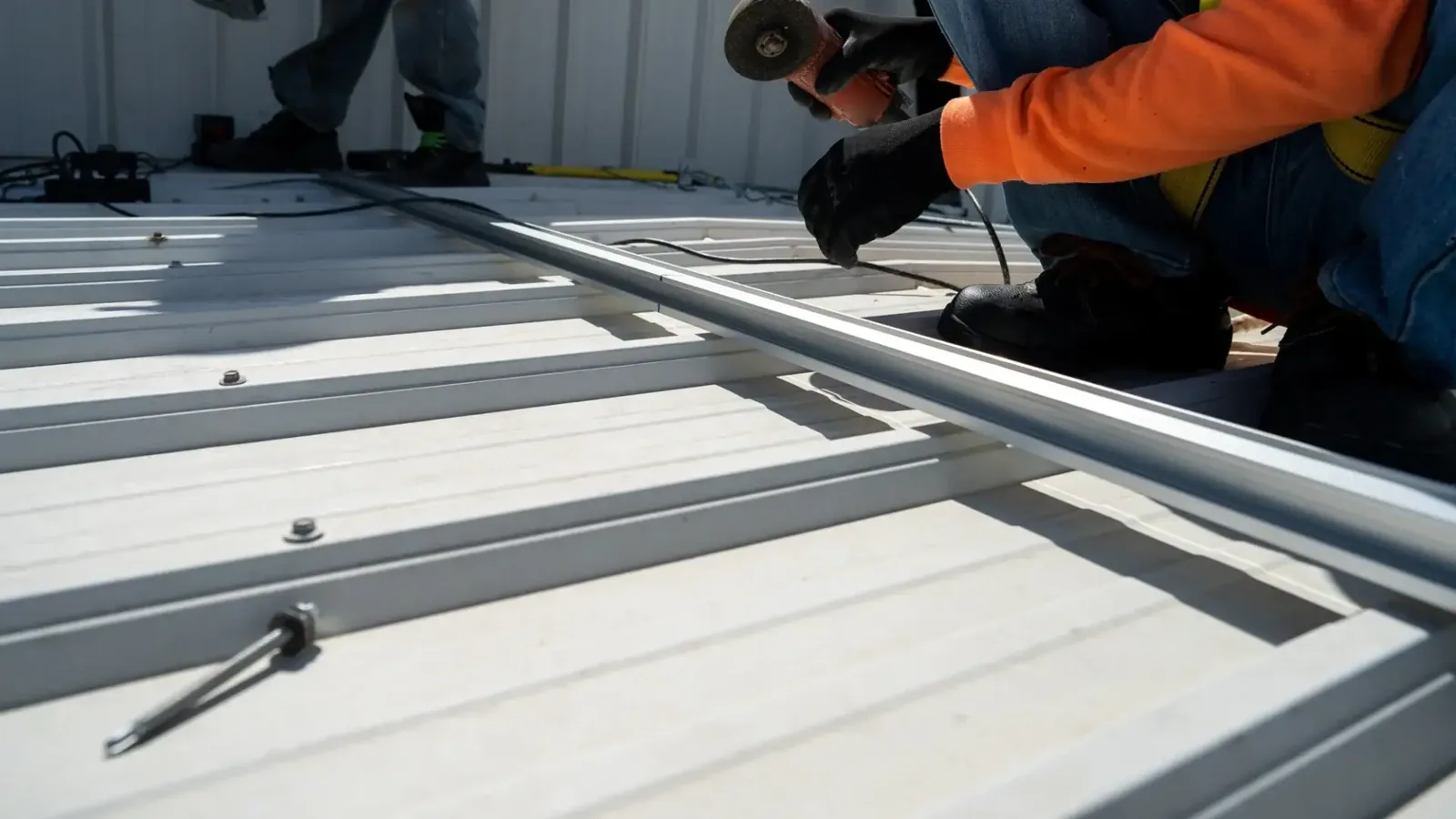
Commercial Roof Leak Repair in Denton, TX
The ceiling stain marks where water appeared, not necessarily where it entered. In Denton, TX, a leak call needs a location, timing, and safe access plan before the crew opens the roof. We ask when the water showed, which area is affected, and whether equipment or tenant work changed. Then we compare the interior report with the roof assembly and nearby details. A roof inspection is useful when water-path findings call for a wider review.
Trace the Water Path
Water can travel along a deck, insulation joint, conduit, or structural member before it reaches a ceiling. Photograph the interior condition and mark its position on a plan. Above, check penetrations, seams, drains, edge metal, curbs, and previous repairs. Record recent weather only as timing. It does not identify the failed detail by itself. When several roof areas could feed the same interior location, test them in a controlled sequence and record the result.
Keep one leak report separate from another until evidence connects them. A wet area at a drain and a stain near an equipment curb may have different causes. The work record should show the path tested, the condition found, and what was ruled out. If the roof assembly is unfamiliar, a small inspection opening can answer a question that surface observation cannot.
Protect the Space Below
For active water, first coordinate interior protection and roof access. Identify electrical equipment, stored goods, production lines, and areas that need to remain open. The property contact directs occupant notification and interior controls. The roof crew then determines whether a temporary cover, drain clearing, or localized seal can reduce exposure safely. A temporary measure is recorded with its limits and a follow-up trigger.
Do not direct people onto a wet roof or around energized equipment without authorization and safety controls. If the leak is near a curb or penetration, isolate the affected roof zone before testing. Use a flashing assessment where the transition is suspect, and a drain review when water is backing up at an outlet. The right next step depends on the detail, not the stain color.
Repair the Confirmed Entry
Once the entry detail is supported by evidence, prepare the substrate and repair the assembly that failed. That may mean resealing or replacing flashing, restoring a seam, patching a puncture, or correcting a drain transition. The method must match the existing material and the condition around it. We mark where the repair begins and ends, photograph the finished detail, and record any adjacent area that was not opened.
If several defects appear near one another, compare their locations before expanding the work. Repeated symptoms may share a drainage or movement issue. A ponding-water review can document low areas and outlet performance. Where moisture may extend under the surface, an infrared survey can help select test locations under suitable conditions.
Use Local Context Carefully
Local heat, rainfall, and storm exposure can inform when an inspection is scheduled, but none diagnoses a roof defect. After severe weather, compare the reported timing with the condition found at the actual assembly. A regional event does not prove that a particular building was affected.
For a Westpark or downtown property, review that building's loading, tenant schedule, and safe access. District context does not replace roof-level observations. Nearby Lake Dallas and Highland Village are separate local service areas; do not carry a condition from one property to another.
Choose a Controlled Test
Testing should isolate a detail without creating new water entry. Start with the most likely roof zone, then evaluate one condition at a time. A controlled water test may help where the assembly and safety conditions allow it. Protect the interior and agree on the observation point first. Record the test area, duration, water path, and result. If the roof cannot be tested safely, use other evidence and leave the suspected entry path unresolved.
Interior access also matters. A ceiling cavity, mechanical room, or finished tenant area may require an escort or protection. Confirm who can open the area and who receives photographs. Keep the suspected roof path distinct from the visible interior damage. This lets the owner authorize the right follow-up instead of expanding work without a known boundary.
When several trades have worked near the leak, record recent penetrations, equipment service, and roof access. Those facts may guide the inspection, but they do not establish a cause. Compare the work dates with the first report and inspect the actual detail. The repair recommendation follows what is found on the roof.
Before applying water, agree on the test boundary, observation point, duration, and stop condition with the property contact. Stop if water escapes the isolated area, interior protection fails, or conditions become unsafe. Record the result, including a negative result, so the next technician does not repeat an uncontrolled test. For a multi-tenant building, coordinate the observation time with the affected occupant and identify who can report a change indoors.
When a controlled test is not appropriate, use a different observation method and explain the limitation in the work record. A second visit may be needed after the roof is dry, after equipment is shut down, or when the owner can provide interior access. Set that trigger before leaving so an unresolved leak is not mistaken for a completed repair.
Close the Leak Report
The closeout records the leak report, tested roof areas, confirmed entry point, repair, and any open question. Add dated photographs and identify the temporary controls that remain. If water entry was not confirmed, say which areas were checked and what further access or test is needed. That prevents the next call from starting with an unsupported claim about a prior repair.
When water returns, compare the new report with the previous plan and weather timing. A separate opening may look like a repeat from indoors. The repair record lets the team check whether it is the same roof area and detail. We can prepare a broader condition report if the pattern crosses multiple sections or the owner needs a capital decision.
Commercial Roofing Questions
Why can water appear far from the roof opening?
Deck flutes, insulation joints, and framing can carry water sideways. We map the ceiling report and compare it with roof details above. The first visible stain is only one observation, so the likely path must be tested before repair.
Should the crew patch the roof during the first visit?
Only if the entry detail is sufficiently clear and access is safe. A temporary control may be appropriate while the suspected path is tested. We record it separately from a permanent correction and identify when the area needs another review.
How do you avoid missing a second leak?
Each reported interior location is marked separately. We inspect related drains, seams, curbs, and prior repairs, then record which areas were tested. A broader survey is useful when reports cluster or the assembly carries moisture beyond the visible symptom.
What information should the property team send first?
Send the affected room or process area, time water appeared, photographs, roof plan if available, and access contact. Tell us about equipment work or prior repairs near the roof zone. That gives the visit a useful starting point without treating a stain as a confirmed roof cause.
When does a leak report become a larger project?
Repeated entry, widespread moisture, or multiple failed details can change the scope. We show the findings by roof area and explain which work is immediate, which can be planned, and what testing remains.