
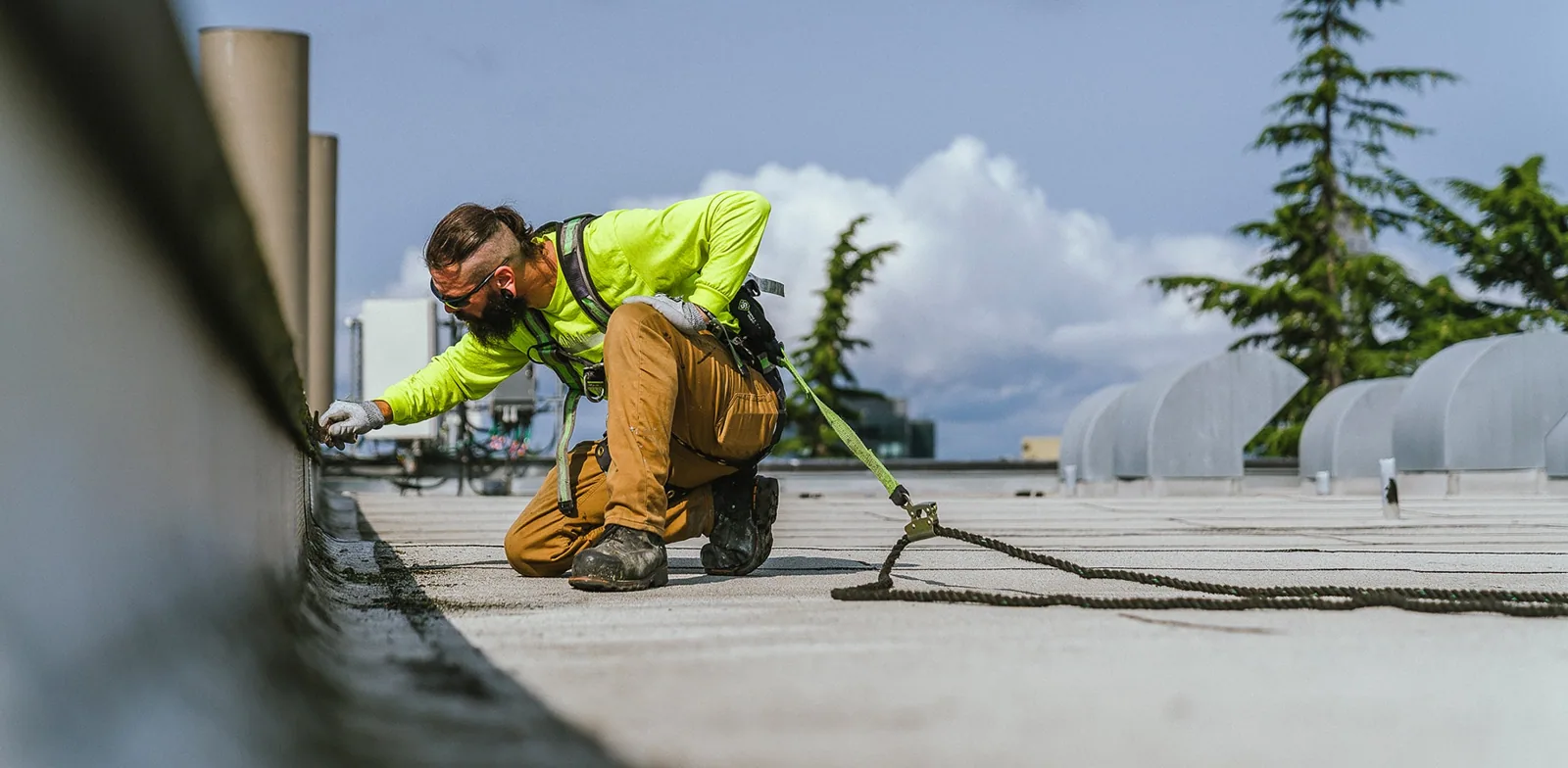
Commercial Roof Maintenance in Denton, TX
A maintenance visit should leave a record the owner can use. In Denton, TX, that means a dated roof-area map, photographs, observed conditions, and repair lines separated from questions that need testing. Summer heat and annual rain describe regional exposure, not the condition of one assembly. We inspect the surface, seams, flashings, drains, edges, and rooftop equipment, then show what needs attention now and what can be tracked. A commercial roof inspection can set the baseline before a recurring program begins.
Set the Record Before the Visit
Start with the last inspection date, prior repair scopes, leak reports, and any warranty file. Mark roof areas by building or zone. If a property has several sections, identify which ones are active, accessible, or restricted. The first visit should distinguish a visible condition from its suspected cause. A displaced edge, open lap, damaged sealant, or debris at a drain can be photographed and located. Moisture below the membrane requires a separate test or opening before the scope treats it as confirmed.
That record matters across Denton's different building areas. Westpark TIRZ is an industrial district north of Airport Road, while Downtown TIRZ is a defined redevelopment area. Those district boundaries do not identify the roof assembly or condition at a specific property. They do make the site contact, delivery route, operating hours, and roof-area labels useful details to collect before scheduling repeat work.
Check the Details That Move Water
Look first at details where water changes direction or crosses the roof plane. Inspect drains, strainers, scuppers, crickets, wall transitions, curbs, skylights, and edge metal. Record whether a drain is clear, whether water remains after a dry interval, and whether the membrane meets the detail without an open gap. Do not describe a low area as a leak cause unless testing supports that conclusion. A drainage correction may need a different scope from membrane repair.
At penetrations, record sealant condition, counterflashing, movement, and nearby membrane stress. A small defect can be localized, while repeated separation across several details may point to attachment or movement that needs broader review. Photograph the same view on later visits when practical. The comparison helps an owner see whether a condition is stable, changing, or newly observed, without relying on memory or a generic maintenance checklist.
Use Local Exposure as a Scheduling Input
Denton's July and August mean maximum temperatures are near 96°F in the climate normals covering 1991 to 2020, and the annual precipitation normal is 38.44 inches. Those figures can inform seasonal planning for inspections and repairs, but they do not establish roof-surface temperature, ponding, or damage. The inspection record should identify the actual roof area and weather conditions when a finding is made. For heat-sensitive work, the crew confirms product instructions, surface conditions, and the safe work window at the property.
The National Weather Service's county tornado climatology is regional history, not evidence that a particular building was struck. After a reported event, document observed impacts before cleaning or repair changes the scene. In Denton, Loop 288 and US 380 are named transportation corridors; a scheduled visit still needs current access confirmation with the site contact. This keeps a maintenance calendar tied to the property rather than an assumption about roads or weather.
Rank Repair Lines by Consequence
Maintenance is not a promise to repair every visible item at once. Sort findings by active water, risk to interior operations, condition progression, and the cost of delaying a permanent correction. Mark immediate protection separately from the permanent scope. A repair line should name the roof zone, material, preparation, detail, and boundary. If concealed insulation or deck conditions could change the work, identify the test or authorization needed before the crew opens the assembly.
Compare a localized repair scope with a broader roof asset record when findings repeat across several areas. A stable coating may warrant a condition check, while widespread moisture can change the replacement discussion. The owner should receive each option with its assumptions, exclusions, access needs, and timing factors. A membrane system review can help clarify compatibility when repair materials need to meet an existing assembly.
Coordinate the Work Window
Before a visit, confirm hatch or ladder access, fall-protection conditions, escort needs, roof-use restrictions, and the person authorized to approve work. For occupied buildings, identify equipment shutdowns, sensitive areas, deliveries, and hours when noise or odor would interrupt operations. A maintenance walk can be brief, but access planning affects whether the full roof area is reviewed. If an area cannot be reached, mark it as not observed rather than implying a clean inspection.
Where roof work depends on deliveries or crane access, check current conditions around Loop 288 and US 380 and the property's own gate and loading plan. The city and TxDOT describe corridor projects, but those records are not a live traffic update. Ask the site contact to confirm the route on the work date. For a nearby Krum property or Corinth property, confirm the governing jurisdiction and access contact before the maintenance scope is set.
Make the Next Decision Visible
Close each visit with the inspection date, areas observed, photographs, findings, recommended repair lines, and items that remain unverified. State whether a recommendation is routine maintenance, a repair, or a test that would support a later decision. Keep temporary protection distinct from permanent correction. When the owner defers work, record the roof area and the condition that would trigger another review. This gives the next budget discussion a record instead of a recollection.
A recurring program should also preserve prior scope versions and closeout records. Compare later photographs with the original view, record repairs completed, and remove closed items from the active list. If conditions change, revise the recommendation with the new evidence. The useful result is not a longer checklist. It is a clear answer about what was observed, what action is approved, and what question still needs to be resolved before the next decision date.
For a multi-building property, keep one summary sheet but preserve separate roof-area records. A leak on one wing should not erase the condition history of another. We can sort the photo log by building, elevation, and repair line, then record which items share an assembly and which do not. This makes a bid comparison easier when work is released in phases, and it keeps the approved scope tied to the correct roof area.
Commercial Roofing Questions
What should a maintenance visit deliver to the owner?
A useful closeout identifies the date, roof areas reached, photographs, observed defects, repair priorities, and any area not reviewed. We separate confirmed conditions from suspected causes and name the next test when evidence is incomplete.
How do we prioritize several repair items?
Active water and risk to building operations come first. We list temporary protection separately from permanent corrections, then compare remaining work by condition, access, and timing. The owner can approve a defined repair line without treating every observation as equally urgent.
Can maintenance prevent every leak?
No inspection can promise that result. A program can find visible deterioration, clear documented drainage concerns, and create a record of changing conditions. Concealed defects and later weather still require property-specific review when they appear.
What records should be ready before the first visit?
Prior scopes, repair invoices, leak locations, roof plans, warranty information, and the access contact help us identify areas to inspect. Missing records remain open questions. We do not infer assembly details from the building use or district name.
How should Denton weather affect the schedule?
The climate normals provide planning context, not a roof diagnosis. We confirm current surface conditions, safe access, and product requirements before repair work. After a reported storm, dated photographs help separate observed impact from conditions already present.