
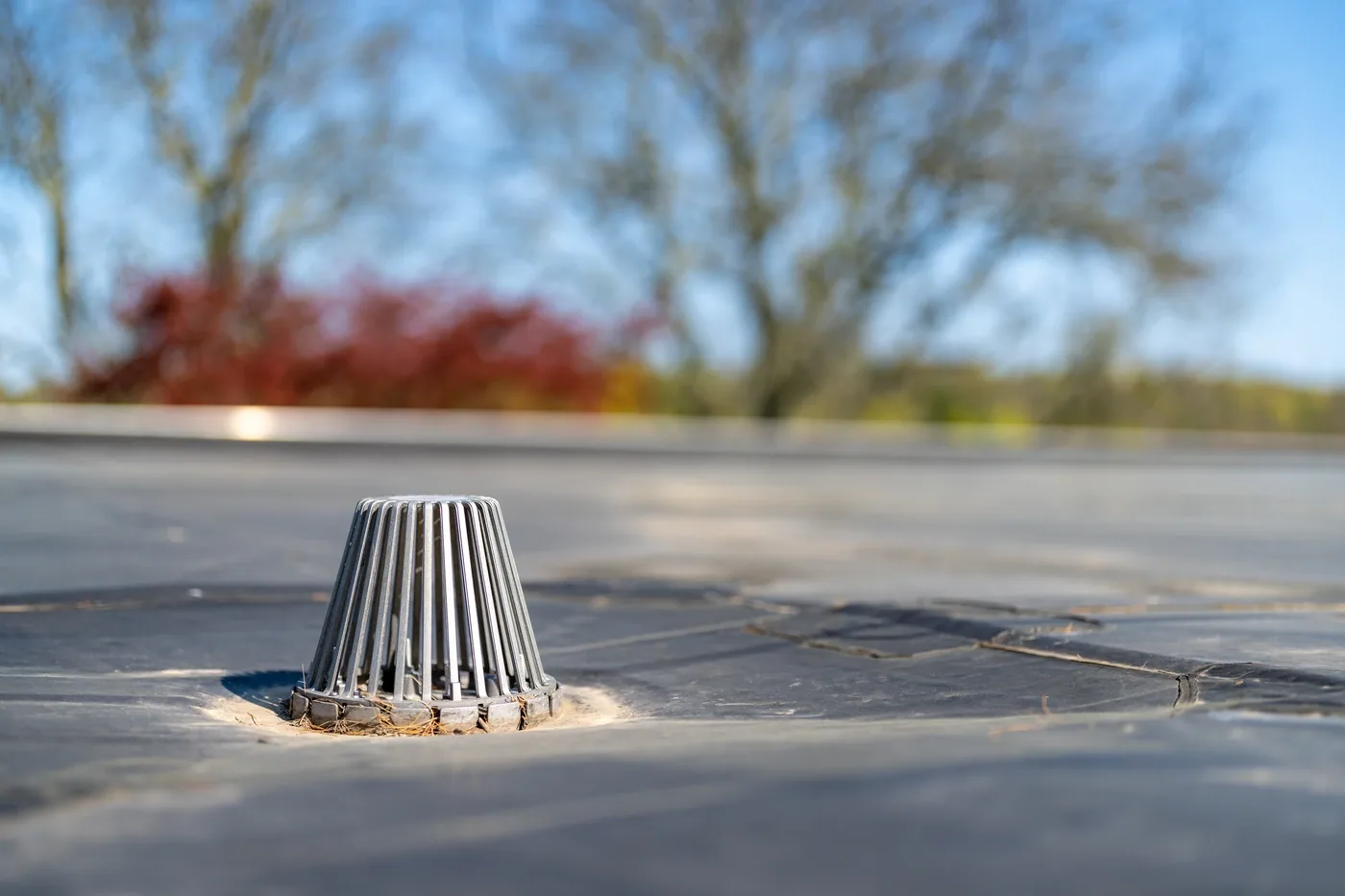
Commercial Roof Drains and Scuppers in Denton, TX
Water should move from the roof area to a working drain or overflow route. In Denton, TX, annual precipitation is part of the planning context, but a normal does not prove that a roof has ponding. We map low areas, drain bowls, scuppers, crickets, and discharge points, then record how water actually moves across the assembly. The next scope may be cleaning, a localized correction, or a designed slope change. Begin with a roof inspection that distinguishes observed water from a suspected drainage cause.
Trace the Flow Path
Start at the high point and follow the slope to the drain, scupper, or gutter. Record debris, blocked strainers, loose components, cracks, open seams, and water marks. Photograph the low area and its route to the outlet. A stain at the ceiling does not identify the roof-entry path. Water can travel beneath the membrane, while a dark surface mark can remain after an older event. Use testing when the result will change the repair boundary.
Denton's normals show 38.44 inches of annual precipitation over the 1991 to 2020 period. That regional figure explains why drainage deserves a measured review, not a claim that one property has failed. At a Westpark industrial property, record the building's actual roof layout and discharge points. Westpark TIRZ's industrial designation does not tell us the slope or drain count of a specific roof.
Inspect Drains, Scuppers, and Overflow
At each drain, check the bowl, strainer, clamping ring, membrane termination, and connection to the surrounding roof. Look for trapped debris, corrosion, sealant failure, or movement that interrupts the water path. A scupper needs a clear opening, secure flashing, and an exterior discharge route that does not send water into an unintended wall or walkway. Review overflow provisions as a separate feature. The roof plan should identify each outlet by zone.
Crickets and saddles redirect water around curbs or toward drains. Confirm their shape, attachment, and tie-in without assuming that a visible low area means a missing cricket. If the surface holds water after the surrounding roof dries, record its depth or boundary and the observation time. A ponding-water review can help decide whether correction is local or broader. Keep the measured condition distinct from a design conclusion.
Also confirm that the drain is not hidden by a new curb, insulation build-up, or patch layer. Added height can leave a ring that traps water even when the bowl is open. Record the membrane termination and any change in elevation at the drain. If the interior leader is inaccessible, mark that connection as not inspected and avoid stating that the full drainage line is clear.
Find the Cause Before Rebuilding Slope
Drainage problems can come from debris, a blocked outlet, a damaged flange, inadequate slope, settlement, or a deflected deck. Each has a different correction. Cleaning may restore flow where the outlet is simply obstructed. A failed drain flashing needs a membrane connection. A persistent low point may require a design review before taper or structural work is priced. We record what was tested and identify the question that remains before proposing a permanent change.
Where water crosses a roof edge, inspect gutters and downspouts for secure connections and discharge. A perimeter and gutter scope may be needed alongside the roof-drain work. At penetrations, confirm that added membrane does not block a flow path. The owner receives separate lines for debris removal, drain repair, flashing, and slope correction so the decision reflects what the evidence supports.
Compare Cleaning With Permanent Correction
Write the boundary of a cleaning or repair scope by roof area and outlet. List what will be removed, replaced, or tested. State whether existing piping, interior drain connections, or downstream discharge are included. If a low-slope redesign is required, call for a qualified design review and show that work as a separate decision. Do not price a slope correction from a photograph alone.
Repair may fit where a drain bowl or local flashing has failed but the surrounding assembly is sound. A repeat problem in several zones may point to a wider drainage or structural issue. For a roof in Downtown TIRZ, redevelopment context is separate from the building's outlet condition. We document the property itself. A repair scope and condition record make those assumptions visible in a bid comparison.
Plan the Work Around the Building
Drain work can affect the interior quickly if a roof opening is left exposed. Confirm weather, access, fall protection, occupied areas, and any equipment beneath the work zone. Identify who can approve added repairs if the drain assembly is worse than expected. If water testing is proposed, define the test area, duration, outlet controls, and responsibility for monitoring. Do not use water testing where it could create an interior hazard or load concern.
Road access near Loop 288 or US 380 should be checked on the scheduled day, not inferred from corridor planning. The City has also identified a Bonnie Brae project corridor where construction timing may change. Ask the property contact about gates, deliveries, and restricted hours. If work is in Little Elm or Corinth, confirm the site jurisdiction and discharge arrangement before finalizing the crew plan.
confirm the Outlet After Work
Closeout should show each repaired drain or scupper, the membrane transition, materials, and the completed discharge path. Photograph the outlet and surrounding roof area. List any low area left unchanged and the reason it remains outside the scope. If cleaning was performed, record the outlet condition before and after. The property team can then compare a later observation against a defined starting point.
Keep the drainage record with the roof plan and repair history. Record whether water flow was observed, what was not tested, and whether interior connections were included. If a larger slope or deck question remains, name the next review and responsible party. The owner should be able to trace the work from observed condition to approved correction, without treating a dry visit as proof that every route will remain clear.
For a scheduled maintenance visit, include a debris check after major roof work, nearby landscaping, or equipment service. Trades can leave packaging, fasteners, and cut material near outlets. The maintenance record should name the affected zone and who will remove the debris before the next rain period.
Commercial Roofing Questions
What distinguishes standing water from a leak path?
Standing water is an observed surface condition. It does not by itself identify where water enters or whether insulation is wet. We map the low area, outlet, and related details, then test suspected paths when the result affects the repair scope.
Can cleaning fix a drain problem?
It can restore flow when debris is the obstruction. A damaged bowl, failed flashing, poor connection, or low area needs a different correction. We list the condition found and separate cleaning from permanent repair.
Should a cricket be added near every curb?
The roof geometry and outlet path decide. We inspect the existing slope and curb transition, then identify whether a cricket would redirect water as intended. A design change needs a defined layout and tie-in, not a standard assumption.
Are overflow scuppers part of the same repair?
They can be reviewed during the same visit, but they have separate openings, flashing, and discharge routes. We document each outlet and state which are included in the approved scope.
What should the closeout show after drain work?
Show the outlet, membrane transition, surrounding roof area, materials used, and any low area left unchanged. Record whether flow or interior piping was tested. That record keeps the completed repair boundary clear.