
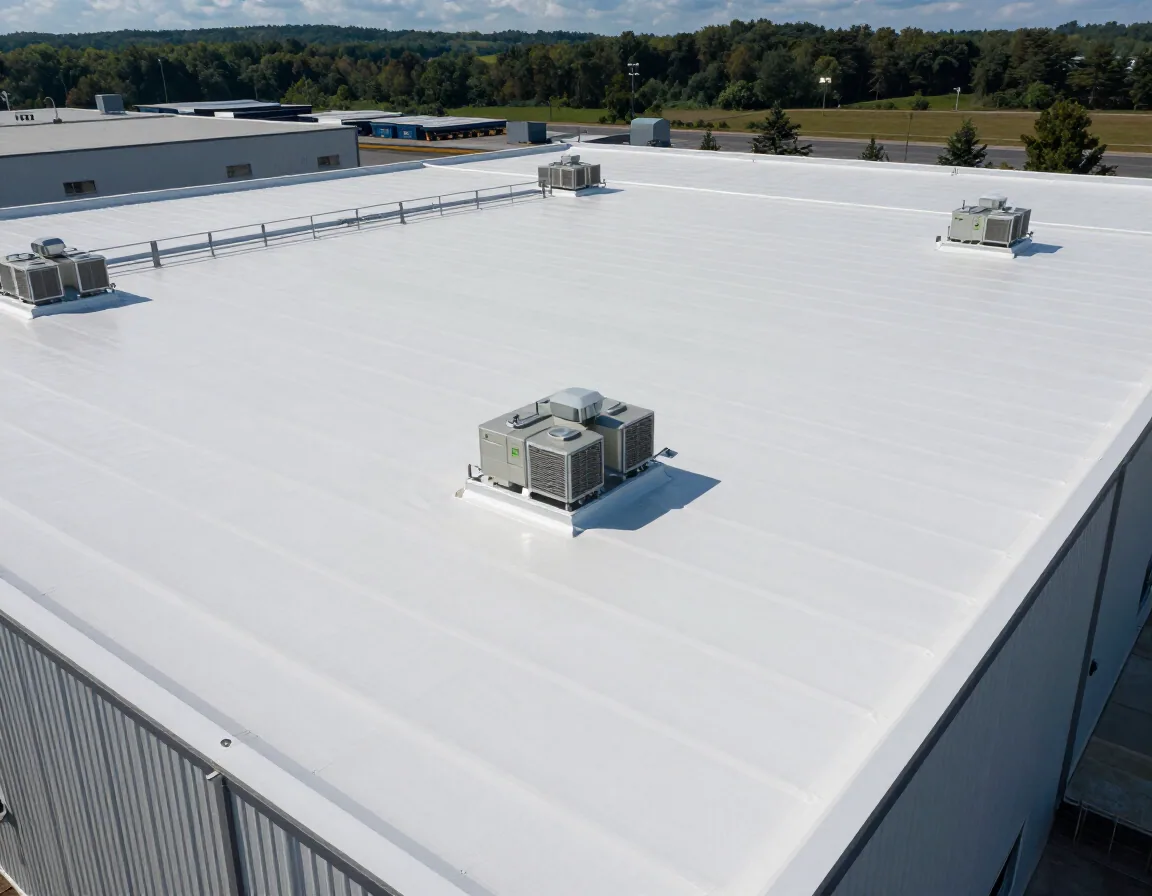
Commercial Roof Replacement in Denton, TX
The replacement decision starts with the roof record, not a calendar age. In Denton, TX, summer heat and annual rain shape the questions, but they do not prove failure. We map the roof areas, assembly, repairs, moisture findings, and active leaks first. The owner receives a scope that separates observed damage from remaining unknowns. That distinction determines whether a repair still fits or a full replacement has a stronger case. A documented commercial roof inspection gives the decision a usable starting point.
Define What Comes Off
A tear-off removes the existing assembly to expose the substrate for review. The field team records wet or deteriorated insulation, deck conditions, penetrations, drains, curbs, and edge details as each area opens. Those findings can change the work. The bid should say how concealed conditions are handled, what is included in base scope, and which items need written approval. If the roof has several assemblies or repair histories, separate the areas on a plan. Keep each photograph tied to a location and scope version.
That record matters in the Westpark industrial district, where the city describes infrastructure planning for a defined industrial area. Industrial use alone does not tell us what a particular roof contains. The actual deck, equipment, access route, and operating schedule set the replacement sequence. We confirm those conditions before selecting materials or promising a work window.
Compare Repair With Replacement
A repair can remain the better decision when damage is local, the surrounding membrane is sound, and moisture has not spread through the assembly. Replacement becomes stronger when repeated failures, saturated insulation, widespread seam separation, or poor drainage affect several areas. The inspection should show where each condition occurs. It should also state what was not opened or tested. That boundary keeps a repair recommendation from becoming a guess about concealed layers.
Cost comparisons need the same limits. Separate tear-off and disposal, deck repairs, insulation, membrane, flashings, drains, safety provisions, and temporary protection. A lower initial figure can omit work the opened roof later requires. A higher figure may include alternates that the owner can defer. We organize the bid comparison by roof area so the decision can follow condition and budget timing. If water is ponding, a separate ponding-water assessment should document slope and drainage before the replacement detail is finalized.
Select the Assembly After Review
Material selection follows substrate, slope, expected service conditions, attachment, wind design, fire requirements, and rooftop use. A single-layer TPO assembly may suit one scope; another building may require a different membrane or multi-ply system. We review insulation and cover board, perimeter securement, penetrations, and transitions as one assembly. The proposal should identify the proposed system and the details that control its performance, rather than rely on a product name alone.
Denton's July normal mean maximum is 95.9°F, while the 1991 to 2020 annual precipitation normal is 38.44 inches. Those figures describe outdoor climate, not roof temperature, leakage, or design capacity. They do make drainage, movement, and exposure worth checking in the actual detail set. For a replacement near Loop 288 or US 380, the roof remains the deciding evidence. Corridor context may affect access or scheduling, so current project conditions need confirmation before mobilization.
Phase Work Around the Building
Occupied properties need a sequence that protects operations. Mark the work zone, deliveries, crane or hoist locations, pedestrian routes, and areas that must remain weather-tight each shift. Identify who can approve a change when concealed deck damage appears. If production, loading, or tenant access cannot pause, divide the roof into manageable sections and close each section before moving on. The plan should name the daily dry-in point and the person receiving the closeout record.
The City of Denton describes Loop 288 and US 380 improvements, including a planned widening project. Project timing can affect nearby travel, but current construction and site access must be checked for the actual date. We coordinate roof staging with the property contact rather than assume a route is open. A written phasing record helps the owner compare schedule risk with the scope, especially where building use continues below the roof.
Approve the Same Scope
Alternates only help when they answer a real decision. Separate base work from deck allowances, added insulation, drainage corrections, and any optional assembly change. State the condition that activates each allowance and the documentation needed before the owner approves it. A line labeled contingency is not enough. Tie it to a roof area, a finding, and an approval step. This keeps the comparison usable when tear-off reveals a different condition than the inspection could show.
For each option, record the schedule effect, material change, and what remains in the existing assembly. If a change affects uplift or attachment, include the design basis and required review. The owner can then compare scope and timing without treating a price difference as a performance conclusion. We carry the approved alternate into the final scope version and closeout record. Each area is labeled with the installed assembly, approved detail, and any item carried forward for a later visit. The next inspection can then be compared with what the crew actually left in place.
Keep the Final Record Usable
At completion, the owner should receive the final scope, approved changes, product information, inspection records, and photographs of critical details. The record should identify completed areas and anything deferred. We record drainage corrections, edge metal, penetrations, and equipment interfaces so later maintenance starts with known conditions. A roof-condition report can support a future condition report or capital review without turning a replacement proposal into a promise about every future leak.
Where a property spans several jurisdictions or operating areas, use the actual roof plan and permit authority. Denton and nearby Krum and Corinth have separate local requirements. We can identify questions for the project file, but the applicable code path must be confirmed with the authority governing the address. The owner receives a clear distinction between work completed, observations recorded, and items that need later attention.
Commercial Roofing Questions
What finding usually changes a repair plan into a replacement scope?
The spread of concealed moisture is often decisive. We map test results and opened areas, then show whether dry, serviceable roofing remains between failures. Local damage may still support repair. Widespread wet insulation or recurring failure across separated areas can make replacement easier to defend.
Can a new roof go over the existing assembly?
The existing layers and moisture condition decide that question. We review deck capacity, attachment, code limits, and whether wet material can be isolated. An overlay is not suitable simply because the current membrane looks flat. The proposal should record the basis for retaining or removing each layer.
How is the roof kept dry during tear-off?
Daily square footage and the forecast control the exposure plan. We remove only the area that can be made weather-tight within the agreed shift, with temporary protection available for changing conditions. The phasing plan identifies the close-of-day seal and the contact who receives any exception.
What should the bid separate?
A useful comparison separates tear-off, disposal, deck repairs, insulation, cover board, membrane, edge metal, drains, and options. It should also state exclusions and concealed-condition pricing. We label each line by roof area so the owner can compare the same work across proposals.
What documents arrive after completion?
The closeout should include the final scope and approved changes, photographs, product data, and records on completed details or deferred items. We organize the record by roof area. That gives the property team a defensible starting point for maintenance and the next inspection.