
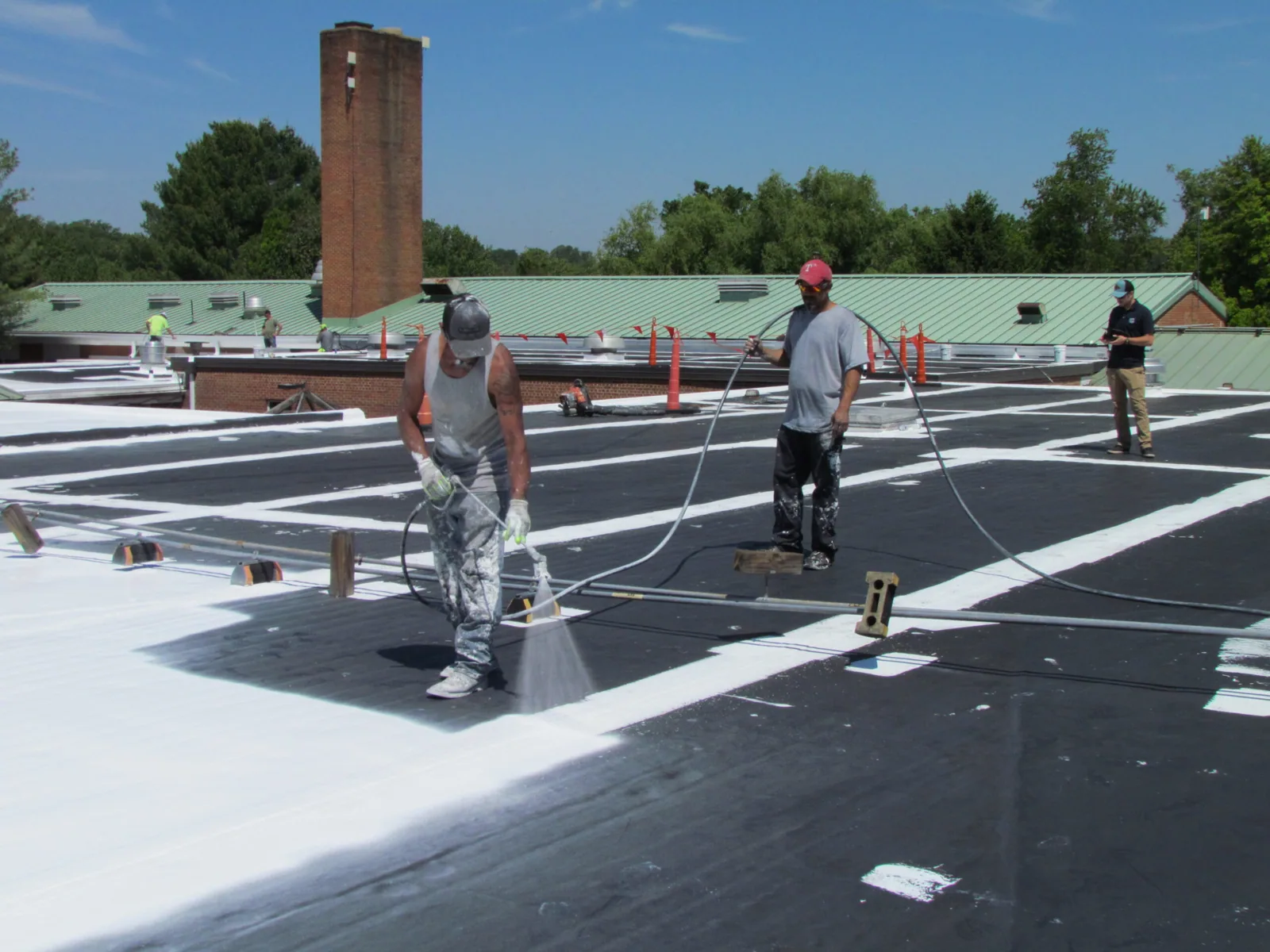
Commercial Roof Recover in Denton, TX
A recover keeps an existing roof in place. That decision belongs to the assembly record, moisture findings, and permit path. In Denton, TX, heat and rain are regional context, not a reason to cover a roof without testing it. We identify the layers, roof areas, active leaks, and prior repairs first. Then we mark what can remain, what needs correction, and what remains unverified. A documented roof inspection gives the owner a basis for comparing recover with tear-off.
Check the Existing Assembly
Start with the roof history. Gather prior scopes, repair invoices, warranty records, and any deck or moisture reports. Confirm how many roof layers are present and whether the structure can accept the proposed assembly. The exact requirements depend on the property and applicable code. We do not treat a surface that looks dry as proof that the insulation below is dry. Test locations should be tied to a roof plan and mapped by area.
Westpark is a defined industrial district in Denton's development planning, but that label says nothing about a specific building's roof. A recover at a Westpark property still needs its own layer count, deck review, drainage check, and attachment design. The city’s corridor planning may matter for access or staging, while roof conditions govern eligibility. We capture those questions before recommending retained layers.
Map Moisture Before Covering
Moisture beneath the membrane can continue to affect insulation and deck after a new surface is installed. Look for interior staining, soft areas, seam openings, blocked drains, and repair patches. Infrared can help identify temperature patterns under suitable conditions, but it does not replace confirmation cuts where assembly findings require them. A moisture survey should state the method, conditions, and locations reviewed. Keep wet material out of a recover scope unless the design provides a documented correction.
Each test result needs a location and interpretation. Mark confirmed wet areas separately from suspected anomalies. The owner can then see whether selective removal leaves a sound, continuous substrate or whether moisture is widespread. The decision is not based on one core or one thermal image. It follows the pattern across the roof and the assembly beneath it. If ponding is present, document the drainage and slope issue before selecting the recover detail.
Compare Retention With Removal
A recover may reduce tear-off and disposal work when existing layers remain stable, dry, and suitable for attachment. It can also preserve wet material, conceal deck concerns, or add load if the existing assembly is not suitable. A tear-off opens the substrate for direct review, but it brings more disruption and weather exposure. We show both paths with the conditions each assumes. The owner should not compare a recover price against a tear-off price unless both scopes include the same roof areas and interface details.
Use a line-by-line repair scope where defects are limited and the surrounding assembly is serviceable. Replacement or recover deserves consideration when failures repeat across multiple zones. For either option, define how concealed conditions are handled and what requires written authorization. A warehouse roof with active loading may need separate staging from a low-traffic building. The roof plan, not a generic schedule, sets the sequence.
Resolve Attachment and Drainage
Before recover, confirm attachment into an approved substrate, perimeter details, penetrations, curbs, and transitions. Existing layers may affect fastener length, pullout, and the way a new membrane is secured. Drainage matters too. A recover does not automatically correct low areas or blocked outlets. Record the proposed slope corrections, drain elevations, and overflow conditions. The selected assembly should show how water reaches an outlet and how transitions stay secure.
The NWS 1991 to 2020 Denton normals include a 38.44-inch annual precipitation normal and July mean maximum of 95.9°F. Those numbers describe regional climate, not the drainage or surface condition of an individual roof. They make it useful to inspect drains, edge terminations, and movement details before the new layer goes down. If a water report exists, compare it with mapped moisture findings and the exact repair history.
Account for Access and Timing
The city identifies Loop 288 and US 380 as development and access corridors. TxDOT describes a planned project along Loop 288 from east of I-35 to east of Geesling Road. A current construction phase could change delivery routes or access windows, so confirm conditions with the property contact before mobilization. Do not assume a route or work area is open based on a project drawing. Record the agreed delivery point, tenant impacts, and daily weather-tight limit.
Nearby Argyle and Little Elm are separate municipalities. The governing permit path depends on the property's jurisdiction and scope. Denton's residential-permit page is not a complete commercial roof code determination. Confirm the applicable code and approvals with the authority handling the property. That check belongs in the decision record before materials are ordered.
Record What Will Remain
A recover proposal should identify the retained layers by roof area. Record any areas removed for testing, repairs completed before the new membrane, and transitions where the assembly changes. Photograph the existing surface and the substrate at representative openings. The owner needs the same record to understand later service calls. A future technician should be able to distinguish new work from retained conditions without guessing from the finished surface.
Do not bury that history in a general record. Put layer count, observed condition, repair boundary, and unresolved question into the project record. If the opening shows a condition that changes attachment or drainage, stop that area and request written direction. The final file should match the installed scope, including approved changes and exclusions.
Put the Recommendation in Writing
The recover proposal should identify existing layers, test locations, retained and removed areas, attachment approach, drainage work, and exclusions. Include a plan that matches each line item to a roof area. List assumptions about deck condition and the process for concealed findings. If there is no reliable roof history, state which questions remain open and what testing would resolve them. A condition report should separate observed facts from the conclusions drawn from those facts.
Keep the final recommendation tied to cost timing and building operations. If a recover is eligible but the added work disrupts loading or access, the owner needs that sequence before approving. If tear-off is favored, show why removal addresses a condition that retention would leave behind. We provide the assembly, findings, and next decision in the closeout file. The owner can compare options without treating an assumption as a confirmed condition.
Commercial Roofing Questions
How many existing roof layers can remain?
The existing assembly and governing code decide what can remain. We identify the layer count, attachment, substrate, and condition, then confirm project-specific requirements. A layer count alone does not establish recover eligibility.
Does infrared testing prove the roof is dry?
No single image proves that. Infrared patterns can guide test locations under suitable conditions. Confirmation cuts and other observations help establish what is present below the membrane. The report should state the method and its limits.
When does tear-off make more sense?
Widespread moisture, unstable layers, poor attachment, or deck concerns can favor removal. The owner should see those findings mapped by area. A recover remains possible only where retained material is suitable and the proposed assembly can be secured.
Can a recover fix ponding water?
Only if the scope corrects the drainage condition. We document low areas, drains, overflow routes, and proposed slope changes before selection. A new membrane laid over unresolved drainage defects can leave the original problem in place.
What records should we provide?
Prior roof scopes, leak reports, repair invoices, warranty files, and available plans help establish the assembly history. We compare those records with current findings. Missing information is listed as an open item, not assumed in the recommendation.