
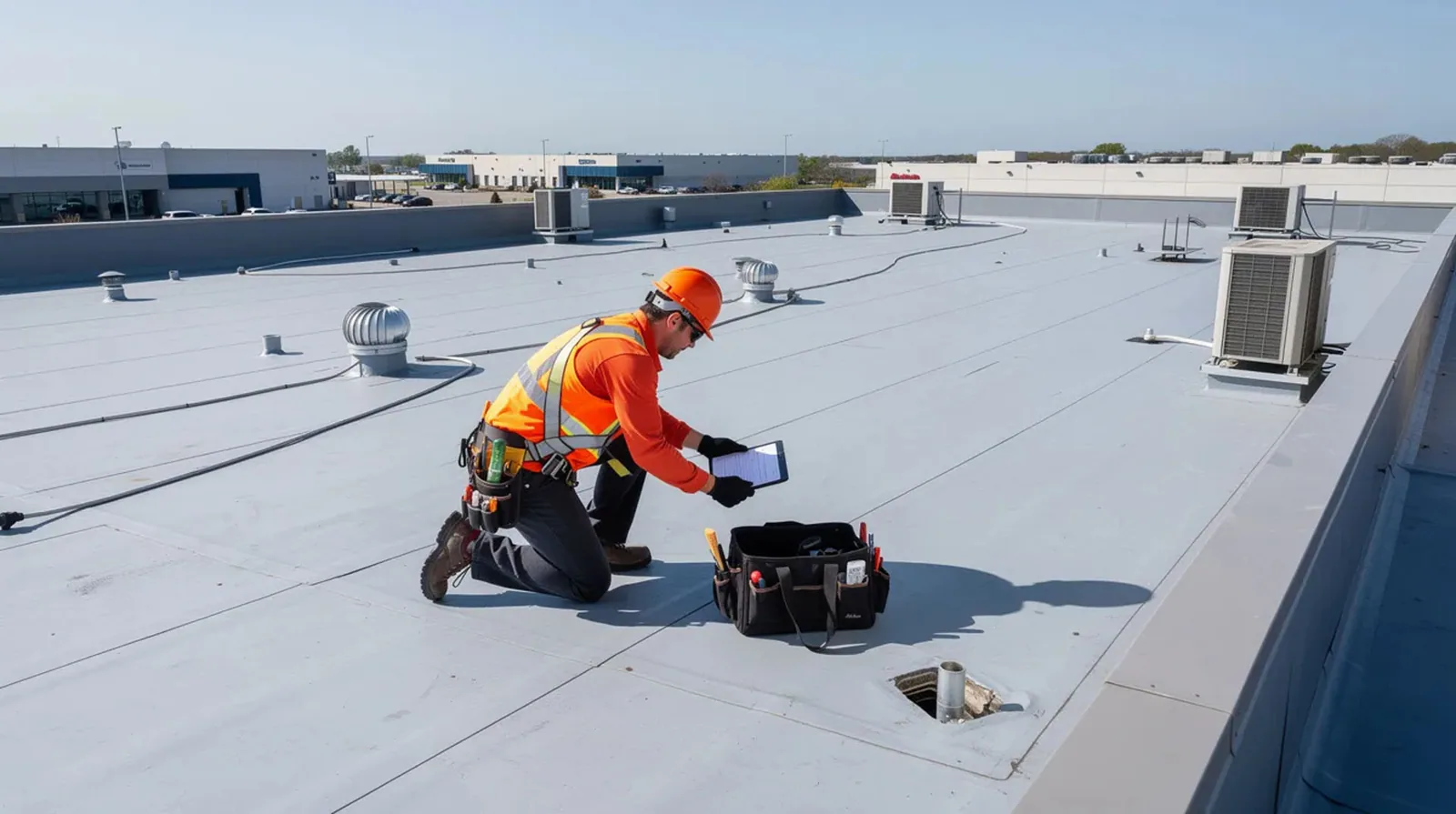
Commercial Roof Inspection in Denton, TX
An inspection is useful when it answers a decision. In Denton, TX, the property team may need to explain an active leak, compare repair bids, prepare a budget, or review a roof before a transaction. We record the assembly and roof areas, photograph visible conditions, and separate observation from conclusion. The report identifies where access was limited and which questions need testing. For a focused service call, begin with a repair review.
Gather the Existing Record
Prior scopes, invoices, warranties, inspection records, and roof plans help establish what is known. We compare them with current visible conditions. Mark repairs that changed the membrane or flashing, and record where the assembly remains unknown. A record may describe one roof area but not another. We preserve that boundary rather than apply an older finding to the full building.
Set the decision date before the visit. A maintenance review, capital budget, insurance file, and purchase evaluation need different detail. The inspection scope should state the intended use, areas included, whether test cuts are allowed, and who can approve additional work. That gives the final report a clear job instead of a list of generic roof observations.
Walk the Roof by Area
The field review follows roof zones and details. We look at membrane condition, seams, flashings, penetrations, curbs, drains, edges, transitions, and rooftop equipment. Photos are labeled to match the plan. Where a surface defect appears, we record its dimensions and nearby condition. A visual inspection cannot show every concealed layer, so the report states what was visible and what would require a test opening.
For a large roof, planned drone imaging can help build an overview of inaccessible areas where flight and site conditions allow. It does not replace hand inspection of seams or penetrations. Thermal imagery may also help select test points, but only when conditions support useful readings. Every tool is tied to a question in the inspection plan.
Rank Findings by Decision
Sort conditions by active exposure, risk of additional damage, and the work needed to resolve them. Separate immediate protection from planned repair. Do not combine a loose edge, a blocked drain, and a wet interior into one unexplained priority. The report should show each finding, location, photograph, consequence, and recommended next action. If moisture or attachment remains uncertain, identify a test rather than present an assumption as a confirmed defect.
Owners can compare a condition report with a bid only when both documents describe the same roof areas. We record exclusions and the date of observation. Repairs after that date may change the condition. Keep proposed quantities and observed quantities separate so budget planning does not rely on a stale estimate.
Separate Regional Weather From Roof Evidence
Denton has hot summer normals, substantial annual precipitation, and a recorded county tornado history. Neither climate record diagnoses a roof at a particular address. The inspection documents what the crew sees: drainage, openings, movement, attachment, and interior reports. For a roof near Westpark or the Downtown TIRZ, city planning context may help identify building use and access questions, but the assembly remains the evidence.
Loop 288 and US 380 are documented transportation corridors. If nearby construction affects a delivery or return visit, check current access with the site contact. This is a scheduling record, not a statement about present traffic. The inspection report keeps building findings separate from outside conditions and clearly names the date each observation was made.
State the Inspection Limits
Every inspection has boundaries. A locked roof hatch, unsafe surface, operating process, or inaccessible equipment zone may limit the view. The report names those areas and explains whether a later visit or escort would resolve the gap. Do not label an unvisited section as acceptable. A clear limit helps the owner decide whether the missing information changes the project.
Test openings answer different questions from a visual walk. A cut may show insulation, deck, and moisture at one point, but not establish conditions everywhere between points. We map the locations and discuss restoration before the owner authorizes openings. If the assembly changes across the roof, use separate sample areas and avoid carrying one result across every zone.
Inspection date matters. Repairs, storms, equipment changes, or tenant work can alter the roof afterward. The report identifies when observations were made and which actions occurred later. For a bid review, compare scope against that dated condition record. If a proposal assumes a later repair, document who completed it and what evidence confirms closure.
Tie Findings to the Owner Decision
A report can support maintenance, a capital request, a lease discussion, or due diligence, but each use needs a different summary. Identify the decision owner and requested date. Put active exposure first, then list planned work and open testing. If several buildings are involved, report each roof separately before combining costs. A single portfolio total should not erase differences in assembly or condition.
Explain the consequence of waiting only where findings support it. A loose edge, blocked drain, or wet insulation carries a different action. Give the owner enough detail to compare repair now, monitor, test, or replace. State what would change the recommendation. The resulting record is more useful than a broad label such as fair or poor without supporting observations.
Where work is near Downtown TIRZ or Westpark, include the actual building and access restrictions. District context does not substitute for the roof plan. Use the same map and area labels through inspection, estimate, and closeout so the owner can trace a finding into the approved work.
Deliver a Report the Team Can Use
The report should include a roof plan, dated photographs, findings by area, test methods, limitations, and priority actions. Each recommended repair should tie to a specific observation. If a tear-off or recover decision is pending, list the inspections or openings needed to compare those options. The owner should be able to trace each recommendation to evidence without searching through unrelated records.
For sites in Lake Dallas or Flower Mound, confirm the governing authority and access contact for that property. A regional report should not imply identical conditions across separate buildings. For deeper questions, an infrared moisture survey can help select confirmation points when conditions support the method. We can prepare a capital-planning summary when the report must support a decision across budget periods.
Commercial Roofing Questions
Does an inspection include opening the roof?
The agreed scope decides. A visual walk records exposed conditions, while cuts or other tests require authorization and defined locations. We state which methods were used and what remained concealed. The owner can then decide whether more information is worth the disruption.
Can the report support a capital budget?
Yes, when the decision horizon and roof areas are defined. We rank repairs, record unresolved questions, and distinguish current findings from planning assumptions. A budget summary should not present an untested service-life figure as established fact.
How are urgent items separated from planned work?
Active exposure and unsafe conditions are listed first, with temporary protection separated from permanent repair. Other items are ranked by observed extent and consequence. Each entry identifies the next action and who must approve it.
Can you inspect around active equipment?
We identify equipment and access restrictions before the visit. The property contact coordinates shutdowns or escorts when needed. If a detail cannot be reached safely, it is logged as a limitation rather than treated as inspected.
What makes an inspection report useful in a bid review?
A roof plan, photographs, exact repair boundaries, and exclusions let the owner compare the same work across proposals. We also record whether concealed conditions were tested. That keeps an allowance distinct from an observed quantity.