
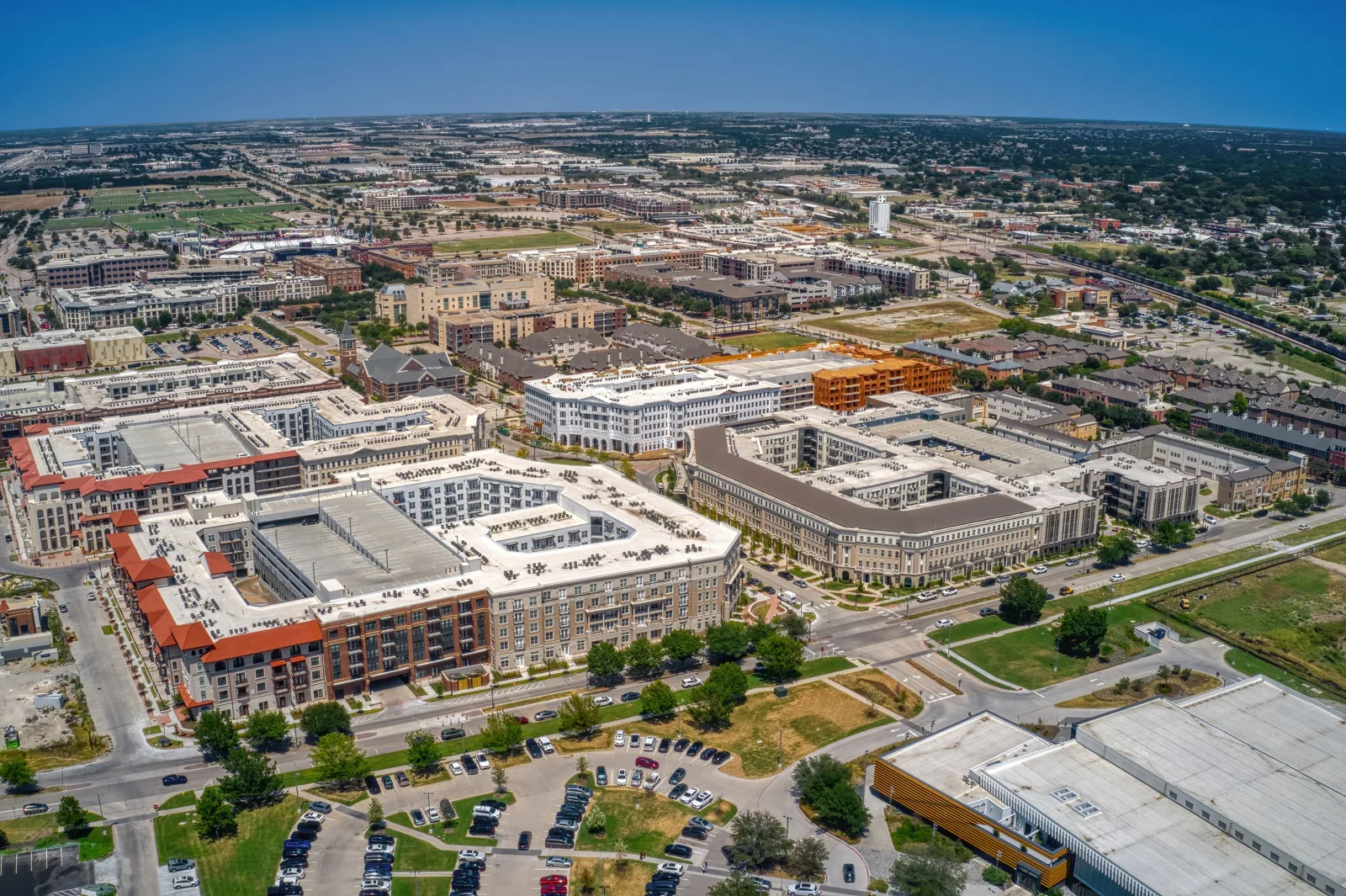
Commercial Roofing in Frisco, TX
Scope version 3 should not quietly include a larger roof area than version 2. In Frisco, TX, we map the repair boundary, identify the assembly, and record the inspection date before comparing the change. Photographs connect the proposed work to seams, flashings, drains, edges, or equipment details actually observed. If the owner needs to decide before concealed conditions can be tested, the record labels that gap and the allowance it affects. A roof condition report can keep that decision traceable.
confirm the City's Role in the Scope
Denton County's community directory lists Frisco and provides a link to local government information. We confirm the jurisdiction for the property and the type of work before a permit assumption enters a bid schedule. That inquiry should be tied to the actual parcel and proposed repair, recover, or replacement. An estimate can record what remains to be confirmed without suggesting that every project follows the same permit path.
The Census Gazetteer reports Frisco's incorporated land area, but boundary size does not establish commercial building count, roof use, or system type. A roof inspection must identify those items at the property. The plan shows separate assemblies, additions, edge transitions, drains, penetrations, and any excluded area. If the asset group also maintains a site in Prosper, the same map discipline helps, but observations and permit contacts stay separate for each city.
Compare the Current Scope Version
A changed proposal should identify why the work grew or narrowed. We compare prior photos, completed repair records, and current findings by roof zone. A reopened seam, newly visible flashing gap, or wet insulation sample may change the repair boundary. A larger number without an evidence trail does not explain the change. We list the new observation, quantity, material, and exclusion, then distinguish it from a condition still awaiting access or testing.
For a leaking membrane, a leak repair review follows interior reports to nearby roof details and keeps the suspected path separate from a confirmed opening. A drone survey can provide an overhead record of accessible roof surfaces when site and flight conditions allow. It does not replace hands-on checks of seams, curbs, and terminations. Keep the tool tied to the question it can answer.
On metal roofs, document panel profile, fasteners, washers, laps, closures, and trim. On single-ply systems, record membrane type, seam condition, flashing, and repair material. If construction records conflict with field observation, keep both in the file and state what is confirmed. An owner can then decide whether compatibility testing or a sample opening is worth the added schedule and restoration work. Before opening the roof, mark the sample location, weather protection, interior safeguards, and restoration method on the work plan. The closeout photo should show that exact area after it returns to service. Record which insulation or deck layers were visible, where the sample stops, and what remains unknown beyond its boundary.
Keep Regional Records Separate from Findings
National Weather Service climate normals are for Denton, the market city. They include warm summer air temperatures and annual precipitation, but those figures do not measure a Frisco roof surface or prove a water-entry cause. We check actual drainage paths, membrane laps, edge attachment, and interior conditions. If rainfall timing is relevant to a leak report, the owner record should identify the report date and conditions, not treat an annual normal as a roof observation.
The National Weather Service publishes tornado climatology for Denton County. County summaries do not confirm damage at one Frisco property. After a storm concern, we photograph each suspected movement or opening, compare prior work, and document areas that remain uninspected. A tornado-related repair review can separate emergency dry-in from permanent work. For a separate asset in Lewisville, use its own dated findings and scope version.
Choose the Next Capital Step
Repair, recover, and replacement options should use the same area map and access terms. A localized repair may be appropriate where the defect is bounded and the surrounding system supports a compatible tie-in. A recover analysis needs a review of existing layers, moisture, attachment, drainage, edge height, and the added assembly. A replacement scope should mark removal limits, temporary protection, deck review, disposal, and restoration. The evidence decides which comparison is useful.
Cost depends on repair area, removal depth, number of penetrations and transitions, deck or insulation findings, access equipment, and interior protection. Schedule can move with permit review, material availability, weather, equipment shutdowns, and occupied hours. We identify which assumption drives the date and which item could change the price. If a test opening is authorized, mark its sample location and restoration before the crew starts.
Emergency service is available around the clock, weekends and holidays included, when active exposure requires a prompt response. We can document temporary protection and set a separate decision point for permanent work. The report should state what the temporary repair does, when it needs to be reviewed, and what evidence is still needed before extending the scope.
Carry the Record into Future Reviews
Keep each inspection date, photo log, roof-area map, scope version, material record, exclusions, access record, and closeout image together. Mark the details that were completed and any area that remained out of reach. If the owner later reviews a warranty file, use the documents supplied for that system and keep the repair record distinct from a warranty decision. A clear closeout makes it easier to trace a later leak to the correct area.
For properties across Frisco and Roanoke, a shared label convention is useful only when each roof keeps its own observed conditions. A moisture survey may help select confirmation areas under suitable conditions. A claim file review can organize dated photographs and repair records when the owner is preparing documentation.
Send the scope version, affected roof area, decision date, prior repair records, and access contact. We can compare the documents with current observations and outline what can proceed now versus what needs authorization or further testing.
Commercial Roofing Questions
How can I tell why a roofing proposal changed?
Compare the roof areas, quantities, material, exclusions, access assumptions, and inspection dates across versions. We tie each change to an observation or identify it as an allowance for something concealed. The owner can then decide whether new scope is supported or needs another test.
Can drone images confirm a leak path?
They can help record roof surfaces and identify areas for closer review when conditions allow. A flight image does not confirm a hidden entry path or replace hands-on checks at seams, penetrations, and wall details. We state the tool's limit in the report.
What information is needed before comparing recover and replacement?
The existing layers, moisture extent, attachment, deck condition, drainage, edge height, and system compatibility all affect the comparison. We state what is documented and what still requires a test opening. Both options should cover the same roof areas and access needs.
Do county storm records prove that a Frisco roof was damaged?
No. Denton County summaries are regional context. We use the actual property's inspection date, photographs, prior repair records, and visible conditions to describe what changed. An unconfirmed cause remains separate from a recorded defect.
What should the property team provide for a scope review?
Send the latest and prior scope versions, roof plan, inspection date, repair tickets, decision deadline, and access instructions. We can align the boundaries and call out differences in work, assumptions, or unresolved conditions before the owner selects a path.