
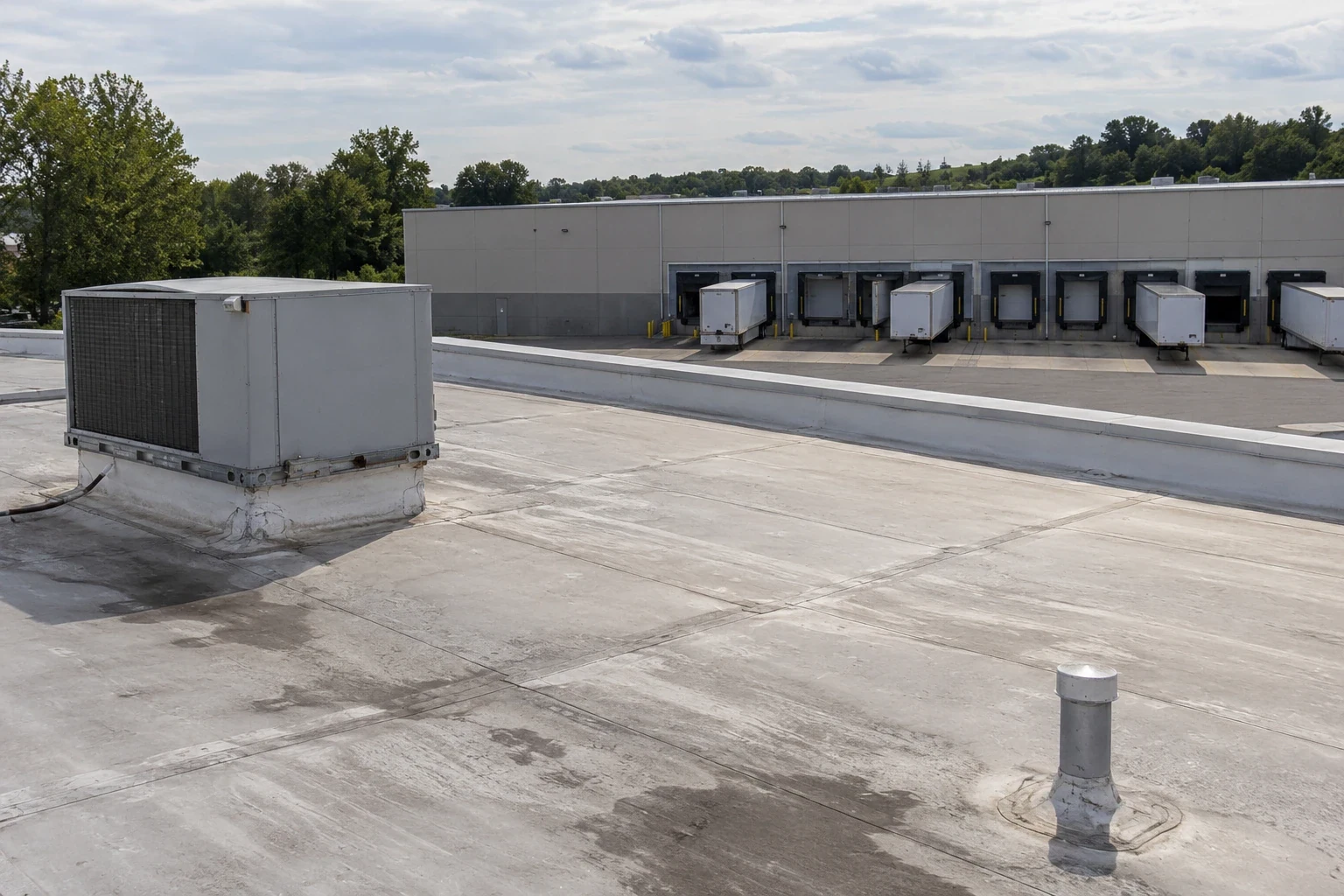
Roofing for Logistics and 3PL Operators in Denton, TX
A dock schedule can make a roof repair urgent even before water reaches stored goods. In Denton, TX, we identify the reported area, inspect the roof zone and drainage, and record the operating constraint that controls access. Photos tie the finding to a location. The manager can then decide whether to protect inventory, authorize a contained repair, or investigate a larger area. Emergency response is available at any hour, including weekends and holidays, when active water needs attention.
A 3PL may manage a building it does not own, so the approval path matters as much as the repair detail. Record the property contact, tenant operations contact, roof access, loading restrictions, and scope version. A distribution-center roof review can define the physical work area; a property manager record can keep authorization and closeout tied to the correct owner.
Trace Water Without Moving the Dock Report
Record which dock, aisle, storage zone, or equipment area was affected and when staff saw water. Keep that account distinct from roof observations. We inspect accessible drains, seams, penetrations, curb flashings, wall transitions, and prior patches. A leak near a dock door may involve a roof detail, wall condition, or another path. The report should show the areas viewed and the evidence that supports the repair boundary.
Log inventory protection and any temporary relocation as separate operating actions. If a moisture survey is proposed, mark its limits and the permission needed for a test opening. A moisture survey can help select areas for further review, but testing should be interpreted with roof assembly and field observations. For active entry, emergency service can address immediate exposure while a permanent scope is priced.
Plan Around Loading and Shift Changes
Confirm dock activity, yard traffic, roof access, staging, lift placement, trailer clearance, and the time when a work area can be released. Identify the contact who can stop loading or approve a changed sequence. The proposal should include setup, cleanup, temporary protection, and interior coordination, not only the roof application. Where the building stays active, divide work into zones that can be accepted and returned to operations in stages.
A city development plan discusses Loop 288 and US 380 in relation to local connectivity. That does not establish a truck route. Check current traffic, delivery restrictions, and the approved gate with the operator. Westpark TIRZ is an industrial district north of Airport Road, but its boundary does not establish any individual warehouse entrance or loading pattern. We confirm gate procedures with the operator. An occupied-building sequence can state which areas remain open and how water protection is maintained between shifts.
Price Protection and Permanent Work Separately
A localized repair may fit if one seam, drain, curb, or flashing detail is defective and adjacent materials remain sound. We define the roof area, method, exclusion, and any condition that could expand the work. If moisture or repeated leaks span several zones, a broader investigation may be needed before selecting a permanent method. The owner should be able to compare immediate protection with correction of the underlying assembly.
Replacement, recover, and coating have different implications for inventory protection, staging, debris removal, and dock availability. Confirm attachment, moisture, drainage, and compatibility before pricing a recover. A repair scope can be compared with a replacement scope using the same work boundary and operating assumptions. Confirm the installed membrane or panel type in the field before writing a material-specific scope.
Use Denton Records as Context
The Denton NWS series places normal yearly precipitation at 38.44 inches. Its July and August mean maximum air figures reach 95.9°F and 95.8°F. Those averages inform planning, not the condition of one distribution roof. They do not establish roof-surface temperature, drain capacity, or a leak at a distribution building. We record current drainage, seam condition, membrane attachment, and any observed moisture at the address. The forecast and system requirements guide the schedule.
Denton designates Westpark and Downtown as active development districts with separate infrastructure purposes. Their boundaries do not identify a 3PL operation or its roof. A warehouse file still needs the address, operating contact, and approval authority. A warehouse file still needs a property drawing, access rules, operating contacts, and approval authority. For a nearby municipality, Corinth service coverage requires its own access and permit check. The same operating plan should not be copied from one address to another. Record the current gate, dock and delivery instructions separately for each building before materials are dispatched.
Keep the Handoff File Current
Before mobilization, provide roof plans, dock and yard restrictions, prior repair records, inventory protection instructions, and the person authorized to approve work. If the work affects a tenant area, identify who issues notice and who accepts the completed zone. Record any after-hours requirement and the cost driver it creates. A concealed-condition allowance should state what remains unknown and how a change will be authorized.
At closeout, retain the approved scope, dated photographs, completed zones, materials recorded, change approvals, exclusions, and open items. Mark temporary protection with an owner and review date. Reporting fields may be consistent across a holding, but each property still needs its access records. For operators with manufacturing tenants, a separate production roof plan may help distinguish line constraints from dock constraints. The next shift should be able to identify what was repaired and what still needs a decision.
For a portfolio manager, keep the property identifier on every photo and invoice. Match the roof zone to the dock or aisle reference supplied by operations. If the contact changes, preserve the access record and the person who accepted the last work area. That simple handoff prevents an open roof question from being mistaken for a completed repair during the next inventory or lease review.
Reconcile closeout with the operator's work order before the next inventory count. The roof area, temporary protection, and water-report status should agree across both records. If another maintenance task remains, list its owner and review date. These fields help a facilities lead choose whether to monitor, investigate, or request a new scope without reopening completed work. Add the current driver check-in process to the access record and date its last confirmation.
Commercial Roofing Questions
Can a leak repair be scheduled between inbound and outbound shifts?
It may be possible when the roof area, access, staging, weather window, and interior protection are defined. We need the operations contact who can release the work zone and approve a change. The schedule should include setup and return-to-service checks.
What should a 3PL do before emergency roof work begins?
Identify the affected inventory, protect the interior, and name the owner or property representative who can authorize roof access. We can respond to active water and document the affected roof zone. The permanent scope follows the assembly and observations available.
Does a dock leak mean the roof drain is blocked?
Not by itself. We inspect the drain and surrounding details, then compare them with the reported interior location and any safe access findings. The report should show what was observed and what remains a possible cause.
How do you avoid disrupting a busy distribution operation?
The operator supplies loading hours, yard rules, staging limits, and an access contact. We can divide the work into defined zones and state the handoff between shifts. Any required closure or protection stays visible in the proposal.
Which records should a facility keep after the repair?
Retain the approved scope, roof-zone photos, date, materials, change records, closeout observations, exclusions, and temporary measures still awaiting review. Keep each record under the property identifier. This lets a later manager distinguish completed work from a new report.