
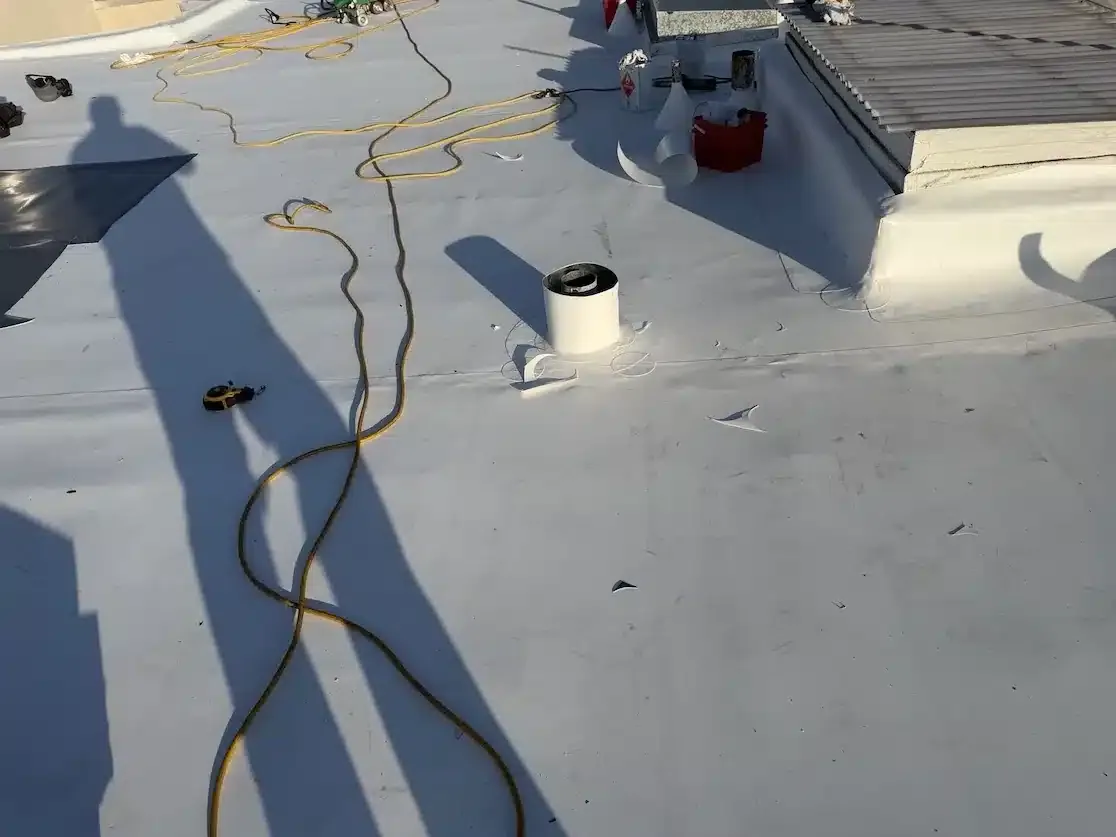
TPO Roofing in Denton, TX
The seam is the first place to document when a TPO roof begins to separate. In Denton, TX, we map the affected roof area, check adjacent details, and compare the observed condition with repair records before pricing a fix. A commercial roof inspection gives the owner a dated baseline for the decision.
TPO is a thermoplastic single-ply membrane with heat-welded seams. The roof still depends on sound substrate, secure edges, compatible flashings, and clear drainage. We identify the assembly and the work boundary first. The scope then states whether the issue is a seam repair, a detail correction, or a larger membrane project.
Map the Seam Before Cutting
Start with the visible seam condition. Look for an open lap, a narrow weld, a fishmouth, dirt in the bond area, or a separation that continues beyond the first visible point. Mark the location and measure its limits. A seam problem can follow a roof detail, but water observed inside does not by itself locate the entry point.
Clean and probe a representative area where the membrane manufacturer’s repair method allows it. Check whether the membrane remains flexible and whether the adjacent material is sound enough to accept a patch. If the surface is contaminated or the sheet is brittle, a simple weld may not hold. Record the test area, method, and result in the photo log.
For a repair, cut back only enough to expose a stable surface and prepare the patch in the approved manner. Extend the repair beyond the defect into compatible membrane. Photograph the prepared surface and finished weld before cover or rooftop equipment restricts the view. A seam failure repair can address a localized opening; repeated failures require an assembly-level review.
Check the Assembly Under the Membrane
A surface repair cannot correct wet insulation, a loose substrate, or an unbonded layer beneath the sheet. Review available drawings, prior scopes, and repair records. Then mark suspect zones for closer evaluation. Infrared readings can help compare roof areas under suitable conditions, while test openings show the concealed layers at selected points.
Keep each observation tied to a roof area. Separate a confirmed wet layer from a stain, soft spot, or temperature pattern that needs confirmation. Record what was opened, what was found, and how the opening was restored. If the existing assembly differs from the records, pause before extending the repair line.
A moisture survey may help select test locations when the roof and weather conditions support useful readings. It does not replace confirmation of concealed material. The owner can compare the confirmed area with the repair cost, remaining service horizon, and disruption of removing wet layers.
Trace Water Through Edges and Penetrations
TPO often meets metal edge, curbs, pipes, drains, and equipment supports. Each transition has its own movement and water path. Inspect the membrane termination, sealant condition, weld width, fastening pattern, and counterflashing where present. A lifted corner may point to a longer issue at the edge or attachment line.
At a curb or pipe, check whether the flashing is dressed tightly and welded to compatible material. Look for wrinkles that channel water, patch edges that are lifting, or a sealant bead carrying a load it was not designed to carry. Record the detail separately from the field membrane so the repair scope names the right labor and materials.
A curb and support review can document an equipment transition. For drainage points, record the outlet, surrounding membrane, and low area. A drain review should include the route water takes across the roof, not only the drain bowl.
Compare Repair With a Larger Roof Scope
A single damaged seam can be a repair line. A roof with recurring openings, saturated insulation, widespread shrinkage, or loose perimeter conditions may need broader work. Map how many areas fail, when they were repaired, and whether they share one detail or installation condition. Do not count patches as proof that the field membrane is sound.
Compare the repair option with recover or replacement only after the assembly is known. A replacement scope may address wet layers and details that cannot be corrected at the surface, but it also changes access, phasing, and cost. If allowed by project requirements, review existing layers and moisture before adding material. Compare PVC roofing and EPDM roofing against the project requirements.
The decision date matters. A repair may bridge planned capital work, but the scope must name its limits. We list the roof areas included, exclusions, test results, and conditions that would change price or sequence. That gives the bid comparison a clear basis.
Account for Denton Weather and Access
National Weather Service normals for Denton show mean maximum temperatures of 95.9°F in July and 95.8°F in August, with 38.44 inches of annual precipitation. Those figures describe regional air temperature and precipitation, not the temperature or condition of a roof. We check the actual membrane surface, substrate, and drainage before selecting repair conditions.
Denton’s planning materials connect development with transportation on US 380 and Loop 288. That citywide context cannot confirm a particular delivery path. For work near Krum or Corinth, first confirm the property’s jurisdiction, then record the approved entrance and access hours beside the roof plan.
Hot surface conditions can affect crew timing and safe handling. Precipitation can also interrupt exposed work. The schedule should state how much membrane may be opened, how it will be protected at shift end, and who accepts the temporary condition. The weather record is context; the daily roof inspection controls the work decision.
Set the Work Sequence and Quality Checks
Before repair, identify the weld method, acceptable substrate condition, patch dimensions, and inspection point for the detail. The crew prepares the membrane, completes the weld, and checks the finished seam with the tool and method specified for the system. If the repair reaches an edge or flashing, inspect that transition as part of the same roof area.
For larger work, keep the roof map, material submittals, field changes, and inspection records on the same scope version. Mark where existing equipment limits access. A condition report can preserve findings and unresolved questions for the owner’s review. If the building stays occupied, a phased roofing plan can set daily work areas.
Close each day with the opened area, completed details, temporary protection, and remaining checks. Photograph seams and flashings before they are covered. If a field condition changes the repair boundary, stop at the agreed hold point and record the owner’s approval before permanent work expands.
Leave a TPO Repair Record
The closeout record should identify the roof area, membrane condition, repair method, materials used, date, and crew records. Attach images of the original seam, prepared surface, and finished weld. If the repair covered an opening or test area, include how that location was restored and whether a follow-up inspection remains due.
Keep warranty documents and manufacturer requirements with the job file. They may define approved repair materials or who may complete certain details. We identify the records provided and record any approval still pending. The file should not claim coverage beyond the written warranty or the work completed.
Send the roof plan, prior repair log, inspection date, and decision deadline. We will mark the affected TPO areas, test what needs confirmation, and return a repair or replacement scope for review. The owner receives a defined work line and the records needed to compare the next step.
Commercial Roofing Questions
Can an open TPO seam be repaired without replacing the roof?
A localized weld may be repairable when the membrane and substrate are sound. We check adjacent seams and concealed layers before setting the repair boundary.
What does a moisture survey tell us about TPO?
It can identify areas for confirmation under suitable conditions. Test openings show the concealed assembly at selected points and guide the scope.
Why inspect the perimeter when a seam is open?
Edge movement, fastening, and flashing can affect nearby welds. The repair record should show whether the termination shares the same condition.
How does summer heat affect TPO repair timing?
The NWS normals give Denton air-temperature context. We check actual surface conditions and crew safety before scheduling membrane work.
What should be in the TPO closeout file?
Keep the roof map, repair method, material records, dated seam photographs, inspection result, warranty documents, and open items together.