
Commercial Roof Condition Reports in Denton, TX
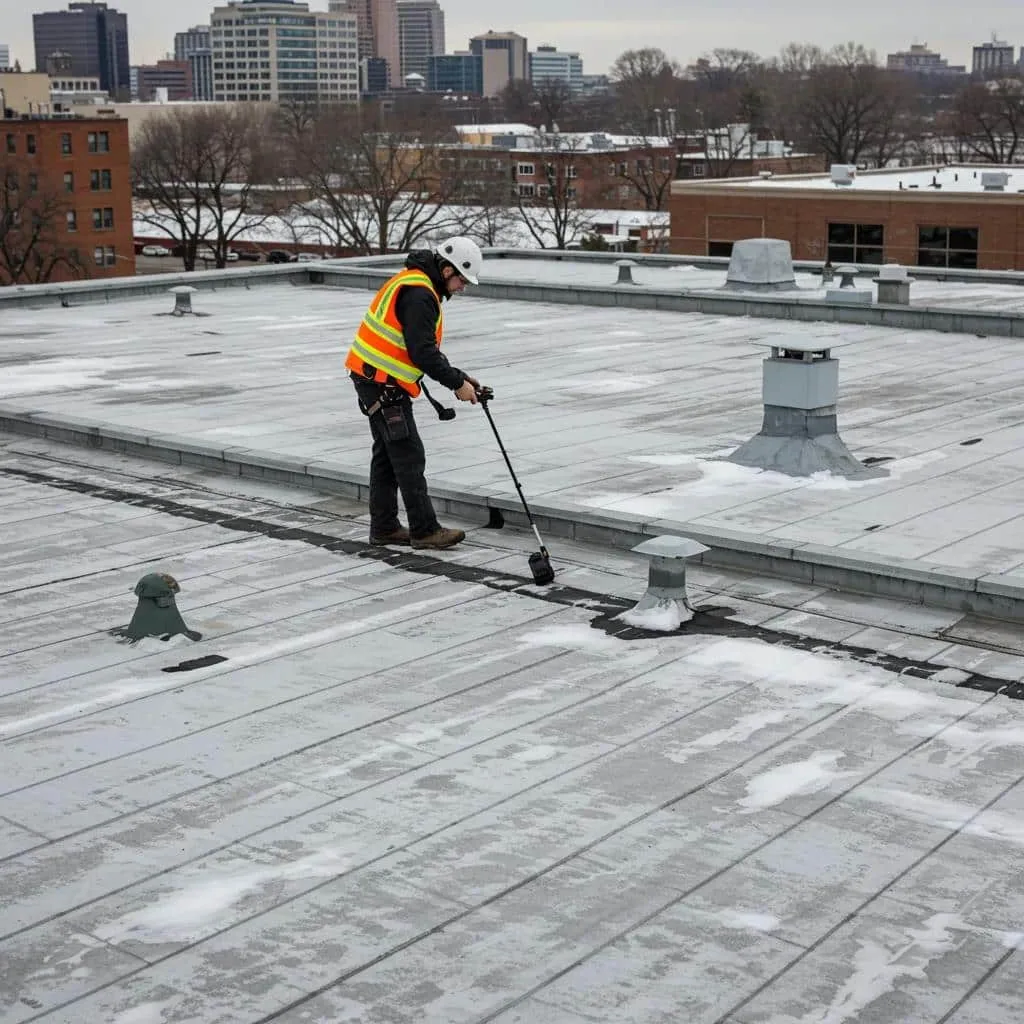
The photo shows a split beside a curb. The report still needs to say which roof area, what was visible, and what decision follows. In Denton, a useful condition report starts with the inspection date, roof plan, access limits, and the owner’s next decision point. We separate observed condition from suspected cause. That distinction keeps a maintenance record from becoming a replacement conclusion without supporting field evidence.
We document membrane seams, flashings, drains, edge details, equipment interfaces, and visible damage by location. Images are tied to the plan and captioned with what they show. If moisture testing, an opening, or another trade is needed, the report lists that as an open item. A commercial roof inspection can establish the field record before a repair line or capital request is prepared.
Record What the Roof Shows
Each observation should identify the roof area, component, extent, and visible condition. We record whether a seam is open, a flashing is separated, a drain is obstructed, or a membrane has a puncture. We record the image location and mark the corresponding point on the roof plan. A broad record such as needs attention is not enough to price a repair or compare a later visit.
We distinguish conditions seen from conditions inferred. Interior staining may point to an area for investigation, but it does not identify the entry point by itself. A moisture reading can support further review, but the test method, locations, and limits matter. When an opening is not authorized, the report says what could not be confirmed and what access or approval would resolve the question.
Denton County’s tornado climatology includes reported events over a long period. County records provide regional context, not proof of damage at a particular building. If a manager reports a storm date, we record that report separately and inspect the actual roof for displaced metal, damaged edges, punctures, or other visible conditions.
Connect Photos to the Roof Plan
Before the visit, gather the latest roof plan, repair tickets, warranty file, prior proposals, and known leak locations. Confirm the access contact, occupied hours, fall-protection requirements, and areas that cannot be entered. If the plan uses a different building label than the facility team, reconcile it at the start. That prevents photographs from being filed under a neighboring wing or a retired asset name.
We label photos with an area identifier and short observation. Wide views establish orientation; close views show a seam, penetration, curb, drain, or edge condition. The caption should not diagnose what the image cannot show. Keep infrared results, test cuts, and core samples identified by method and exact test location rather than blending them into visual observations.
For a multi-building property, a roof asset record can hold the inspection date, scope version, and open items across visits. A drone roof survey may add coverage where safe access is limited, but imagery does not replace a close field review of a suspect detail.
Separate the Finding from the Recommendation
The report should not combine observation, cause, and repair into one sentence. We state what is visible, what the evidence suggests, and what remains unconfirmed. Then we identify a next step: localized repair, moisture testing, access to a concealed area, or monitoring. If active water entry affects operations, immediate protection is listed separately from the permanent scope.
A recommendation should be limited to the area and evidence reviewed. A split seam on one section does not establish failure across the roof. If similar conditions appear in several locations, each should be mapped so the owner can judge whether the pattern changes the work. We record where a repair may meet the need and where repeated defects warrant a broader scope comparison.
Westpark is an industrial district north of Airport Road, and Denton identifies it as a development area. That place context may matter to access planning, but it does not tell us what a specific roof contains. The report remains tied to the property’s assembly and observed condition, whether the building is near Westpark, Downtown TIRZ, or another part of the city.
Give Each Priority a Basis
Priorities should explain why an item is first, scheduled, or deferred. We separate active water entry, defects that may worsen, routine maintenance, and capital candidates. Each line names the supporting observation and the action needed. If the owner defers a repair, the record can state a monitoring date or temporary protection step rather than leaving the item open without an owner decision.
For replacement planning, the report maps moisture findings, failed details, repair recurrence, and areas not tested. It does not convert a roof age or isolated defect into a system-wide conclusion. A capital planning review can compare repair, recover, and replacement options against those mapped conditions. A drainage assessment can define a separate correction where water flow is the issue.
The climate record for Denton includes hot summer air normals and annual precipitation. Those measures help frame why heat and water exposure belong in a review, but neither proves a roof defect. The report should use field observations, assembly details, and test results to set the priority.
Keep Limits and Follow-up Visible
List sections not accessed, surfaces hidden by equipment, and tests not performed. Record whether the limitation came from safety rules, occupied operations, locked access, or an authorization decision. A future reviewer can then see whether a blank area means no defect was observed or no inspection occurred. That is a material difference when bids or budgets rely on the report.
Loop 288 and US 380 are Denton transportation corridors discussed in city planning materials. A TxDOT project describes proposed improvements on a portion of US 380. Current status and travel conditions can change. Confirm the route, site entrance, and delivery window before booking a follow-up inspection. For a property near Krum or Corinth, confirm the property address and authority having jurisdiction before setting any permit-related step.
Follow-up should use the same roof map and area labels. We compare new photographs with the prior inspection date and identify completed repairs, recurring conditions, and unresolved findings. A maintenance visit can close routine items while keeping capital decisions separate.
Prepare a Report the Team Can Use
The final file should include the roof plan, inspection date, conditions, photo log, access records, recommendations, limitations, and open decisions. Keep the scope version with the report when repairs are priced. If a proposal changes, retain the revision so the team can trace what was found and why the correction changed.
A report may support an owner meeting, insurance documentation, financing review, or maintenance plan. For event-related work, claim documentation should preserve reported event information and inspection findings without stating a cause the roof review did not establish.
Send the roof area, leak locations, records, decision date, and access contact. We will document observations, record needed testing, and return a scoped record with photos.
Commercial Roofing Questions
What should a commercial roof condition report show?
Map each observation to a roof area, include dated photographs, describe access limits, and separate visible conditions from suspected causes. We list the action and any test or authorization still needed, so the owner can connect the record to a decision.
Can photos alone confirm a leak path?
A photograph shows a visible condition, not always the water path. We compare the detail with interior reports and adjacent transitions, then identify testing needs. The report separates the observed area from an unconfirmed cause.
How are inaccessible roof areas handled?
We mark the area as not inspected and state why access was limited. If equipment or operations blocked review, we name the next access step. A blank area is not a finding of no defect.
Should recommendations include repair and replacement options?
When evidence supports a comparison, we show the bounded repair and broader scope separately. Each option uses the same roof map and identifies exclusions, moisture questions, and access assumptions. One defect does not establish system-wide failure.
How should a follow-up inspection use the prior report?
Use the same roof labels and compare photographs with the earlier inspection date. We close completed repairs, record recurring conditions, and keep unresolved testing visible. That preserves the sequence from finding to action.