
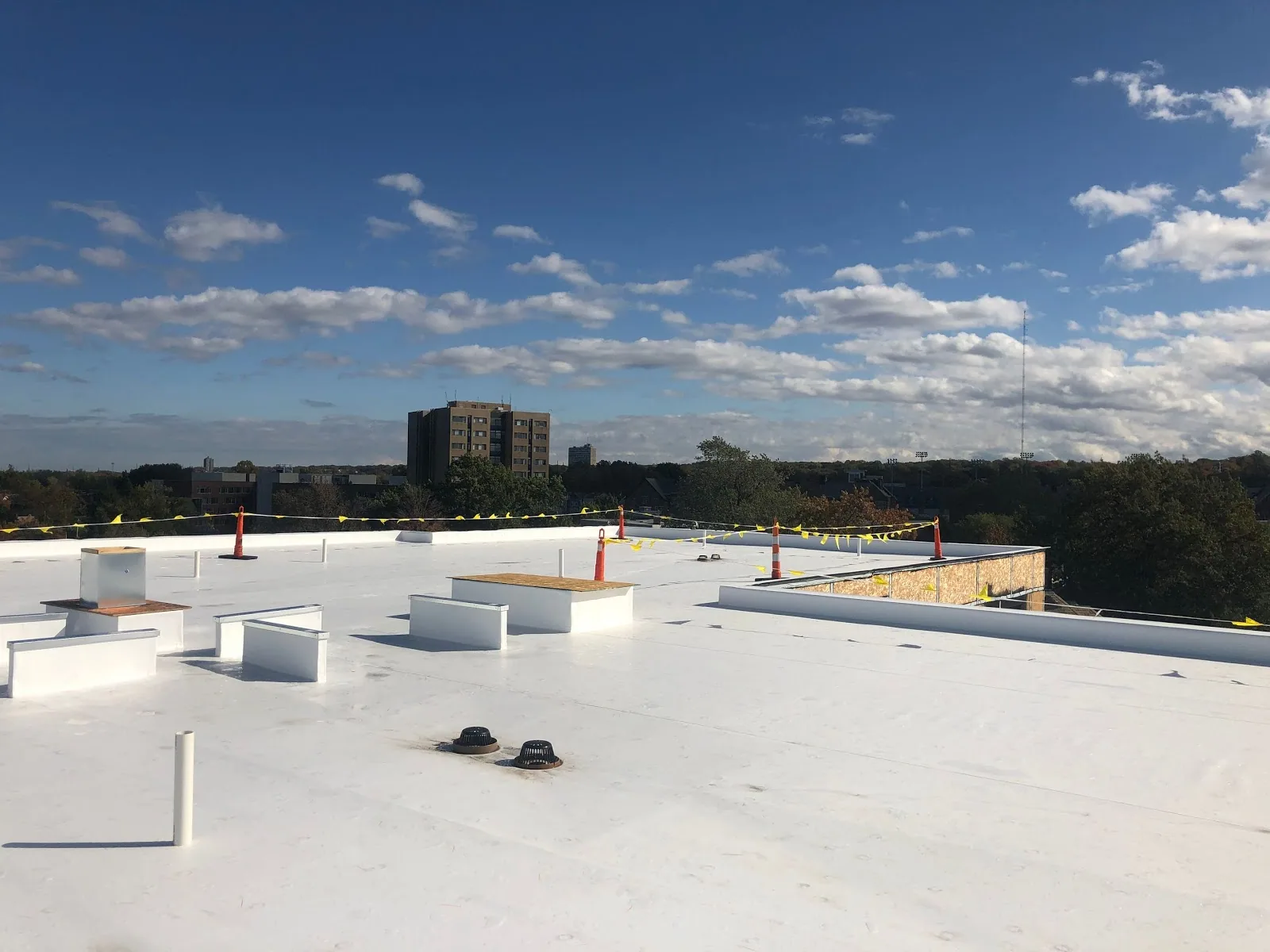
Commercial Roof Repair in Denton, TX
A repair starts with the defect that can be located, photographed, and tested. In Denton, TX, a roof report may include a seam opening, loose flashing, drain issue, or puncture. Those conditions need different corrections. We record the roof area, assembly, adjacent details, and evidence before selecting a repair. If the cause remains uncertain, the scope says what needs further testing. A commercial roof inspection can establish that baseline.
Locate the Failure Before Cutting
Mark the affected area on a roof plan. Photograph the defect from above and below where access permits. Check whether water is active, whether the surface is safe to reach, and whether nearby equipment or work has changed the roof. A loose seam may need a different treatment from a puncture through the field membrane. A failed penetration can send water along insulation before it appears indoors. The repair limit should follow evidence, not the stain alone.
When the opening is clear, the crew records material, attachment, and the condition around the repair. If the roof has several repair layers or unknown patches, record those separately. A patch that hides a wet area is not a complete correction. We identify any moisture concern and explain whether a test opening or broader review is needed before closing the work.
Match the Repair to the Assembly
Repairs need compatible materials and sound tie-in surfaces. On single-ply roofs, the field membrane, seam, flashing, and primer requirements may differ by product and age. A repair at metal, modified bitumen, or coating needs its own preparation and detail. We clean and prepare the substrate, remove unsound material where needed, and form the patch or flashing transition to shed water. For a seam concern, a separate seam-failure review can distinguish a localized opening from broader bond loss.
Drain and edge work deserves the same care. Water can enter at a failed curb or scupper even when the field membrane remains intact. Check the lap, termination, fasteners, sealant condition, and backing. If the damage repeats across separated locations, compare the pattern before pricing one-off patches. Repeated repairs may point to movement, attachment, or drainage conditions that need a larger scope. When replacement is on the table, compare the findings with a replacement scope rather than treating each patch as a separate decision. The proposed TPO system must match the existing assembly and approved details.
Set the Repair Boundary
The work order should identify the exact roof areas, included details, temporary protection, and any excluded condition. Record whether insulation, cover board, or deck will be opened. State how concealed deterioration will be reviewed and who can authorize added work. A repair with no boundary creates confusion when another leak appears nearby. The property contact should know what the crew will inspect, what will be repaired, and what evidence will be delivered.
That distinction matters across Denton's different building areas. Westpark is an industrial district, while Downtown TIRZ is a defined redevelopment area with public infrastructure planning. Those designations do not tell us an individual roof's construction. They do make it important to identify the actual building use, loading needs, tenant access, and protected work hours before setting the scope.
Protect the Operating Day
Before work begins, confirm roof access, ladder or hatch location, fall protection, equipment shutdowns, and the person receiving the crew. Identify occupied areas below the repair. If tools, odor, noise, or a temporary water test could affect operations, set the control in advance. For a service call near Loop 288 or US 380, check current roadwork and delivery access with the site contact. For calls near Loop 288 or US 380, confirm current roadwork and delivery access directly with the site contact. Conditions can change between estimate and dispatch.
Active water may require temporary protection before a permanent material repair can be completed. Record the temporary measure separately. Record its inspection trigger and expected next step. A dry-in or seal is a short-term control, not a substitute for correcting the assembly. The closeout should explain when permanent work occurred or what still blocks it.
Compare the Repair Line
A repair price should identify the preparation, material, detail, and limits of the work. Separate labor for access or protection from the correction itself. State whether the crew will remove a failed patch, open insulation, or stop at a visible surface defect. If an allowance covers concealed damage, tie it to a defined area and written approval. A single total can hide different assumptions across bids.
Record whether the proposed work restores the membrane only or includes flashing, metal, drain components, or substrate repair. Those items have different material and access needs. If a repair repeats, compare its accumulated scope with a larger correction. The owner can then choose based on documented condition and timing rather than the appearance of a low bid.
For an occupied facility, include protection and access in the decision. A roof area above active operations may require different hours or staging than an unused section. The repair plan should identify the person who can approve a change and the record needed before closing an opened area. That detail keeps the closeout aligned with the authorized work.
For a multi-building property, keep estimates separated by roof area and show shared mobilization once. The comparison should make clear which cost belongs to each assembly and which access assumption is common. If the defect is confined to one tenant bay, document the limits of that area before work begins so the closeout does not imply a building-wide correction.Leave a Repair Record
Closeout includes date, roof area, before-and-after photographs, material used, preparation, and any condition found beyond the approved boundary. We label unresolved items and identify who owns the next decision. That record helps the property team distinguish a new event from a repeat at the same detail. If a test or broader review is advised, link it to the finding rather than placing it in a general recommendation.
Owners in Krum and Corinth may have separate local permit or access considerations from a Denton property. We confirm the jurisdiction and the roof scope before work. The repair plan then reflects the building in front of us, not a generic assumption about a city or roof type.
Commercial Roofing Questions
When is a repair too small to solve the leak?
Moisture beyond the visible defect changes the repair boundary. We map test results and openings, then show where sound, serviceable roofing remains. A localized correction may still fit. Repeated failures across separated areas can support a broader scope.
Can one repair material work on every roof?
No. Membrane chemistry, surface condition, temperature, and seam construction affect compatibility. We identify the installed assembly before choosing primer, patch, flashing, or sealant. When the material cannot be confirmed, we state the limitation and test or investigate further.
What if the repair area is wet?
The crew records where moisture is confirmed and how it was found. Wet insulation may need removal rather than covering. If the opening is larger than the approved scope, work pauses for direction and a revised quantity before permanent closure.
What should a repair closeout show?
It should show the location, before-and-after condition, materials, repair boundary, and any concealed findings. We also list excluded items and the next action if the evidence remains incomplete. The property team can then track repeat reports against the same roof area.
Can repairs be completed while tenants are present?
Tenant hours and access restrictions govern the sequence. We coordinate occupied areas, equipment, noise, and temporary protection with the site contact. If an activity cannot continue safely below the repair, we agree on controls before opening the roof.