
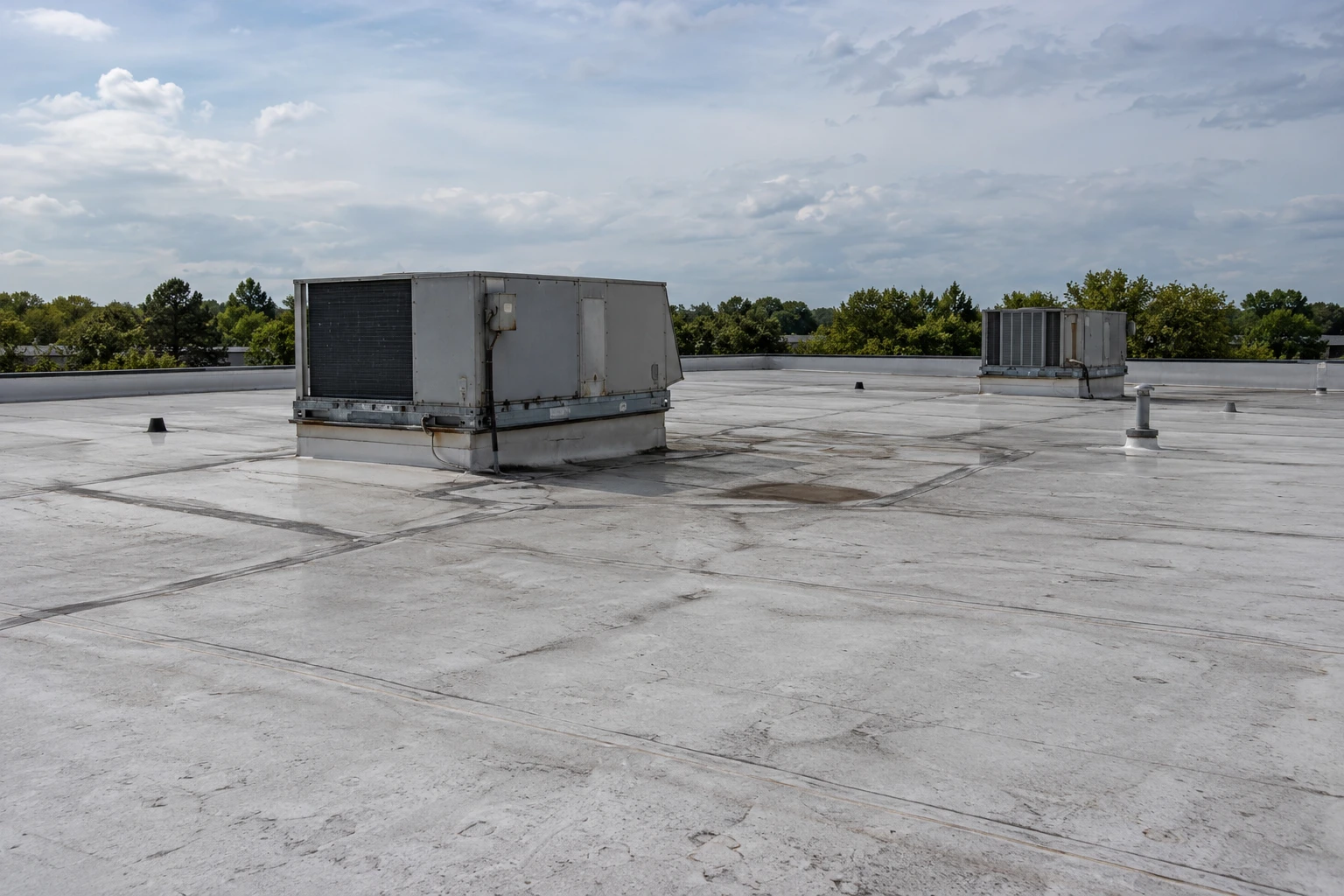
Data Center Roofing in Denton, TX
A roof finding above a critical room is a coordination issue before it is a repair recommendation. Record the roof area, observed condition, inspection date, affected interior zone, and facility contact. Keep the reported symptom separate from the confirmed entry path. A data center may have controlled access, rooftop equipment, and operating limits that change how a crew can inspect or protect the building. The scope should state those constraints before pricing.
A commercial roof inspection can establish a roof-zone map, photo log, access records, and open questions. The facility team can then decide whether the next step is a limited repair, targeted testing, or a broader capital review.
Map Roof Areas to Controlled Spaces
Divide the roof by construction phase, elevation, equipment zone, and interior function where that information is available. Use labels that facilities and security teams already recognize. Mark access routes, hatches, restricted areas, penetrations, drains, and any locations where work could affect occupied or controlled space. Do not place sensitive operating details in a public-facing scope. Keep security procedures in the owner-controlled project file.
For each reported condition, record what was observed on the roof and what was reported inside. A ceiling mark may be remote from the entry point. A roof photograph without a location reference may be difficult to compare later. Use a plan reference and dated images. The warehouse roof review provides a useful approach to separating large roof zones; data center access controls require additional coordination with the property team.
Where a site has multiple buildings, identify the exact property and roof area in the private work order. Do not carry a finding from one building to another because their use appears similar.
Coordinate Around Rooftop Equipment
Before setting a work method, identify equipment that must remain online, clearances required by the facility, and the person who can authorize access. Confirm whether a contractor may stage tools near units or cross service paths. Record any shutdown request as an owner decision, not an assumed part of roof work. The scope should distinguish roof access from permission to touch, move, or isolate equipment.
Photograph curbs, support frames, pitch pans, conduits, and visible flashing. Record loose material, corrosion, open joints, or prior repairs without assigning cause beyond the evidence. A raised curb or added support can create a transition that deserves separate review. The equipment curb assessment can define that interface, while the actual facility representative confirms the equipment boundary and service rules.
Protect walk paths and identify how materials will reach the work area. Keep debris control, end-of-shift housekeeping, and temporary weather protection in the plan. If a proposed detail needs equipment service coordination, list the responsible contact and decision deadline.
confirm the Roof System and Open Questions
Gather roof plans, submittals, warranty records, prior leak reports, and repair tickets. Mark known installation phases and places where the documentation does not match field conditions. Confirm deck, insulation, membrane or panel system, attachment, edge conditions, and drainage where accessible. When the deck or insulation cannot be seen, list the access method or product review needed to close the gap.
For a single-ply section, a TPO system review can frame membrane compatibility and flashing questions. It does not identify the product installed at a particular data center. Keep the product name unconfirmed until records or inspection support it. A manufacturing plant roof guide also covers equipment and work-window coordination, but its process assumptions should not be transferred to another property.
Separate a visible repair need from a possible moisture, attachment, or deck issue. Assign each uncertainty a method, access requirement, and cost line. The owner can then decide which evidence is worth collecting before authorizing permanent work.
Set Access and Protection Before Mobilization
Confirm check-in, escort, badging, roof access, delivery windows, staging, and emergency contact procedures with the facility. Identify areas that cannot be entered and the person who can release a location. A contractor should not assume that a roof hatch, loading point, or route is available because it appears on a plan. Record changes to access in the project log.
Separate temporary protection from permanent repair. Give a temporary cover or seal an owner, inspection interval, and return date. State what condition requires escalation. If the work must pause, describe how the roof will be left at the end of the shift. The maintenance plan can organize recurring observations, but an active leak still needs an assigned response and documented closeout.
When replacement is under review, the replacement scope should identify removal limits, equipment coordination, protection, and the conditions that could change price or sequence. Use the same assumptions for each bid comparison.
Use Denton Area Context Without Extending It
Westpark is an area-level reference in Denton's development-district material: the City locates the TIRZ north of Airport Road and describes infrastructure investment intended to encourage development. It is not a list of data centers, tenants, security procedures, or roof conditions. The owner must provide facility-specific access instructions.
The Denton strategic plan identifies a proposed Jim Christal Road connection to I-35. Check present project records before relying on the proposal for a crew route or delivery time. For a location near Corinth, confirm the governing permit authority for the property before finalizing a scope.
A regional weather table lists Denton's 38.44-inch annual precipitation and a July normal mean maximum of 95.9°F. Those statistics do not establish server-room conditions or a roof defect. Use the inspection findings and equipment requirements supplied by the facility.
Make the Capital Decision Traceable
Summarize the observed condition, roof area, access limit, operational concern, and unresolved question. Present the next test or repair with its price basis, owner dependency, and decision date. If a limited repair is viable, state the boundary and excluded areas. If the scope depends on a test result, price the investigation separately and show what finding would change the recommendation.
Do not compare a spot repair with a full replacement unless the roof areas, protection assumptions, and access requirements are clear. Identify allowance amounts, warranty review, and concealed conditions beside the bid. The facility can then compare cost and disruption on a consistent basis.
Closeout should include dated photographs, completed roof zones, materials documented, changes authorized, access records, and warranty correspondence where applicable. Record what remained inaccessible. Keep the photo log and scope version together so the next inspection can distinguish a completed repair from an open condition. Share only the information the property owner authorizes for outside distribution.
Commercial Roofing Questions
Can roof work be planned without interrupting data center operations?
The work plan depends on access controls, equipment clearances, interior protection, and facility release procedures. Identify those requirements before pricing. A roof visit does not authorize equipment shutdown or entry into controlled rooms. The proposal should state any owner decision, escort, or restricted area that affects the sequence.
What should a data center roof inspection document?
Record roof zones, observed conditions, dated photographs, access limits, equipment interfaces, reported interior symptoms, and questions that remain open. Tie each finding to a plan reference. Keep security-sensitive procedures in the owner-controlled file and share only material approved for external use.
How are equipment curbs and penetrations handled in a roof scope?
Identify the roof detail, visible condition, equipment boundary, and responsible facility contact. State whether the work affects service access or needs a trade partner. Do not assume equipment can be moved or isolated. Price uncertain concealed conditions separately and document the approved restoration detail.
When should a facility consider repair versus roof replacement?
Compare the observed condition, assembly evidence, affected area, access assumptions, and remaining unknowns. A defined repair may address a localized finding. Broader evidence may support a capital review. The recommendation should explain what test or condition changes the choice instead of relying on age alone.
What information should be ready before a roofing bid?
Provide roof plans, prior reports, warranty files, access rules, known work windows, and the decision date. Identify equipment that must remain available and areas requiring an escort. Ask bidders to use the same roof zones, protection assumptions, and removal limits for comparison.