
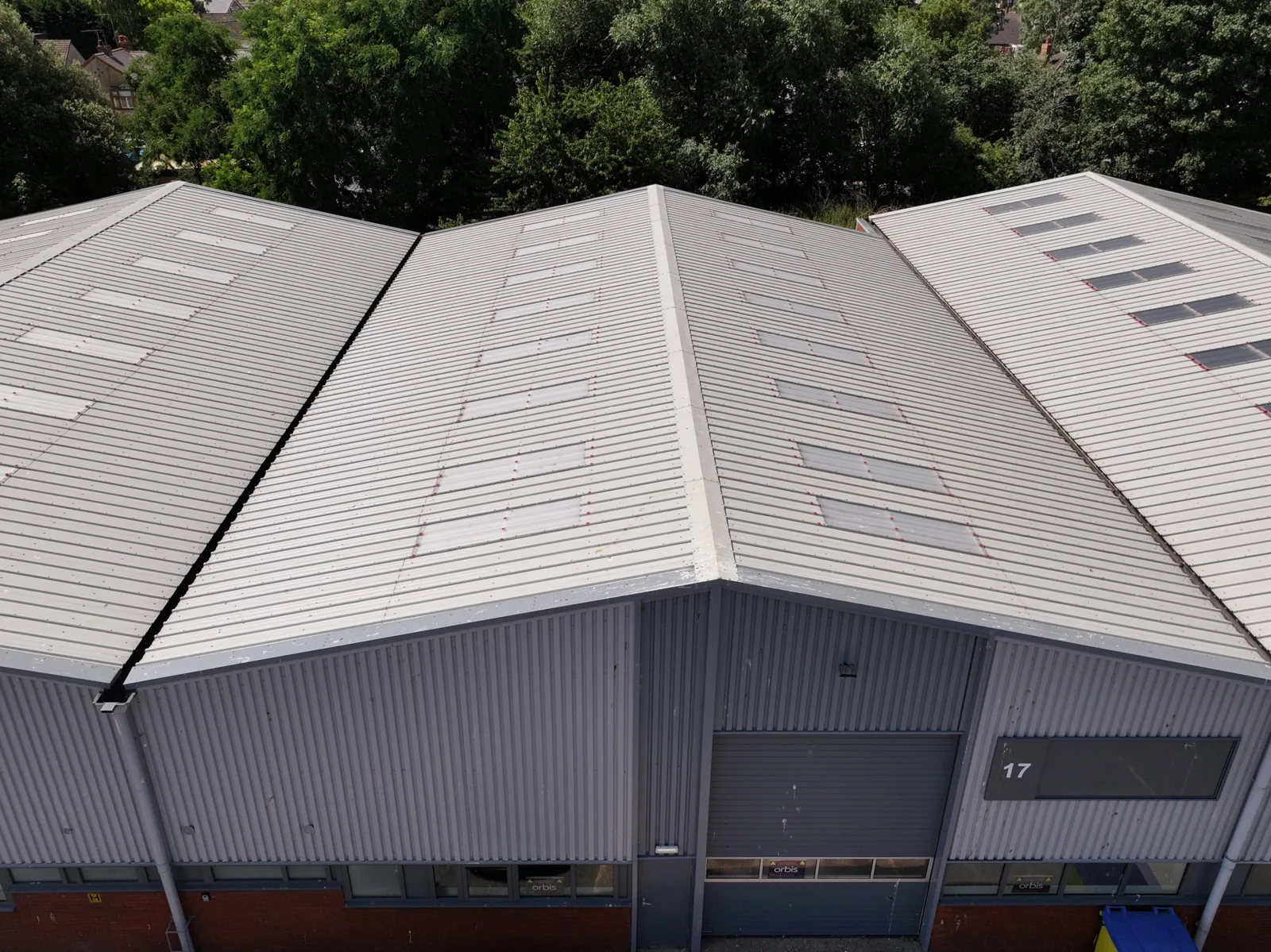
Warehouse Roofing in Denton, TX
A forklift strike at a dock can damage flashing without explaining a leak several bays away. Mark the damaged edge, interior report, and inspection date separately. For a Denton warehouse, the roof map should show each section, drain, curb, and loading area before a repair line is priced. That record gives the facility manager a basis for deciding what needs immediate protection and what can wait for a broader review.
Warehouses may combine low-slope membrane, metal roof, canopy, and expansion-joint conditions. Confirm the installed system from closeout records or field inspection. A commercial roof inspection can document accessible areas, reported leaks, and questions that require testing.
Map Roof Zones to Building Use
Separate the main storage area from docks, office buildouts, mezzanines, and later additions. A large roof may have different installation dates or assemblies. Photograph each transition, label it on the plan, and record whether the area was accessible. Do not use a single observation from one bay as a condition statement for the full warehouse.
Record rack height, product sensitivity, forklift paths, and locations where a leak could interrupt receiving or inventory. The roof report should distinguish an active water entry from an old stain or a condensation concern. If the facility has a temperature-controlled section, include its operating limits and interior observations in the access record. A distribution-center roof review can address a different flow pattern when cross-docking and outbound schedules shape access.
Record drains and overflow routes by roof area. A blocked drain above stored goods may create a different response priority than a remote roof defect with no interior effect. The record should state the observed condition, affected zone, and next decision without treating the address as proof of system type.
Trace Water at Docks and Edges
At loading doors, inspect the roof-to-wall transition, canopy connection, edge metal, and nearby penetrations. Check whether a reported leak follows a panel seam, membrane termination, or an opening created for equipment. Water can travel before it appears inside. Map the entry evidence and the suspected path as separate items until the detail is opened or otherwise confirmed.
Review traffic below the work area. A temporary dry-in or flashing repair may require a marked receiving lane, spotter, or short delivery window. Confirm who can close a dock and how much notice operations need. The scope should identify the affected edge run, material, and tie-in rather than leave a broad perimeter allowance. For a facility with process lines and heavy rooftop equipment, the manufacturing-plant roof review addresses a related coordination problem.
For a membrane roof, compare the field seam with the curb and wall details. A TPO repair review can help frame the system question, while the actual warehouse assembly still needs confirmation. Keep protection of inventory and prevention of new water entry in the written sequence.
Check the Installation File
Gather submittals, warranty terms, prior repair tickets, roof plans, and photographs before selecting a repair material. Mark each confirmed product and each unknown. A warehouse can have more than one roof phase, particularly where offices, dock additions, or equipment openings changed the original footprint. Do not carry one specification across a transition unless the records and field condition support it.
Check fasteners, plates, laps, seam engagement, insulation changes, and deck observations where access permits. If concealed conditions affect the scope, state the test opening or manufacturer review that would answer the question. Keep the sample location and restoration method with the photo log. A recover evaluation should compare existing layers and added assembly requirements before an overlay is priced.
For a standing-seam or retrofit metal section, measure panel profile and attachment before ordering components. For a single-ply section, confirm membrane type and compatible detail materials. The EPDM review provides a separate membrane reference; its assumptions should not be carried to a different section of the building.
Sequence Repairs Around Receiving
Divide work by roof zone and dock group. The scope should say what opens first, how the crew protects the area at shift end, and which receiving windows cannot be interrupted. Identify rooftop equipment that must remain in service and the trade contact who controls shutdowns. Record crane or lift staging separately from the roof work so access conditions do not disappear inside a lumped description.
For an occupied warehouse, temporary protection and permanent repair are different decisions. A short-term cover may protect inventory while testing continues, but it does not resolve attachment, wet insulation, or deck questions. Set a return date and decision owner for every temporary measure. If the investigation expands the repair boundary, issue a new scope version rather than quietly extending the original line item.
When several roof areas are affected, compare a focused repair with a phased program. The maintenance plan can schedule drain, seam, and flashing observations between capital projects. Keep each phase tied to an area map, photo log, and measurable closeout point.
Use Denton District Context Carefully
The City places Westpark TIRZ north of Airport Road and describes infrastructure investment as a tool for encouraging development. That district reference can orient a broad property conversation, but it is not a warehouse count or roof survey. A receiving plan still depends on the actual parcel entrance, check-in process, and current dock schedule.
Transportation references in Denton's economic plan include Loop 288 and US 380. Treat those as regional planning context. They do not confirm a route to a particular loading bay or the time a crew can arrive. Confirm current notices and site instructions before dispatch. The city's Downtown TIRZ is a separate defined district, not evidence about industrial roof inventory.
NWS normals provide climate context for Denton, including high summer air temperatures and annual precipitation. They are not a surface reading or a leak finding. Compare the current substrate, forecast, and product limits before opening a section or setting cure conditions.
Set the Capital Decision Point
Give the owner a short comparison: repair the bounded defect, investigate the concealed condition, or plan a larger replacement. State the evidence supporting each option, the area included, the access assumptions, and what remains unknown. A replacement scope should identify removal limits, temporary dry-in, protection of stored goods, and closeout records. Keep it separate from a recover or repair alternate.
Budget timing changes what the report needs to show. If the next capital review is months away, list the interim inspections and response triggers rather than implying the roof is stable without evidence. Where wet insulation or deck concerns remain, identify the sample or opening that would move the decision forward. Tie each amount of work to a roof area and inspection date.
For a warehouse near Krum, confirm the property jurisdiction and access contact before setting permit assumptions.
Commercial Roofing Questions
Can a dock leak be repaired without closing the whole warehouse?
Work may stay within one roof zone, but the receiving lane, interior protection, and repair method set the interruption. Mark the affected bay, entry route, and any loading pause. If the entry point remains uncertain, protect the area and schedule the next inspection before setting a permanent repair boundary.
What should the inspection record show when the warehouse has additions?
Separate each roof phase and record the system, visible transition, documents reviewed, and inaccessible areas. Label photos by zone and date. If an addition changed drainage or attachment, show that detail on the plan instead of applying one field conclusion to the whole building.
When is a recover worth comparing with replacement?
Compare existing layers, moisture, attachment, deck condition, edge height, drainage, and system requirements. The review should say what is confirmed and what needs an opening or manufacturer check. Price options on the same roof area and access assumptions.
How do you plan roof work around stored inventory?
Mark receiving hours, sensitive storage, and interior protection needs with the facility contact. Sequence one area at a time and document how it will be left dry at shift end. List any temporary protection and its required recheck date.
Does Westpark location determine the warehouse roof scope?
No. The district description is area context, not evidence about one building’s roof. Scope from the assembly, observed conditions, installation records, access rules, and operating needs.