
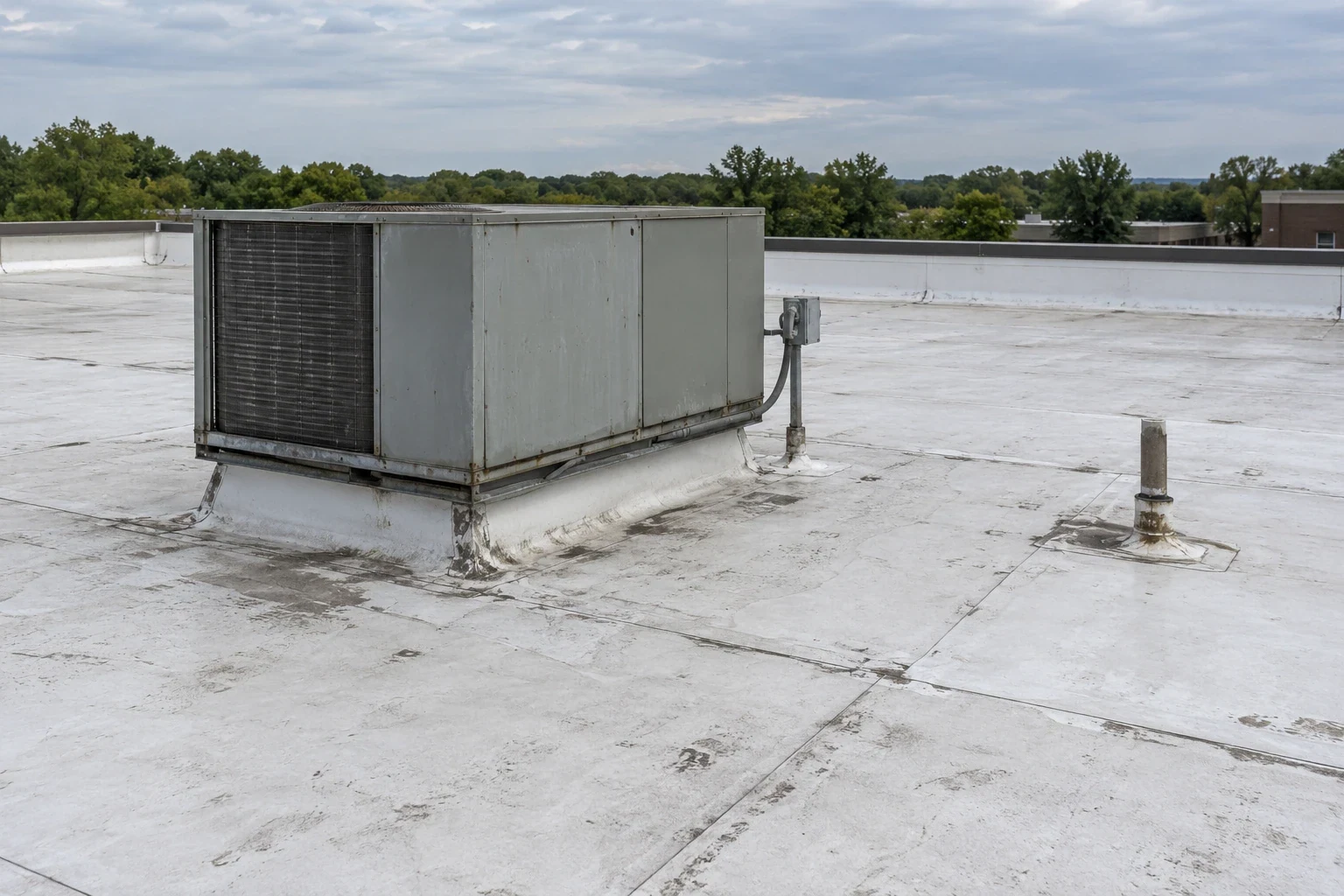
PVC Roofing in Denton, TX
Discoloration near an exhaust outlet is a reason to inspect the PVC surface before choosing a repair. In Denton, TX, the roof record should identify the discharge area, membrane condition, seams, and any prior patch. A roof condition report can map the observation to a decision without treating surface appearance as proof of material failure.
PVC is a thermoplastic single-ply membrane with heat-welded seams. Its suitability depends on the building use, roof assembly, flashing details, and project requirements. We review those conditions before scoping a repair or replacement. The decision should follow what the roof shows and what the owner needs the roof to do.
Review Exposure Before Repairing the Sheet
Start by mapping the area around vents, kitchen exhaust, process discharge, and rooftop equipment. Record the direction of airflow, staining, surface texture, and distance to nearby seams or flashings. A localized mark can have more than one cause. The repair scope should name what was observed and whether a sample, manufacturer review, or test area is needed.
PVC is selected in some projects where chemical exposure is a design concern, but not every discharge is compatible with every membrane. Confirm the product and exposure limits for the actual assembly. If an exhaust plume reaches the roof, the owner should resolve emissions control and membrane choice with the design team before a patch covers the evidence.
Record the membrane age only when reliable project documents support it. Record previous repairs and any surface change that continues beyond the visible stain. A commercial roof inspection can establish the inspection date, roof area, and limits of the walk. A moisture survey may help select locations for confirmation when conditions permit useful readings.
Test the Weld and Detail Together
A sound PVC field seam depends on a clean, compatible surface and a properly completed weld. Inspect the lap for separation, fishmouths, dirt, or a narrow bond. Probe the seam where the approved method allows it. If the sheet has residue or heat damage, establish a prepared test area before extending a repair across the roof.
At a curb, pipe, drain, or edge, examine the flashing and field sheet as one water path. Look for wrinkles, lifted corners, patches that terminate at a transition, or sealant standing in for a welded detail. Record whether the membrane can be welded to the existing material. A curb detail review can define work where mechanical equipment interrupts the field.
For a patch, prepare enough sound material to create a continuous bond beyond the defect. Keep the repair away from a wrinkle or contaminated area that could undermine the weld. Photograph the original condition, preparation, completed seam, and nearby transition before later work limits access.
Check What Supports the Membrane
The PVC sheet is only one layer in the roof. Review the substrate, insulation, cover board, attachment, and vapor control where records are available. Soft areas, recurring leaks, or a patch that moves underfoot may call for confirmation below the membrane. Keep each test opening small, mapped, and restored with compatible materials.
If the existing assembly is unknown, compare field observations with prior scopes and warranty documents. Record where the record and the roof differ. Wet insulation can affect repairability and the amount of material that must be removed. The decision record should separate confirmed findings from areas that still need testing.
For a larger replacement, compare the proposed PVC assembly, attachment method, and edge details with the building’s project requirements. A TPO option or KEE membrane may be part of that comparison if the design and exposure conditions support it. The manufacturer’s written documents and project specifications govern the selected system.
Keep Water Moving Off the Roof
Follow the roof surface from high points to drains and scuppers. Check whether patched areas, added supports, or equipment changes redirect water toward a seam. Record standing water, drain elevations, debris, and the path to each outlet. A ponding area is a roof condition to evaluate; it does not by itself identify whether slope, blockage, or deflection is responsible.
Repairing a seam does not correct a blocked drain or a low area that holds water. Record the outlet condition and the limits of access separately. A drainage assessment can define that scope. If the membrane around the outlet is damaged, coordinate the weld repair with the drain detail rather than leaving a patch edge exposed to flow.
After work, inspect the water path and remove roofing debris from outlets. If the roof cannot be observed during rain, state the limits of the review and schedule a later check when access is safe. Keep the follow-up date with the closeout record.
Compare the Repair Line With Capital Timing
A localized repair may fit when the sheet, substrate, and adjacent details remain serviceable. Broader scope may make sense when openings recur across different roof areas, concealed layers are wet, or edges and penetrations need coordinated correction. Map the findings and group repairs by roof zone so the owner can see the actual work boundary.
Compare patching with replacement using the cost of access, removal, disposal, temporary protection, and business interruption. If the project uses a recover, confirm that the existing layers and moisture are acceptable before adding material. A replacement scope should identify what comes off, what remains, and how the completed PVC assembly will be inspected.
Set the decision point around the owner’s budget year and operating schedule. If the roof has active water, temporary protection may be the immediate work while the permanent scope is reviewed. Keep those two decisions separate in the proposal. State exclusions, test needs, and what finding would change the repair line or sequence.
Use Denton Details for Scheduling
For a Denton delivery plan, use the city’s transportation map only as background: it discusses Loop 288 and US 380 in the context of access and development. Recheck current work zones, then have the property contact confirm the entrance and receiving hours. A corridor reference does not approve a route to the roof.
Westpark is an industrial area identified in Denton’s development planning. That context can help frame delivery questions, but it does not establish the roof type or condition at a specific building. We inspect the actual PVC assembly and coordinate the access record with the property contact.
For work near Krum or Corinth, confirm jurisdiction and site access before setting a schedule. The two cities are close to Denton by representative-point distance, but drive time and entry requirements are different questions. Put the confirmed arrival instructions in the work order.
Close With a Membrane Record
The closeout file should identify PVC product documents supplied for the project, repair locations, weld checks, materials, date, and installer records. Include photos that show the original defect and completed detail. If a test opening was made, record the layers observed and how the roof was restored.
Keep the approved submittal, warranty file, inspection records, and field changes together. State which roof areas were not accessed and which items need follow-up. Do not infer warranty coverage beyond the written terms or the work performed. A warranty file review can help the owner keep approval records with the roof history.
Send the roof plan, prior repair log, exhaust or equipment locations, and decision date. We will map the PVC condition, separate confirmed findings from open questions, and return a scoped next step. The owner can then compare repair and replacement against current records and operating needs.
Commercial Roofing Questions
Does PVC handle every kitchen or process exhaust?
No. Confirm the actual discharge and product requirements before selecting or repairing the membrane. Surface staining alone does not establish chemical compatibility.
What should be checked at a PVC seam?
Inspect bond width, contamination, separation, and nearby flashings. Record the test method and confirm that the adjacent sheet can accept a compatible weld.
Can a PVC patch stop repeated leaks?
A patch addresses a defined defect. Repeated openings call for a map of seams, edges, penetrations, drainage, and concealed layers before setting a broader scope.
Does standing water mean the PVC roof needs replacement?
Not by itself. Check drain condition, roof lows, membrane details, and underlying support before comparing repair, drainage work, or replacement.
What records should remain after a PVC repair?
Keep the roof map, repair method, material documents, dated photos, weld inspection, warranty records, and any open follow-up item.