
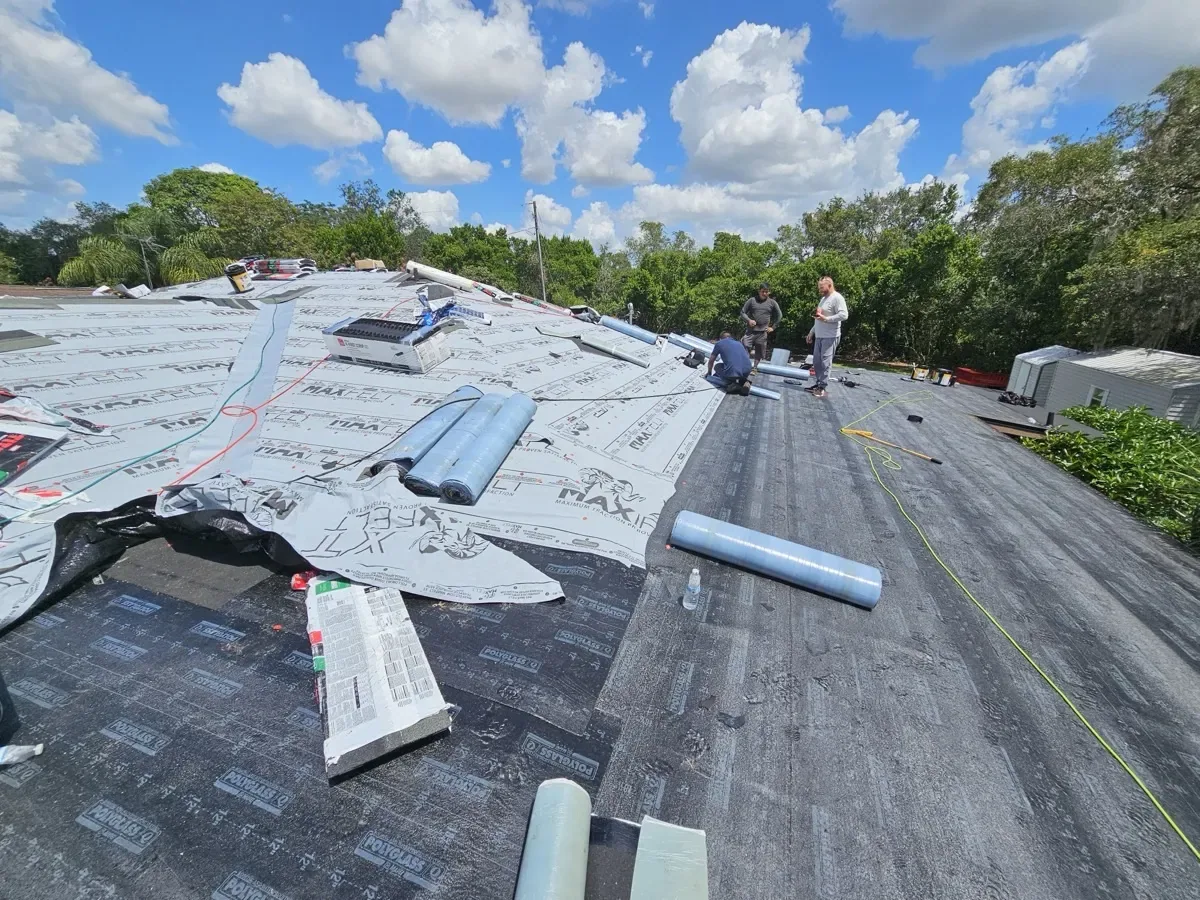
Emergency Commercial Roof Repair in Denton, TX
An active leak makes the first decision immediate: what must stay safe and operational. Commercial roofing emergency response is available around the clock, every day, including holidays. In Denton, TX, we gather the affected room, roof area, site contact, and access limits before dispatch. The crew reviews conditions on arrival. Temporary protection and a permanent repair are separate steps, each documented in the work record.
Report the Area and Immediate Risk
Tell us where water is entering, when it began, and what is below the leak. Include electrical rooms, inventory, production, tenant operations, and any shutoff or access restrictions. Provide photographs from a safe location. Do not send staff onto a slick or damaged roof. The designated site contact controls interior barriers, power isolation, and occupant communication while roof access is arranged.
Severe weather can leave debris, loose metal, damaged skylights, or unstable surfaces. Denton County has a documented tornado history, but regional events do not prove that a particular building was struck. The crew checks the actual site and current conditions. If access is unsafe, the response plan changes before anyone reaches the roof.
Make the Building Safe First
Initial work may focus on protecting contents and reducing active water entry. Depending on the condition, that can involve a temporary cover, clearing an obstruction, or a provisional seal. The method depends on safe access, wind, water, roof slope, and the surrounding assembly. We identify the area protected and the limits of the temporary measure. A make-safe action does not establish the permanent repair until the roof detail is inspected.
Interior teams may need to move goods, contain water, or keep people away from an affected zone. We coordinate the roof response with the property representative. For an occupied building, that includes a clear handoff between roof access, interior protection, and any resumed operations. The report records who was contacted and what conditions still require attention.
Record What the Crew Finds
Once the roof is safe to inspect, locate the damaged area and check nearby seams, penetrations, drains, edges, and rooftop equipment. Take photographs before moving debris where possible. Record membrane type, attachment, visible openings, water paths, and any temporary repair already present. If the opening cannot be fully traced during the first visit, state what remains uncertain. Avoid treating a distant interior stain as the confirmed entry point.
Denton’s normal annual precipitation and warm-season temperatures help describe the local climate, but they do not determine what happened on this roof. For a report after a storm, timing and site evidence matter. Nearby Westpark or Loop 288 place names do not imply the same damage on neighboring buildings. Each property receives its own inspection records and map.
Separate Dry-In From Permanent Work
After the immediate exposure is reduced, prepare a permanent scope that identifies the failed assembly and repair boundary. Replace damaged flashing or membrane where needed, correct a drain or edge detail when supported, and document any concealed condition that requires approval. The owner receives included work, exclusions, and the next inspection trigger. A planned repair can follow when materials and access are ready.
Some emergencies reveal a wider issue. If water has spread under the membrane, an infrared moisture survey or test openings may help map affected material. If the damage is extensive, compare repair with a larger replacement scope. The temporary cover remains identified as temporary until the permanent scope is complete and documented.
Keep the Handoff Clear
One person should receive roof findings and relay approved changes to the property team. That contact confirms access, interior protection, and any area that must stay open. If a second crew or trade arrives, record what condition it is asked to address. A simple handoff prevents a temporary cover from being mistaken for permanent work and keeps the work boundary consistent.
Before the crew leaves, review the protected zone with the site contact. Identify the next inspection point, the status of active water, and any area that remains exposed. If a return visit is required, state what material or access is needed. The report should say who accepted the update and what decision is still pending.
Operations can resume only after the property contact confirms their own interior controls. The roofing crew reports the work completed and any remaining roof risk. Keep those responsibilities separate. That record supports a safer restart without making a claim about areas that were not inspected.
Coordinate Access and Return Work
Emergency service depends on authorized access and safe working conditions. Share roof hatch or ladder location, escort requirements, restricted areas, and the site person who can approve a change. If traffic, roadwork, or deliveries matter, confirm the route for the actual response time. Near Loop 288 or US 380, confirm current access and delivery conditions with the site contact before dispatch or return work.
At Downtown TIRZ properties or elsewhere in Denton, tenant hours and equipment use may dictate when permanent work can occur. For nearby Argyle or Ponder, the governing location and access conditions differ. We record the selected sequence, weather-tight point, and person responsible for interior coordination.
Before closing the call, identify any unresolved access, weather, or authorization issue that could delay the permanent scope. If a temporary measure remains, name who will monitor it and what condition calls for an earlier review. This makes the next action specific without treating a temporary control as permanent.
Close the Incident With Evidence
The incident file should show the initial report, response time, access records, temporary protection, roof findings, and permanent work status. Attach photographs and map each affected area. List what remains open, including a second visit, testing, or approval. The property manager can then explain what was controlled and what still needs a decision without overstating the result.
If water returns, compare the report with the same roof plan and repair boundary. The water path may lead to a separate opening or reflect a continuing condition. A wind-damage assessment can document edge or attachment findings where relevant. The next work follows observed conditions and authorized scope. A scheduled roof inspection can confirm the surrounding assembly after the temporary response.
Commercial Roofing Questions
Is emergency response available overnight or on holidays?
Yes. Commercial emergency response is available around the clock, throughout the week, and on holidays. Arrival depends on safe access, current conditions, and site authorization. We confirm those details during the call and keep the property contact updated.
Can you stop a leak before the permanent materials arrive?
A temporary measure may reduce exposure when the roof can be reached safely. We record its boundary and limits, then schedule the permanent repair based on the assembly and materials required. A temporary dry-in is not represented as a finished repair.
What should staff do while the crew is on the way?
Keep people away from unsafe roof access and the affected interior zone. Protect equipment or contents only where safe. Share the access contact, affected room, photographs, and any hazards. The property representative directs interior controls.
What if a storm has damaged several roof areas?
We map each observed area and prioritize active exposure, unsafe conditions, and operating impacts. The initial response may stabilize the building while a broader inspection defines permanent work. One roof report does not establish conditions on another building.
When will permanent repair be complete?
The crew can confirm a repair sequence after inspecting the assembly, access, and extent of damage. Weather, materials, and concealed findings can change the schedule. The work record identifies the next step and any condition that must be resolved first.