
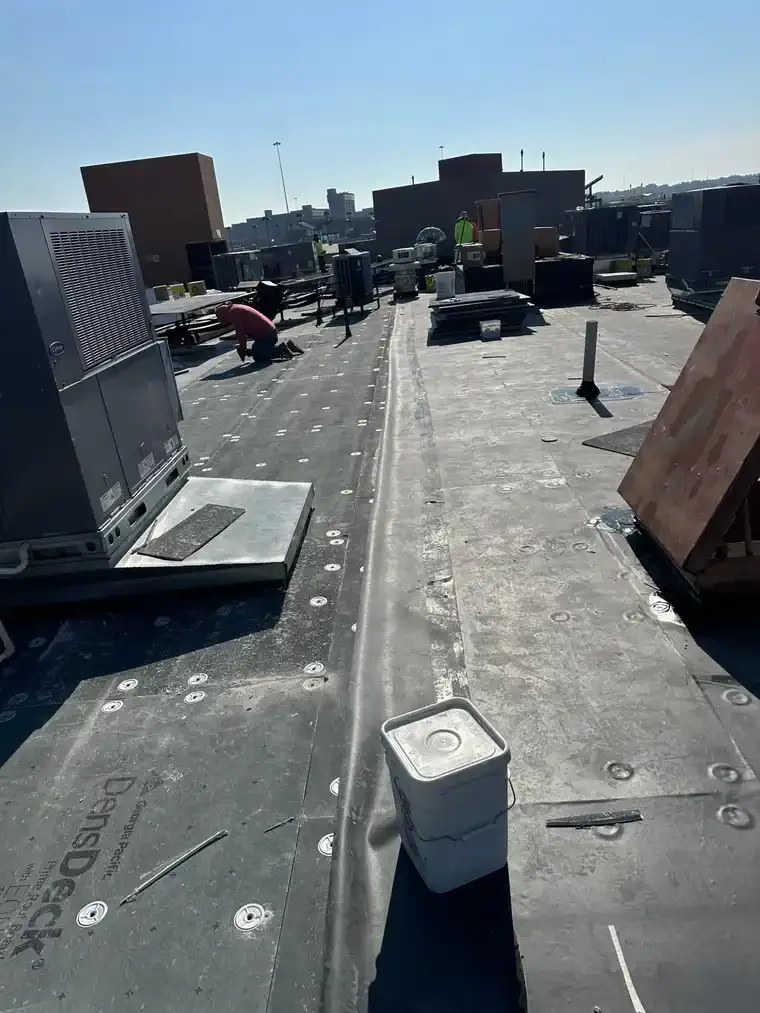
Wind Damage Roof Repair in Denton, TX
A loose edge, displaced cap, or new interior mark belongs on the same inspection map, but each is a separate observation. In Denton, TX, the first repair decision turns on what moved, where water entered, and whether the roof can stay protected while a permanent scope is prepared. Photograph the roof area from a safe position. Add the inspection date, windward side if known, and the location of any interior report.
Wind can affect perimeter details, metal edge, flashing, rooftop equipment, and membrane attachment in different ways. A commercial roof inspection records those conditions without treating a loose component as proof of system-wide failure. We identify active exposure first, then separate temporary protection from repair work that can be priced and checked.
Map What Moved
Start at roof edges, corners, penetrations, transitions, and exposed metal. Record open seams, displaced coping, pulled fasteners, lifted flashing, fractured sealant, or debris impact. Mark the size and boundary of each affected area. A roof plan keeps photographs tied to specific locations rather than a general label such as wind damage.
Check interior reports against the roof map. Water may travel under a membrane or along a deck before appearing indoors. A ceiling stain therefore identifies a concern, not necessarily the entry point. Record the reported time, room, and any active drip separately from the exterior finding. An infrared moisture survey may help select confirmation locations when the assembly and field conditions support useful readings.
For a metal edge or coping condition, document the attachment, adjoining membrane, and termination before deciding whether to reset, replace, or extend the repair boundary. The edge metal and coping review can distinguish perimeter work from a field membrane patch. Keep concealed conditions listed as open questions until access or testing resolves them.
Limit Active Exposure
When water is entering, identify the affected room and protect equipment, inventory, and occupied areas under the owner's direction. On the roof, use only a temporary measure suited to the accessible assembly and current conditions. Record where it was placed, who will check it, and what permanent work remains. A temporary patch should not disappear into the final repair price.
Denton's normal climate record includes substantial annual precipitation and warm summer air temperatures. Those averages help frame scheduling questions, but they do not tell us whether a particular roof was damaged or when a safe inspection can occur. At a building near the Krum service area, access still depends on the actual property contact, roof rules, and the weather on the visit date.
Loop 288 and US 380 are identified in city planning materials as transportation corridors relevant to access and development. Their status does not predict a crew's arrival time. Confirm current travel conditions, loading access, tenant hours, and roof entry instructions with the site contact before setting a repair window.
Set a Defensible Repair Line
A localized repair may fit when the displaced component is isolated, nearby material remains serviceable, and a compatible tie-in can be made. A broader scope deserves review if attachment failure repeats across separate roof areas, multiple transitions have opened, or moisture findings extend beyond the visible breach. State the evidence for each option. Do not price replacement solely from a storm report. A tornado-damage review also separates event context from property findings, while heat and UV repair planning addresses a different set of exposure questions.
For a membrane opening, document the sheet type when records or field identification support it, the prepared area, patch dimensions, seam direction, and any matching accessory. For sheet metal, record profile, finish, fastener type where visible, and how replacement will preserve drainage. The commercial roof repair scope should name the limits, preparation, materials, occupied-area controls, and closeout checks.
If the condition reaches insulation or deck, mark the affected boundary and explain what needs confirmation before quantities are final. A replacement alternative should remain distinct from an emergency stabilization line. Matching roof area, exclusions, access assumptions, and temporary protection across bids makes the decision easier to review.
Use Denton Context Carefully
The National Weather Service maintains Denton County tornado climatology with reported events and summaries by year, rating, intensity, and month. That history explains why owners may want a dated post-event roof record. It does not establish that wind damaged a named property. The condition review must still identify the actual edge, seam, or penetration and compare it with prior photographs.
Denton's Westpark district sits north of Airport Road. City materials describe infrastructure investment intended to encourage development there. Those planning details can orient a site discussion, but they do not identify a roof assembly or condition. Argyle is another nearby municipality, but the roof decision remains tied to its own assembly and site contact.
Keep local context out of the repair diagnosis unless a property-specific observation supports the connection. A storm record can set the inspection date and documentation need. It cannot substitute for seam checks, attachment review, moisture confirmation, or a defined repair boundary.
Sequence the Work
Set the work sequence around active leaks, roof access, tenant activity, and any other trade using the same area. Confirm who may shut down equipment, move stored materials, or authorize a test opening. If the building remains occupied, identify noise, odor, fire-watch, and temporary weather protection needs before mobilization. The access record belongs with the scope version, not in a later email alone.
Cost changes with the repair boundary, substrate condition, edge geometry, material compatibility, equipment coordination, and safe access. Timing can change when concealed damage appears or weather prevents surface preparation. State the assumptions that could revise quantities. If the inspection excludes a locked zone or unsafe surface, list that limit and the follow-up required.
Our emergency crew can be reached day or night, including weekends and holidays. Immediate stabilization and permanent repair are different decisions. The owner should see which items protect operations now, which restore the roof assembly, and which remain subject to confirmation before a capital commitment.
Keep the Event File Usable
Retain the dated roof map, overview and detail photographs, interior report, temporary-protection records, repair boundary, product information, exclusions, and closeout images together. Mark each photograph with the roof area and view direction. Record what was observed, what was repaired, and what could not be confirmed during access.
For an insurance review, organize the event date supplied by the owner, inspection date, affected areas, repair invoices, and photographs without converting a regional weather record into proof of property damage. Our claim documentation support can help assemble a condition record and repair scope. Coverage and causation remain decisions for the parties reviewing the actual policy and evidence.
After completion, compare the finished work with the authorized scope version. Photograph the tie-in and any adjacent area that remained unchanged. Keep open items visible so the next inspection can distinguish a new condition from the earlier wind event.
Commercial Roofing Questions
Which roof photos help define wind-related repair work?
A roof map, wide view, close detail, and matching interior report are useful. Label each image with its location and date, then keep temporary protection separate from permanent work.
Does a lifted edge mean the whole roof attachment failed?
One observation does not answer that. We check adjoining perimeter sections, fasteners or attachment details, transitions, and available records before setting the repair boundary.
When can a temporary patch remain in place?
The assembly, weather, access, and owner requirements control the temporary measure. We record its location and follow-up check, then scope a compatible permanent correction.
What changes the repair cost after wind exposure?
The affected area, material availability, concealed substrate, edge access, equipment conflicts, and occupied-building controls can change labor and sequencing. Those assumptions should be listed.
How should a Denton owner compare repair bids?
Use the same roof areas, access limits, exclusions, temporary measures, and closeout requirements. Keep each contractor's repair boundary and unresolved conditions visible beside the price.