
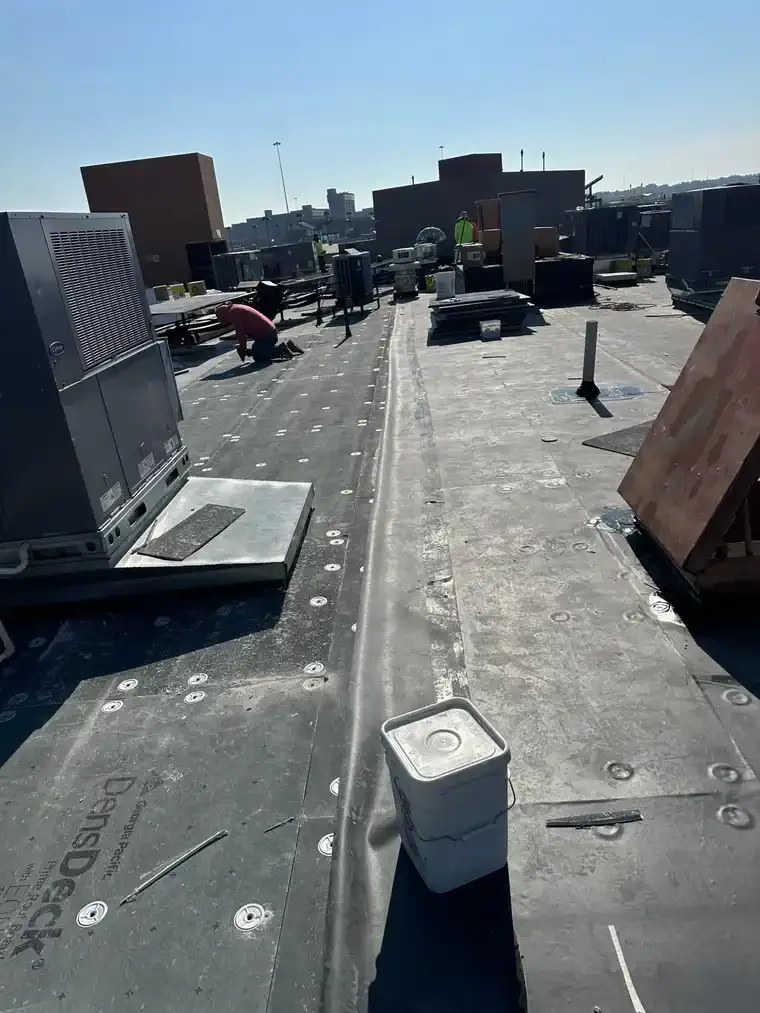
Tornado Damage Roof Repair in Denton, TX
A reported tornado date sets the inspection window, not the repair boundary. In Denton, TX, record each displaced edge, opening, impact mark, and interior water report by roof area. Photograph the condition before cleanup when the site authority allows it. Keep the owner-reported event time separate from the inspection date, and record which sections remain unsafe or inaccessible.
Wind pressure, debris impact, rain entry, and response activity can affect different parts of an assembly. A roof-wide replacement should not be inferred from an event summary. The storm damage assessment maps observed conditions, identifies temporary exposure, and lists what needs confirmation before a permanent scope is priced.
Confirm the Site Is Ready for Inspection
Before roof access, confirm release by the authority controlling the scene and approval from the property owner. Ask which roof zones are restricted, whether utilities or equipment remain unsafe, and who can authorize temporary protection. Record the access record and named site role, not private personal details in public copy. Coordinate with facility operations before entering occupied areas.
From a safe location, document loose metal, displaced coping, punctures, open seams, damaged curbs, debris, and interior reports. Do not walk on a wet, unstable, or debris-covered surface without an approved safety plan. A commercial inspection can distinguish reviewed areas from excluded sections and identify the next safe confirmation step.
If the building is open, protect occupants and equipment under the owner's direction. Mark the affected room and whether water is active. The roof map should connect interior reports with exterior observations without assuming the nearest roof detail is the entry point.
Separate Displacement from Impact
At the perimeter, examine edge metal, coping, fascia, fasteners, and membrane termination. In the field, map seams, punctures, tears, and debris strikes. At rooftop equipment, record moved supports or damaged lines without adjusting another trade's equipment. Photograph each item with enough surrounding detail to find it again. A single displaced component does not establish the condition of adjacent areas.
Check penetrations, skylights, drains, and wall transitions. Water can enter at an opening and travel beneath the roof before appearing inside. If a transition is open, a flashing repair review can define the interface separately. For a split membrane seam, seam failure repair addresses compatible preparation and tie-in.
Compare the current map with prior inspection photos and repair history. Record any pre-existing condition that appears in earlier records, and any section with no prior image. That distinction matters for a property decision and for claim review.
Protect the Building While Scope Is Prepared
Where active exposure remains, define a temporary cover or interior protection with the site contact. Record its location, materials, attachment method, inspection interval, and removal plan. Keep the temporary action out of the permanent repair quantity. If a puncture or opening is visible, a puncture repair assessment can distinguish that sheet correction from edge or seam work.
Our response line is available overnight, on weekends, and through holidays. Arrival and access still depend on scene release, property authorization, route conditions, and safe roof entry. State those prerequisites rather than promising a schedule before they are confirmed. If the roof is unsafe, document the restriction and protect interior operations from the approved side.
Temporary measures can change the surface or obscure a detail. Photograph the original condition before placement and the protected condition afterward. The permanent inspection should identify what must be reopened or retested to confirm the assembly.
Use Denton County Records as Context
The National Weather Service publishes tornado climatology for Denton County, with reports and summaries by year, rating, intensity, and month. That record can help an owner maintain a regional event file. It cannot establish damage at an individual building. Tie each repair decision to dated photographs, roof locations, and the assembly findings from that property.
Westpark TIRZ is one Denton district associated with public infrastructure investment and planned development. Those city materials do not list individual buildings or roof systems. For a property near Krum, confirm the owner contact, access authorization, and permit authority from the actual address before an inspection.
The NWS Denton table records annual precipitation of 38.44 inches and midsummer mean highs near 96°F. These are climate normals, not a wind measurement at a roof or evidence of damage from one event. Use current site observations and owner records to establish the scope. Keep regional context out of the causal conclusion.
Compare Repair with Broader Work
A localized repair may fit when damage is bounded, adjacent material remains sound, and a compatible detail can restore the assembly. A larger area warrants review when attachment loss repeats, multiple roof zones are open, insulation is wet, or the deck needs evaluation. State which observations support each option and which quantities remain assumptions.
Cost and duration depend on roof area, access, debris handling, material availability, occupied operations, testing, and the number of trades involved. Compare the same roof zones and exclusions across bids. Keep emergency stabilization separate from replacement planning. If an opening remains active, a permanent or temporary emergency repair should define its own boundary and closeout check.
For a property near Loop 288 or US 380, confirm current road work and the site's delivery entrance before scheduling. City planning identifies these corridors as relevant to access and development, but current travel and site entry must be checked for the actual visit. Add delivery limits, debris staging, and the person who can approve a field change to the access plan. Those details can change labor sequence even when the repair boundary stays the same. If equipment needs to be shut down, list the responsible trade and notice period before setting a start date. Name who receives the completed image set and who confirms interior notifications are closed. Carry any restricted access forward as an unresolved item.
Keep the Event File Reviewable
Keep the owner's reported event date, official release, inspection date, roof map, wide and close photographs, temporary work records, repair boundary, product information, exclusions, and completed-work images together. Mark what was visible and what remained concealed. If test openings were used, map their locations and document restoration.
Our claim documentation support can organize the condition record and repair scope. It does not decide coverage or cause. Those conclusions depend on the policy, investigation, and evidence reviewed by the parties handling the claim.
After completion, compare the final scope version with the installed work. Photograph each repaired edge, seam, penetration, and impacted zone before access changes. Carry unresolved items forward with the next inspection date so a later leak or repair can be compared with the documented tornado review.
Commercial Roofing Questions
Does county tornado history show that a roof was damaged?
No. Regional records provide event context. A property assessment needs its own inspection date, roof map, photographs, assembly review, and any approved testing.
Can temporary protection be installed before the full estimate?
It can be scoped separately when access is released and the owner authorizes the method. Record the protected area, inspection interval, and permanent work still required.
Should an interior leak be assigned to the nearest roof opening?
Not without tracing the water path. Compare interior reports with seams, penetrations, edges, and any moisture confirmation before setting the boundary.
What separates a repair from replacement after a tornado?
The mapped extent, attachment condition, wet materials, deck findings, and ability to make compatible tie-ins guide the choice. Keep unconfirmed quantities visible.
What dates belong in the post-event file?
Keep the owner-reported event date, scene release, inspection date, temporary work dates, and closeout date distinct. The sequence helps a reviewer follow the record.