
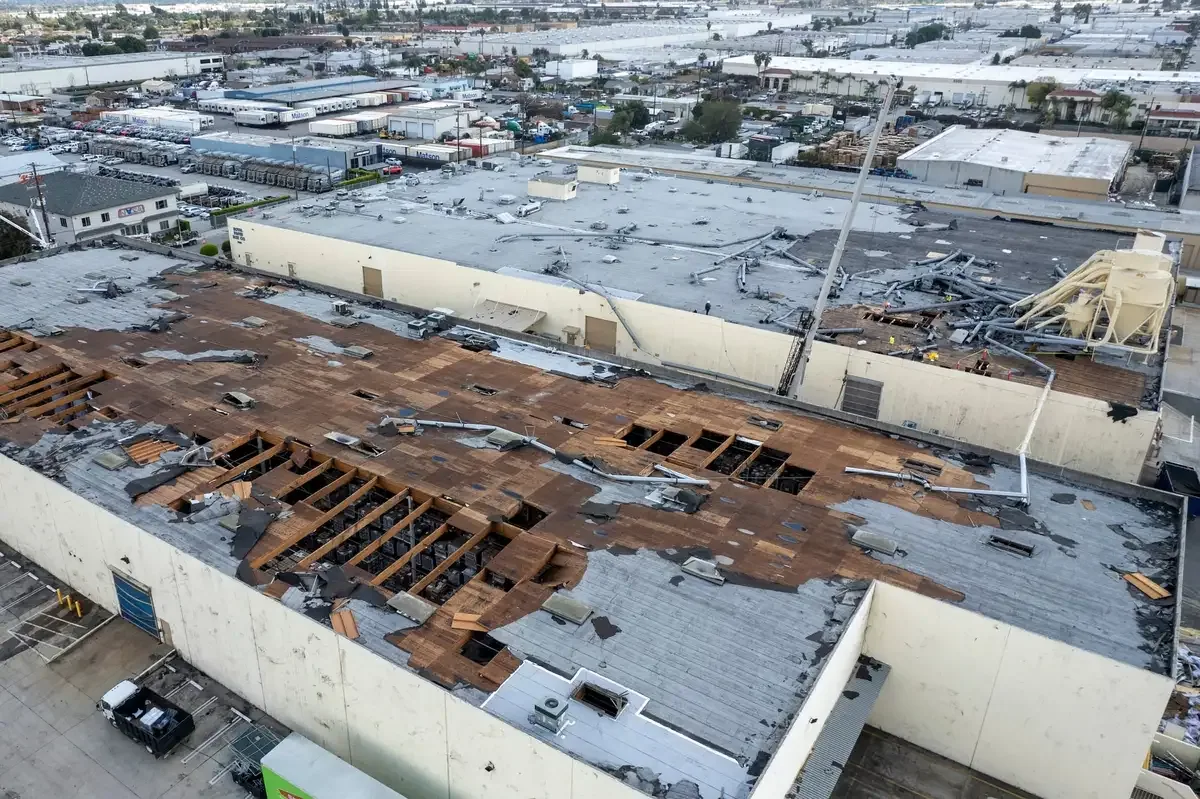
Storm Damage Roof Repair in Denton, TX
After severe weather, preserve the roof condition before cleanup changes the evidence. In Denton, TX, the first record should identify the date, roof area, visible opening, displaced material, and any active water. The National Weather Service maintains tornado climatology for Denton County, but regional history does not prove damage at a specific building. We separate observed impact from suspected cause, protect active openings when needed, and define what must be inspected before permanent repair. A commercial roof inspection sets that record.
Control Active Water First
Begin with interior protection and safe access. Identify affected rooms, equipment, inventory, and occupied areas below the roof. If water is entering, place temporary protection where it can be installed safely. Record the location and limits of that measure. A temporary seal or dry-in is not the final correction, and its inspection trigger should be stated. Do not send staff onto a roof during unsafe wind, lightning, or unstable conditions.
The first repair scope should distinguish what can be seen from what remains concealed. A lifted edge, punctured membrane, damaged curb flashing, or displaced metal needs a separate location and photograph. Water may travel before appearing indoors. We map the visible point, then inspect the connected assembly to determine whether insulation, deck, or adjacent details need review. The record should retain the initial condition and each follow-up action.
Build a Dated Damage Record
Photograph the full roof area and close details before debris removal where it is safe. Record the inspection date, weather report provided by the owner, access limits, and whether temporary work has already occurred. Mark each observation on a roof plan. Do not combine separate defects into one general storm line. A seam opening, impact mark, puncture, and wet interior may have different causes and repair requirements.
Denton County's tornado climatology covers reported events over a long historical period, but it cannot identify the event or damage at an individual property. The current roof tells us what was observed. For a building near Westpark, record the actual assembly and operational access rather than assuming that an industrial location predicts roof construction. The same rule applies downtown, where Downtown TIRZ is a redevelopment area, not a building-condition record.
Test the Suspect Areas
Inspect the membrane, seams, perimeter attachment, edge metal, penetrations, drains, and rooftop equipment. Look for displaced components, fresh openings, scrape marks, loose fasteners, and changes around curbs. Compare suspect areas with adjacent undamaged roof sections. A visual pattern may guide testing, but it does not establish concealed moisture or deck condition. Use test cuts or other methods where the result will change the repair boundary.
If moisture is suspected below the surface, a moisture survey can help select locations under suitable conditions. The report should state the method, conditions, and confirmation needed. If wind has affected edges or transitions, a wind damage review can separate localized repair from broader attachment concerns. For suspected membrane punctures, identify the roof zone and material before pricing a patch.
Write the Permanent Repair Boundary
Define the exact roof areas, materials, preparation, flashing transitions, and closeout photographs included in the permanent repair. State whether wet insulation or damaged deck is included, excluded, or subject to an allowance with written approval. List the condition that would change the scope. An owner should not have to infer whether a proposal covers only the visible hole or the surrounding assembly that failed.
Repair sequencing may depend on access near Loop 288 or US 380, but a corridor reference does not tell us current traffic or project status. Confirm delivery routes and gates with the property contact. If a roof is above active operations, establish protection and work hours before opening the assembly. A defined repair line can be compared with broader replacement when damage spans multiple roof zones.
Scope control is especially useful when several trades are involved. Record whether HVAC service, electrical checks, interior drying, or tenant protection must occur before the roofing crew returns. Identify the person who can authorize concealed-condition work and the record required for approval. If the roof opening exposes damaged insulation, preserve its mapped location and quantity. That information supports a revised scope without changing the original storm observations.
Compare Repair With Broader Replacement
A repair can fit when the affected area is localized, the surrounding assembly remains serviceable, and the cause can be corrected. Repeated failures, widespread moisture, loose attachment, or deck concerns may justify a larger investigation. We show those findings separately rather than converting a storm call into an automatic replacement recommendation. The owner receives the condition, evidence, uncertainty, and cost drivers behind each option.
When damage crosses multiple areas, compare the repair plan with a replacement scope and a condition report. Include temporary protection, removal, disposal, substrate correction, tie-ins, and operating constraints where they apply. The Denton climate normals include substantial annual precipitation, which is planning context only. The inspection date and actual moisture evidence remain the basis for the roof decision.
Close the Event With Clear Records
Keep initial photographs, test locations, temporary work, approvals, permanent repair details, and after photographs together. The closeout should list any open area and the next action required. If the owner is evaluating claim documentation, preserve the inspection date and scope version. A roof record can support a review, but the property owner and insurer determine policy coverage and claim decisions. We do not substitute a repair opinion for a coverage decision.
For service planning near Krum or Lewisville, confirm the property jurisdiction, access contact, and delivery route. The page should not turn regional weather or a town name into a damage statement. Each building needs its own review. The final record shows what was visible, what testing confirmed, what work was authorized, and which conditions remain outside the repaired boundary.
Keep replacement material samples or product identifiers with the closeout when compatibility affects a future repair. Label each photo by roof area and direction. A later leak report can then be compared with the same seam, curb, or perimeter detail instead of being treated as a new condition without context.
We also list roof zones that were not accessible during the first visit. A second inspection can close those gaps after conditions are safe and the owner grants access.
Commercial Roofing Questions
What should the owner document before cleanup?
Photograph visible openings, displaced materials, interior water, and the affected roof zones when access is safe. Record the inspection date and any temporary protection already installed. We keep observations separate from suspected causes and record areas that could not be reached.
Does a county tornado record prove storm damage at my building?
No. Regional climatology describes reported events, not the condition of a specific roof. We inspect the assembly, map observed impact, and use testing where it changes the repair decision.
Can temporary protection remain as the repair?
A temporary measure controls immediate exposure but may not restore the assembly. We identify its boundary, limitations, and follow-up trigger, then write a permanent scope after the affected material and adjacent details are reviewed.
When does storm work require a broader roof review?
Multiple openings, repeated edge movement, moisture beyond the visible area, or deck concerns can widen the review. We map each finding and compare repair with replacement only when the evidence supports that decision.
Will a repair report settle an insurance claim?
The report can document observations, photographs, tests, and repair work. Coverage is determined under the policy by the owner and insurer. We keep the roof findings factual and do not present a contractor assessment as a coverage ruling.