
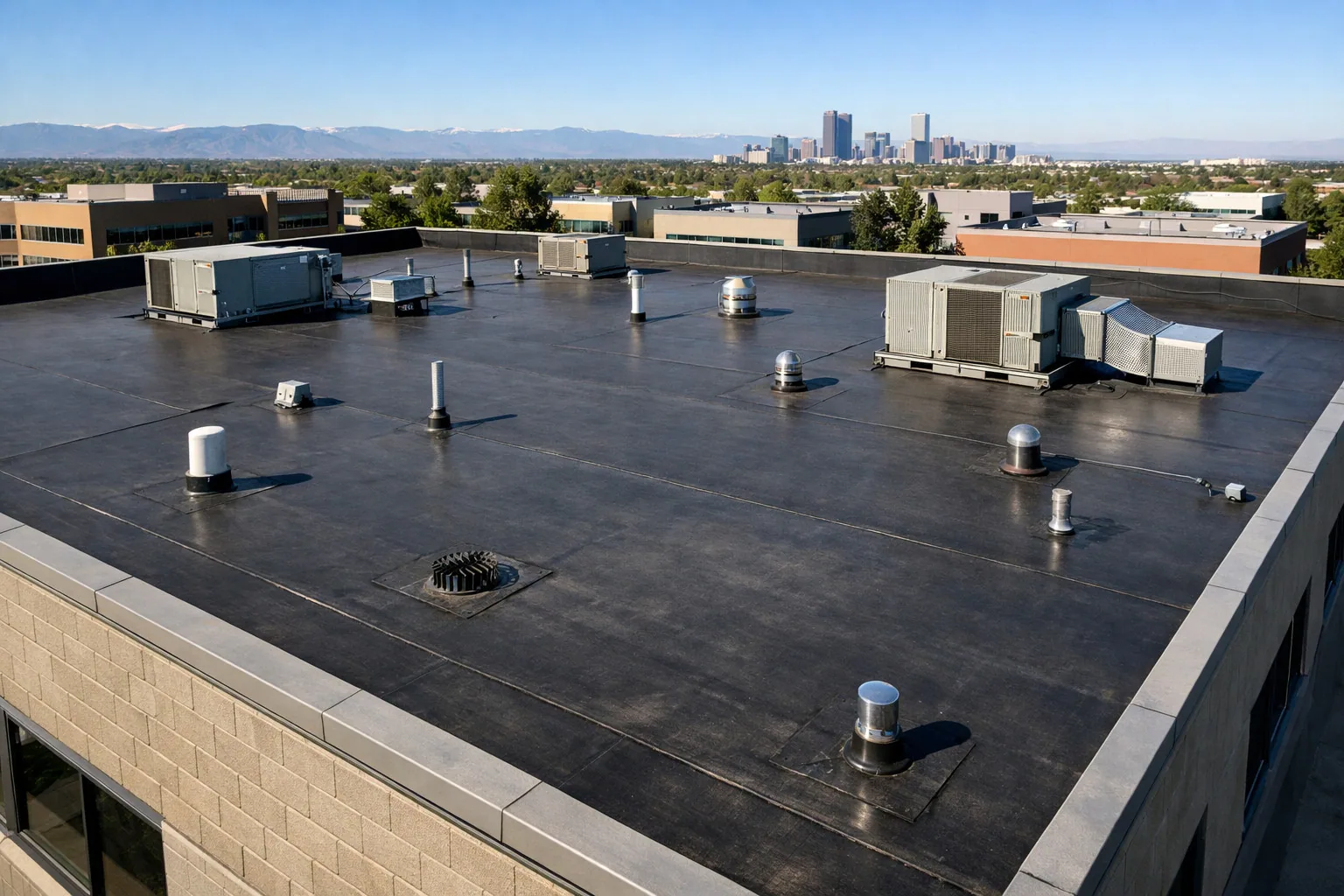
EPDM Roofing in Denton, TX
A dark seam at a rooftop unit is an observation, not a diagnosis. For a Denton commercial roof, the record should identify the EPDM sheet, seam direction, nearby flashing, and last known repair. The owner can then compare a local repair with broader work using the same roof area and inspection date.
EPDM is a flexible synthetic-rubber membrane used in low-slope assemblies. Its condition depends on the sheet, seam method, attachment, insulation, drainage, and transitions. We document those pieces before recommending work. A commercial roof inspection can establish the baseline and limits of the review.
Identify the Sheet and Seam
First establish what is on the roof. Review closeout records, prior scopes, product labels, repair invoices, and available warranty documents. Record which areas are confirmed EPDM and which remain unverified. A building may contain different roof phases, overlays, or transitions. Do not assume one detail describes the full roof.
EPDM seams may use tape, adhesive, or another specified joining method. The correct repair depends on the existing system and approved preparation. Inspect a representative seam for edge lift, contamination, wrinkles, or an earlier patch. Record whether the defect is isolated or appears along a longer run. Keep photographs tied to the roof map and date.
Where identification is uncertain, separate the observation from the conclusion. A small confirmation opening or manufacturer review may be needed before setting a permanent scope. The TPO system comparison and PVC membrane review can help frame alternate assemblies, but material selection still follows the building, design, and owner requirements.
Trace Water at the Seams
At a seam, look for separation, displaced tape, open corners, or a repair that ends before reaching sound membrane. Check nearby penetrations and changes in plane. Water may travel below the visible opening, so the interior leak location does not by itself identify the roof defect.
For each suspected entry point, record the exterior condition, interior report, weather timing, and any prior repair. Test only where the method is compatible with the existing membrane and safe access is available. If moisture extends beyond the visible area, mark the boundary for further evaluation rather than enlarging a patch by guesswork. An infrared moisture survey can help select locations for confirmation when the assembly and conditions support useful readings.
A commercial roof repair scope should state the preparation, membrane compatibility, seam treatment, and closeout record. It should also identify any concealed condition that remains outside the repair line.
Inspect Flashings and Penetrations
Field sheet and flashing details work together. Review pipe boots, equipment curbs, drains, parapets, edge metal, and expansion transitions. Look for unsupported corners, loose terminations, open laps, or sealant used where a system detail calls for another method. Photograph the transition from enough distance to show its place on the roof, then capture the close condition.
Mechanical equipment changes access and may conceal the path of water. Record the curb perimeter, nearby seams, pipe supports, and any service work that could affect the membrane. A curb and support review helps define the interface between roofing and equipment trades. Confirm who will disconnect, move, protect, and reset equipment before pricing those tasks.
When repair access is limited, list the restriction and its effect on the inspection. Do not describe an inaccessible area as sound. The owner can authorize a follow-up visit or include the uncertainty in a bid comparison.
Check Drainage and Roof Movement
Map drains, scuppers, overflows, and persistent low areas. Record blockage, loose strainers, ponding, or a slope change that affects the repair. Standing water can complicate access and hide seam conditions. It does not establish the cause of a leak or prove that the membrane must be replaced.
EPDM accommodates movement differently from a rigid surface, but the assembly still needs compatible attachment and sound transitions. Record wrinkles, bridging, membrane pullback, and stress at corners. Compare current conditions with earlier photographs when available. For a drainage concern, a drainage assessment can separate maintenance items from work that changes roof slope or drain height.
Record what was dry, wet, or inaccessible on the inspection date. Denton climate normals include substantial annual precipitation and hot summer temperatures; those regional figures frame planning only. They do not measure a roof surface or show whether a particular seam has failed.
Compare Repair and Replacement
A localized repair is easier to defend when the defect has a clear boundary, the surrounding sheet is sound, and compatible material is available. A broader scope may be appropriate when seams fail in several areas, prior patches repeat, or concealed moisture changes the extent of work. State the evidence supporting each option and what would change the recommendation.
For a larger project, compare recover and replacement only after reviewing layers, deck, insulation, attachment, drainage, edge height, and code path. Document any test openings and restoration. A replacement scope should define tear-off limits, protection, temporary dry-in, detail work, and closeout records. Keep alternates separate so bids can be compared on equal roof areas and assumptions.
Denton’s development-district materials describe Westpark TIRZ as an industrial district north of Airport Road and record public infrastructure investment intended to support development. This is neighborhood context only; a project scope still comes from the building’s roof map and property records.
Plan Access and the Decision Date
Set the inspection date, access contact, occupied hours, and decision deadline before work is scheduled. For travel planning, Denton economic-development materials call out Loop 288 and US 380. Review current road notices and the property's own access rules before selecting a visit window; roadway context supplies no reliable ETA.
Krum is a nearby incorporated city, but city boundaries do not define service availability or travel time. Confirm the property address, access rules, and governing jurisdiction for each assignment. If a roof lies outside the main Denton work area, include drive time and mobilization assumptions in the proposal instead of burying them in the unit price.
For a proposed coating, overlay, or recover, confirm that the existing EPDM and underlying assembly meet the selected system requirements. Cleaning, adhesion testing, moisture limits, and manufacturer approval may affect eligibility. A coating scope should record these conditions before a coating is presented as an option.
Keep the Closeout File Usable
Closeout should make the work traceable. Retain the roof map, inspection date, scope version, access records, product and installation records, daily photographs, seam checks, exclusions, and open items. Identify which observations were confirmed and which remain unresolved. Keep warranty correspondence with the project record without treating a document as proof that every condition is covered.
After a repair, compare the completed work with the agreed repair line. Photograph the prepared surface, finished seam, flashing transition, and surrounding roof area. Record any condition that prevented the planned detail. If a leak returns, the owner can compare the new report with the original location and closeout photos.
For properties near Krum or elsewhere in Denton County, use the same record standard. A city name helps identify the assignment; it does not replace property-specific inspection, access approval, or permit review. The next decision should follow the observed condition, not an assumption based on location or membrane age.
Commercial Roofing Questions
When can an EPDM seam be repaired instead of replaced?
A repair may fit when the defect is bounded, the surrounding sheet is sound, and compatible preparation and materials are available. Widespread seam failure or concealed moisture may require a broader scope.
How should a repeat leak be investigated?
Map the interior report and inspect related seams, penetrations, drainage, and transitions. Compare earlier photos and record what remains concealed before extending a patch.
Can EPDM be coated?
Possibly, but eligibility depends on the exact membrane, preparation, adhesion testing, moisture condition, and selected coating requirements. Document those checks before pricing the work.
Does ponding water mean the EPDM roof has failed?
No. Record the location and duration, inspect drainage and nearby details, and evaluate the assembly. Ponding alone does not establish membrane failure or the cause of an interior leak.
What should an EPDM repair closeout include?
Keep the dated roof map, repair method, material records, preparation and seam photos, access records, exclusions, warranty file, and any follow-up item together.