
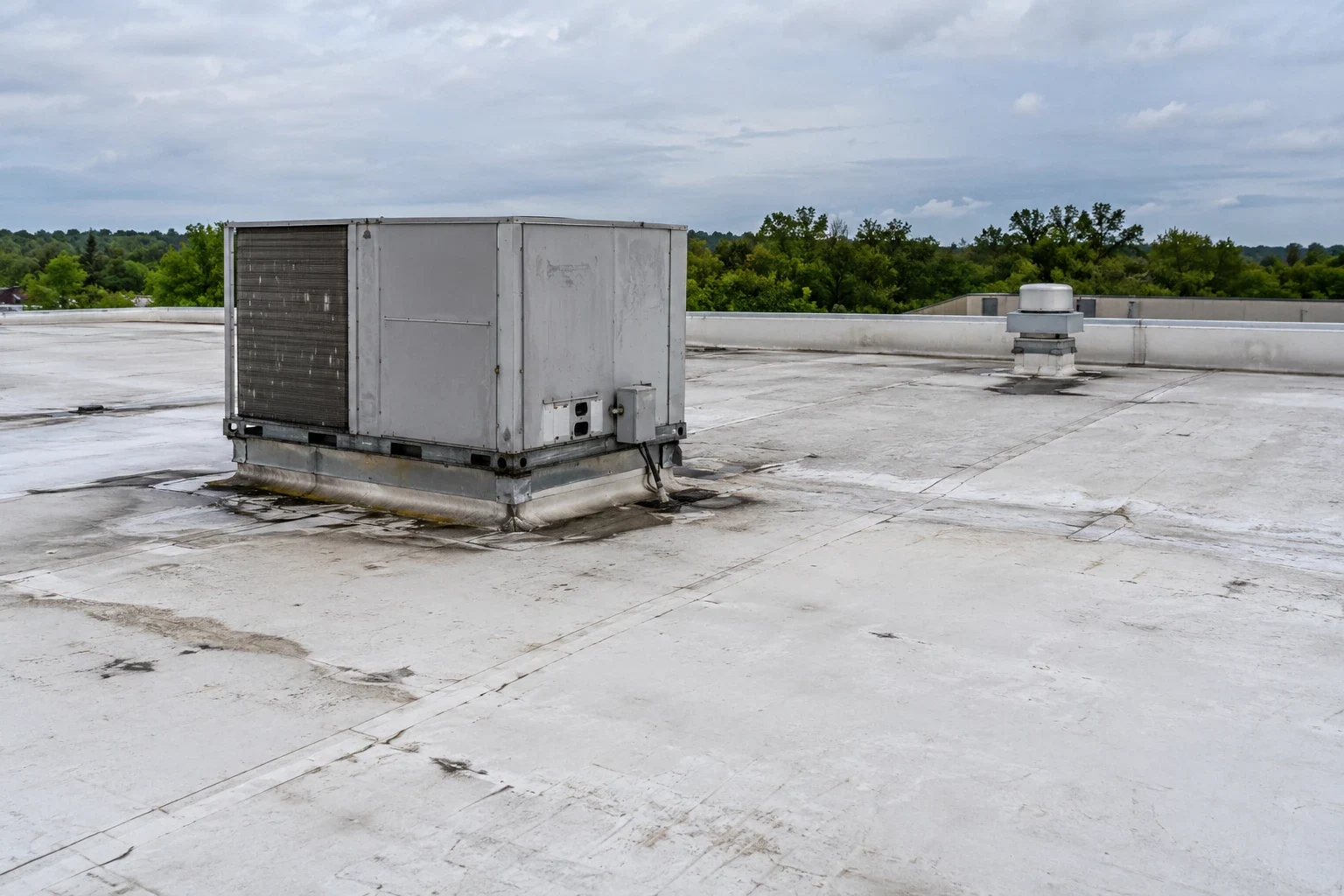
Distribution Center Roofing in Denton, TX
A dock door that must stay open changes the repair sequence. Record the affected roof area, inbound schedule, and the time when a receiving lane can be isolated. A distribution center in Denton may run several shifts, so the roof map should connect each leak or seam condition to the operation below it. That gives the owner a clear choice between a contained repair, a short protective measure, or an investigation before the next budget review.
Confirm the roof system and any later additions from records or field inspection. A commercial roof inspection can mark access limits, reported water entry, and areas that need testing.
Tie the Roof Map to Product Flow
Separate inbound docks, outbound staging, conveyor areas, cold rooms, and office sections on the roof plan. A condition over a sortation line can have a different operational consequence from one above an empty expansion bay. Mark the interior location, the roof area above it, and the date of the report. Keep a suspected water path distinct from the observed entry point until the inspection supports a connection.
Record shift changes, trailer movements, and areas where a lift or material drop would block circulation. The project file should show who approved the work window and how much notice the facility needs. A warehouse roof review covers storage-zone coordination; a distribution center may add conveyor clearances and tighter dock turnover.
Photograph drains, overflow paths, equipment curbs, and roof transitions that affect water flow. If an addition changed the drainage area, show that in the plan rather than treating the roof as one uninterrupted field. An outlet and scupper assessment can document maintenance observations separately from a slope or assembly change.
Review Dock and Conveyor Transitions
Inspect the roof edge above dock seals, canopies, conveyor openings, and wall transitions. Look for loose flashing, open seams, damaged fasteners, punctures, or earlier sealant work. Record the length and exact roof zone of each condition. A repair should state which detail is being corrected and what remains outside the work line. That boundary matters when several doors share the same canopy or parapet.
Confirm how a crew will reach the roof without crossing a live conveyor or stored product. Identify any rooftop unit shutdown, lockout, or escort process that the facility controls. If a water report appears after a washdown or temperature change, preserve the timing and interior observations. Identify the responsible trade where supports or penetrations interrupt the membrane.
For metal transitions, measure panel profile, fasteners, and edge details before ordering parts. For single-ply systems, confirm membrane type and compatible flashing. A TPO system review helps frame that question without assuming the installed assembly from the building use alone.
Compare Records with Field Conditions
Gather roof plans, submittals, warranty correspondence, repair tickets, and photographs from earlier projects. Mark confirmed sections and unknown materials. Distribution properties often add office pods, conveyors, or dock enclosures after the original roof. Those changes can create different attachment, flashing, and drainage details. Keep each phase visible in the report so a replacement allowance does not silently cover unreviewed construction.
Check seams, fasteners, plates, edge metal, penetrations, insulation transitions, and accessible deck conditions. If the assembly is concealed, name the test opening or manufacturer question needed to confirm it. Do not treat one sample as representative of every roof zone. A cold-storage roof evaluation may add vapor-control and temperature-transition questions where refrigerated areas connect to ordinary distribution space.
Where wet insulation or attachment remains uncertain, label the open question and price the investigation separately. A moisture survey can help select confirmation points when roof construction and conditions support useful readings. The report should state the method’s limits and how an opening will be restored.
Phase Work Around Shift Changes
Break the scope into roof zones that match the facility’s operating plan. State the dock or conveyor area affected, the protection method, and the point at which the facility can resume normal movement. A temporary dry-in is not the same as permanent repair. Give it an owner, a review date, and a trigger for returning to the roof.
Keep material staging, lift access, waste removal, and daily cleanup in the sequence. If the crew must work above active inventory, specify the interior protection and communication path. The facility should know which door or aisle will be restricted and when. For a broader program, the maintenance plan can schedule drains, seams, and flashing checks between capital projects.
Compare repair with recover or replacement only after the installed layers, attachment, drainage, and deck are reviewed. A recover comparison should document added assembly height and transitions at curbs and edges. Keep the alternatives on the same roof area and the same access assumptions.
Use Denton Development Context
Westpark appears in Denton's development material as an industrial district north of Airport Road. The city's stated use of infrastructure investment is to encourage development. A distribution team's delivery window, access gate, and staging area still require confirmation from the property contact; the district description does not supply those details.
A separate planning reference discusses a proposed Jim Christal Road link to I-35. Keep the proposal conditional until current project information confirms status. Denton also lists Downtown TIRZ as an active development district. Neither planning designation establishes the roof condition or building use at a specific parcel.
Regional climate normals can help frame seasonal scheduling, but do not establish whether a dock roof is ready for work. Check the current weather, surface condition, and material limits when setting a protection plan or cure window.
Set the Next Decision Date
Summarize the observed condition, the operation at risk, the work boundary, and the decision deadline. If the roof can be repaired in a contained area, show the evidence and exclusions. If broader moisture or attachment issues remain, identify the next test before pricing a full replacement. A replacement scope should include removal limits, temporary protection, dock coordination, and closeout records.
For work near Corinth, confirm the property jurisdiction and site contact before setting access or permit assumptions. The city name is useful for locating the project, but it does not establish contractor availability or a drive time.
Keep the photo log, scope version, roof-zone map, and operation records together. At closeout, record what was completed, what remained inaccessible, and who accepted any temporary condition. That file gives the next budget year a traceable starting point rather than a general roof-age estimate.
Commercial Roofing Questions
Can repairs be staged without stopping all outbound work?
The answer depends on roof access, interior exposure, and which doors or conveyor zones sit below the work. Mark the roof zone and any lane restriction first. Then agree on a shift window, protection method, and end-of-shift condition with the facility manager. The scope should identify the areas that remain open.
How should a roof leak above sortation be documented?
Record the time, operating conditions, interior location, and roof area directly above it. Photograph the membrane, seams, nearby curbs, and drainage path. Keep a suspected path separate from a confirmed entry detail until inspection or testing supports the connection.
When should a distribution center compare recover and replacement?
Compare those options after checking existing layers, moisture, attachment, deck, drainage, edge height, and equipment transitions. The report should show which facts are confirmed and which require an opening or design review. Price both options on matching areas and access terms.
What changes when cold storage shares the building?
Temperature transitions can affect vapor control, condensation review, and how work is sequenced at the boundary. Identify the refrigerated zone and its operating limits. Have the roof and mechanical records reviewed together before defining a repair or replacement detail.
Does the Westpark district description prove a roof or access condition?
No. Denton’s Westpark description is industrial-area context. The facility’s assembly, access rules, observed conditions, and installation records determine the project scope.