
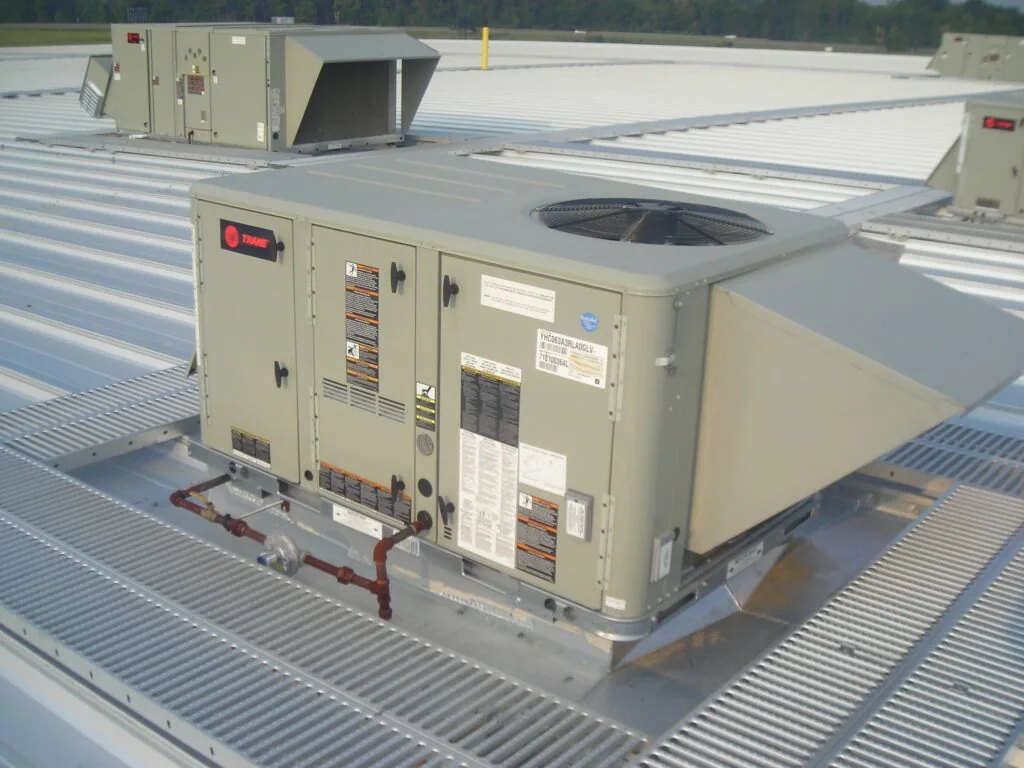
Rooftop Equipment Curb and Support Work in Denton, TX
A rooftop unit shifts the repair question from membrane alone to the curb, support, and roof assembly below it. At a Denton, TX commercial property, we record what is visible, identify how the unit bears on the structure, and check whether the flashing remains continuous. The scope separates the equipment connection from nearby roof conditions. A roof inspection can set that boundary before work is priced.
Vibration, service access, and repeated maintenance can disturb a curb over time. A fresh seal at the outer edge may hide a loose termination or movement below. We photograph the corners, fasteners, counterflashing, and adjacent seams, then compare them with the equipment and roof history. The owner receives an observed condition, an open question if one remains, and the next test or repair decision.
Trace the Load Into the Roof
A curb carries more than weather exposure. It supports equipment weight and transfers forces into the framing or deck. We review accessible attachment points, curb dimensions, support spacing, and visible deformation. Drawings can show the intended arrangement, but field conditions decide whether the installed detail matches. If a unit has moved or a support is bent, we document the location and involve the appropriate structural or mechanical professional before changing the load path.
Pipe stands, rails, sleepers, and supplemental frames may bear on different roof layers. A support that compresses insulation can leave a low area that retains water. A stand secured through the membrane can introduce a separate penetration detail. We map each condition rather than treating every support as one repair. A defined test or drawing review should resolve uncertainty before replacement.
If the surface has broken around an attachment, a repair assessment can separate membrane restoration from structural correction. The work order lists each trade boundary; roofing work does not imply that a unit, curb, or frame has been redesigned.
Inspect the Curb and Flashing Together
Water can enter where the curb meets the field membrane, at a corner fold, beneath counterflashing, or through an abandoned fastener. We check the full perimeter and inspect laps, sealant, metal terminations, and transitions to nearby penetrations. A bead of sealant is not a substitute for a compatible flashing detail. The repair must bond to a sound surface and remain accessible for future service.
TPO and PVC seams need preparation suited to the membrane. EPDM and modified bitumen use different materials and methods. We identify the installed system before choosing reinforcement, primer, flashing, or termination hardware. If the curb is corroded, loose, or too short for a durable tie-in, the estimate identifies that condition instead of burying it under a surface patch. A membrane-system review can help confirm compatibility where the roof records are incomplete.
Equipment replacement can change curb dimensions or connection locations. We compare the proposed unit with the existing opening before removal. A different footprint may require separate deck, curb, insulation, and membrane work. The owner can coordinate both trades around one approved detail.
Follow Water Beyond the Perimeter
A leak near a unit does not prove the curb is the entry point. Water may travel along a conduit, support rail, or insulation layer before reaching the interior. We compare the report location with roof-side staining, seam openings, drain paths, and any wet insulation found nearby. If the route is not visible, the report states whether monitoring, a controlled test, or a test opening would narrow the cause.
Multiple curbs can share a low area or interrupt the path to a drain. We map ponding and record the drain condition without assuming that equipment caused it. A drainage review can identify a blocked or damaged component, while a moisture survey may help select confirmation points when the roof and weather conditions support useful readings.
Keep defects separate in the estimate. Loose counterflashing, damaged membrane, and wet insulation may need different labor and approvals. If testing finds concealed damage, we pause at the approved boundary and show the added area before proceeding.
Plan Around Service Access
Mechanical equipment may need to remain available while roofing work proceeds. We coordinate the service window, shutdown authority, lifting plan, roof hatch, and path for materials with the site contact. The estimator records whether a unit must be isolated, protected, or moved by another contractor. Roofing labor does not include disconnecting or restarting mechanical equipment unless that work is expressly included and assigned to a qualified trade.
Work above an occupied floor needs a clear protection plan. We identify the area beneath the curb, control debris, and keep temporary openings weather-tight at each shift boundary. If a lift, crane, or delivery blocks a route, the property team confirms the location and timing. The crew records who authorized the access and who receives notice before the assembly is opened. For larger scopes, an occupied-building sequence can keep roof, tenant, and equipment decisions on the same schedule.
A maintenance technician should know when the membrane is ready for service traffic and which surfaces need protection. We identify any product-specific cure or exclusion period. The closeout records the equipment position and repaired detail so later service calls do not disturb a new termination.
Account for Denton Field Conditions
Denton’s July normal mean maximum is 95.9°F, while the city’s annual precipitation normal is 38.44 inches. Those climate records inform scheduling questions, not a conclusion about roof temperature, moisture, or curb failure. We check the actual surface, substrate, and product requirements on the work date. A repair that needs a dry, prepared surface should not be rushed because the calendar suggests a seasonal pattern.
Westpark TIRZ is an industrial district with infrastructure investment. Loading and equipment access may shape staging, so we confirm the route and work window with the site contact. Downtown TIRZ properties need their own access plan.
US 380 and Loop 288 are Denton transportation corridors. Confirm current access for each lift or delivery. For work near Krum or Corinth, we confirm the property jurisdiction and contact rather than carry a Denton permit assumption across a municipal line. A Krum service call and a Corinth service call receive separate access records.
Leave the Curb Detail Traceable
The proposal identifies roof area, curb or support, preparation, membrane work, metal work, and exclusions. Price equipment lifting separately when another trade controls it. If a concealed condition could change scope, state the approval point and evidence needed. A condition report keeps photographs and decisions with the roof record.
After work, we photograph the perimeter and tie-in, list materials, and identify adjacent items outside the approved scope. The record records whether another contractor moved the unit. If the curb still needs structural review, it remains an open action, not an implied roofing repair.
Send the equipment schedule, roof plan, prior repair records, and access contact. We will define the roofing boundary and identify any mechanical or structural decision needed before work.
Commercial Roofing Questions
Can a leaking curb be repaired without moving the unit?
Often, if the full perimeter can be reached and the curb is sound. We inspect the terminations and clearance before pricing. If equipment blocks access or the curb has failed, the estimate identifies the added mechanical or access work.
Who decides whether the equipment must be shut down?
The owner’s mechanical contact controls shutdown and restart. We coordinate the roofing window, identify exposure while the curb is open, and keep the roof detail separate from equipment work. The site contact approves access and any change that affects operations.
What causes water to appear near a rooftop unit?
Possible paths include failed flashing, a loose termination, a nearby seam, a damaged conduit detail, or water traveling through the assembly. We record what is visible and test where needed. The stain alone does not locate the opening.
Can a new HVAC unit use the existing curb?
That depends on dimensions, support, condition, and the mechanical manufacturer’s requirements. We compare the proposed footprint and roof opening before removal. A different curb or load may require structural and mechanical review in addition to the membrane tie-in.
What belongs in the curb repair closeout?
The closeout lists the curb perimeter, preparation, materials, photographs, and unresolved conditions. Record whether another trade moved the unit.