
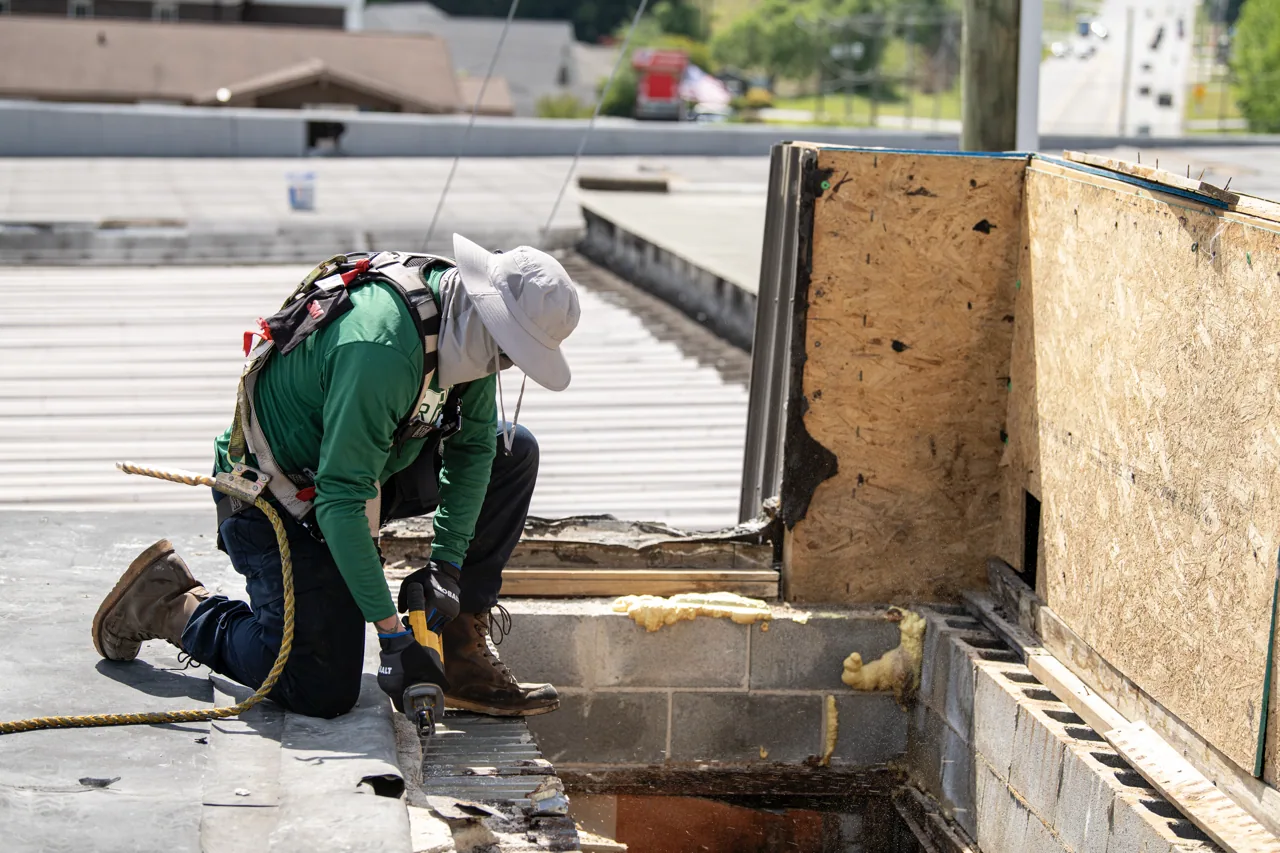
Occupied Building Reroofing in Denton, TX
The first decision is what can stay open, and what the roof record says must be protected. Commercial roofing in Denton, TX can proceed around an active property when access, noise, water protection, and work limits are set before materials arrive. We document the roof area, observed condition, occupied zones, and decision date. A commercial roof inspection establishes the starting point for the scope.
Occupied-building reroofing coordinates the roof crew with people using the building. It does not mean every entrance or operation remains unaffected. The owner chooses access limits and closures. Our scope identifies roofing work, temporary protection, daily handoffs, and decisions that could change cost or timing.
Set the Work Boundary Before Mobilization
Divide the roof into work areas that can be opened, made weather-tight, inspected, and returned to service in a planned sequence. Mark access routes, staging points, drains, hatches, equipment zones, and areas that must remain clear. The owner’s access contact confirms which doors, loading areas, and interior rooms are active during each phase.
Keep assumptions visible in the scope version. Record whether the crew can use an existing stair or ladder, whether a lift area needs reservation, and who can authorize a temporary closure. A condition report can separate the observed condition from items that need a later test or owner decision. The work boundary should be practical for both the roof and the operation below.
For multiple roof areas, use field names and limits that match the owner’s current plan. Keep the access instructions with the daily work log.
Plan a Weather-Tight Daily Handoff
Before each shift, agree how much roof can be opened and what condition must be reached before the crew leaves. The plan should identify temporary dry-in materials, the person who checks the area, and the contact who receives the end-of-day record. A roof opening left under temporary protection is still an active condition that needs a clear owner and follow-up time.
Record the area started, materials installed, work remaining, and any condition that changed the sequence. Add dated photographs where they clarify a seam, curb, drain, or temporary edge. If rain enters or interior protection is used, record the room, time, observed water path, and immediate response. The record helps the owner distinguish a new event from an earlier condition without deciding cause before inspection.
An emergency roof response may protect operations, but the permanent scope remains a separate decision. Record the temporary action and follow-up inspection.
Protect Interior Areas and Building Access
Identify sensitive rooms, production or service hours, tenant notices, and routes that cannot be blocked. The owner should name who can approve a room entry, equipment interruption, or changed delivery window. We coordinate roofing access and surface protection within the agreed scope; building staff retain control of interior operations and security.
For each phase, confirm where workers may enter, where materials can be staged, and which areas require a spotter or escort. Keep roof debris and tools away from drains and occupied areas. If a ceiling tile or interior finish must be checked, document who will arrange that access and how the finding will be reported.
A repair scope should identify a contact for changes. When an operation needs an unexpected quiet period or a route must remain open, record the effect on crew hours and weather exposure before shifting the work. A short access record can prevent a small operational change from becoming an undocumented scope change.
Compare Repair and Replacement Against the Decision Date
Occupied properties often need a choice between a defined repair and a larger roof project. Compare the observed condition, affected area, known moisture, and access cost with the owner’s budget year and operating calendar. Do not treat a visible patch as a full-assembly review. If the roof build-up is uncertain, identify the test or record needed before pricing a broader scope.
A replacement scope may require a longer work sequence and more interior coordination than a localized repair. A recover review must account for existing layers and applicable project requirements. We identify roof conditions and exclusions; the owner and design team compare options with their funding, schedule, and property requirements.
Set a decision point for concealed conditions. If removal reveals wet insulation, an unexpected deck condition, or a detail that differs from the drawings, stop at the agreed hold point. Photograph the area, record the measurement or test, and issue a written change option before work moves beyond the approved repair line.
Keep Changes and Notices Traceable
Give one person authority to approve field changes and define how a decision is recorded. The daily log should record the roof area, date, issue, proposed response, price or time effect, and approval status. Verbal direction can help crews protect a building, but it should be followed by a written record before permanent work changes the scope.
Coordinate resident or tenant notices with the property contact. State which area is affected, when access changes, what noise or lift activity is expected, and whom to contact if operations conflict. Do not promise a fixed completion time when weather, concealed conditions, or owner access can change the sequence. Update the schedule and notice when the scope version changes.
A maintenance plan can carry forward open roof items after the reroof. Keep the photo log, repair line, product records, warranty file, and access records together. The record should show which work was included and what remains outside the project.
Use Denton Context Without Assuming Site Conditions
The City identifies Loop 288 and US 380 as transportation corridors relevant to development and access planning. Current traffic, construction, and property access still need confirmation for the actual work date. We use the property contact’s delivery instructions rather than assume a route from a corridor name.
Westpark TIRZ is an approximately 800-acre industrial district north of Airport Road, described by the City in connection with infrastructure investment. That is district context. It does not establish a particular building’s roof type, condition, occupancy, or access rules. We inspect the actual roof and confirm the work boundary with the owner.
For a project in Krum or Corinth, confirm the governing jurisdiction and site contact before setting permit or access assumptions. Keep that check in the project file.
Close Each Phase With a Roof Record
At the end of a phase, compare the completed area with the work map and approved scope version. List open items, incomplete details, weather protection, and the next inspection point. Photograph completed transitions before equipment, walk pads, or later work restricts the view. Label images by roof area and date so the owner can locate them without guessing.
Before final closeout, review drains, edges, penetrations, access paths, and any locations repaired after the original condition survey. Record exclusions and areas not inspected. Provide product and warranty documents required by the contract, plus the final roof plan and contact for future access questions. A roof coating restoration may address a separate assembly question if added to scope.
Send the roof map, prior scopes, occupied-hours limits, and access contact. We will document the condition and phase boundary for owner review.
Commercial Roofing Questions
Can a commercial reroof keep the whole building open?
The owner sets access limits and any short closures before mobilization. The operating plan depends on the property and approved scope.
How is interior water protection handled?
Name the areas below active work, temporary protection, end-of-shift checks, and the contact for condition records.
What changes can affect the schedule?
Weather, concealed conditions, owner access, lift windows, or new repairs can change the sequence. Record the decision and timing effect before permanent scope changes.
Should we repair or replace before occupants return?
Compare observed condition, affected area, operating calendar, and budget year. Identify needed tests before selecting a broader scope.
What should the closeout package contain?
Keep the final roof map, scope version, repair log, dated photos, warranty documents, open items, and access contact together.