
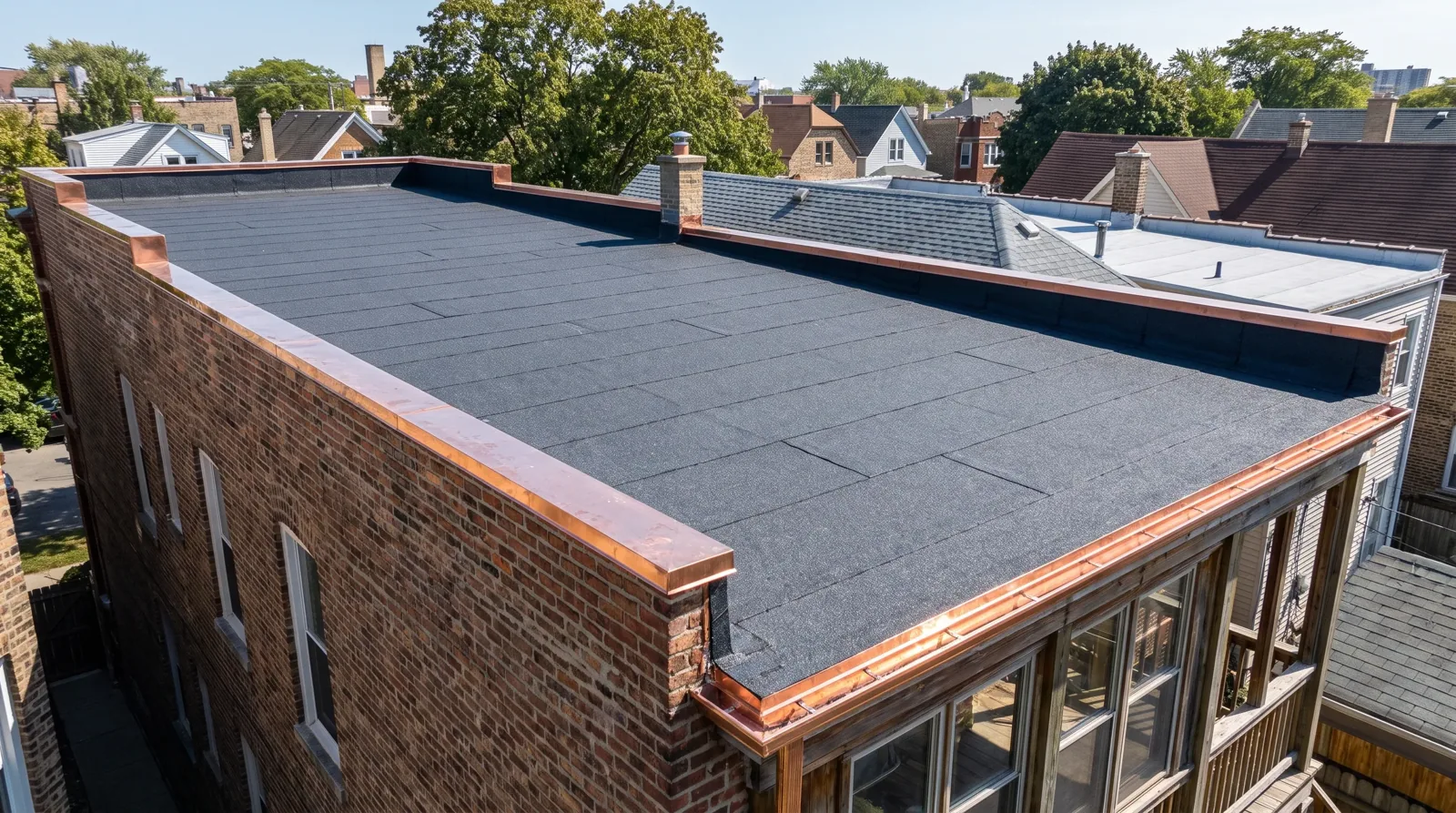
Membrane Puncture Roof Repair in Denton, TX
A puncture is a small opening with a potentially larger area to inspect. In Denton, TX, mark its exact roof zone, measure the visible damage, and photograph the surrounding membrane before cleanup. Foot traffic, dropped hardware, sharp debris, or equipment service can leave different marks. Record what is observed, who reported the activity, and whether water was active inside.
The repair boundary depends on the sheet, surface condition, substrate, and any moisture below it. A patch must bond or weld to sound compatible material. We inspect the puncture, nearby seams, traffic path, and penetrations before setting a repair line. A commercial roof repair assessment can separate the opening from other conditions in the same area.
Map the Puncture and Traffic Path
Record the opening's size, shape, and position relative to seams, drains, curbs, walk pads, and roof access. Photograph the puncturing object only if it remains safely available. Do not remove embedded material before documenting it. Record whether the membrane is cut, torn, crushed, abraded, or separated from its substrate. Those distinctions affect preparation.
Foot traffic can scuff the surface, press a sharp object into the sheet, or stress a seam near equipment. The route itself matters. Mark where technicians walk, where tools are staged, and whether protection is missing. A equipment curb and support review can identify trade interfaces when service work surrounds the damaged area.
Check the underside or interior only within the approved access plan. An indoor stain may align with the puncture, but water can move through the assembly before entering. A roof map and dated photo log keep those observations connected without assuming that one caused the other.
Check the Substrate and Nearby Seams
Inspect the membrane around the opening for wrinkles, pulled reinforcement, brittle edges, wetness, contamination, or prior patches. Look at adjacent laps and T-joints for a separate separation. If the puncture reaches insulation or deck, identify the limits that can be seen and list the test needed for concealed material. Do not widen an opening without approval and a restoration detail.
Moisture confirmation should be selected for the specific assembly. An infrared moisture survey may help locate test points when conditions support useful readings. Record the method, date, and areas it could not evaluate. If a seam has opened nearby, the seam failure scope should remain a distinct line unless inspection supports a combined repair.
When impact affects a roof walkway or access hatch, inspect the approach as well as the opening. A missing or displaced walk pad may explain repeated wear, but it does not prove the pad was the sole cause. Add the correction, any protection measure, and the permanent patch as separate decisions.
Match Materials and Preparation
Identify the membrane from records or an appropriate field check before selecting a patch. Clean and prepare the area under the approved system method. Specify material, overlap or weld, corner treatment, compatible primer or adhesive where required, and the inspection before the patch is covered or walked on. A surface that is wet or contaminated may need additional preparation.
For thermoplastic sheet, document the seam or patch process and the test area if the approved procedure calls for one. For EPDM or another elastomeric membrane, use compatible flashing components and a defined bond surface. Do not apply a generic coating as a substitute for a puncture repair. The TPO system and EPDM membrane have separate repair requirements.
Cost depends on patch size, access, substrate, material identification, test opening, and whether protection must be added for future traffic. If the roof has repeated cuts or broad wear, compare isolated repairs with a planned restoration scope. Keep the affected roof area and assumptions consistent between alternatives.
Coordinate Service Access
One Denton development area named in City materials is Westpark TIRZ. The planning record discusses public infrastructure and future investment there. For a roof visit, the property contact still sets staging and entry. The district label says nothing about the installed membrane, so identify the assembly from that building's records or field review.
Loop 288 and US 380 are identified in Denton's economic development plan as transportation corridors relevant to access and development. Check current traffic or construction before setting an arrival window. The Krum service area is nearby, but the municipal name does not establish access, permit requirements, or availability at a particular address.
The City also maintains a project page for Bonnie Brae Street improvements from Scripture Street to Loop 288. Construction timing can change. Confirm current conditions for any site visit and record the route with the access contact. None of these corridor facts indicates roof damage or a defect location.
Prevent Another Opening
For an occupied building, coordinate the repair with maintenance staff, equipment vendors, and any tenant using the affected area. Identify walk paths, tool staging, and restrictions on open flames or adhesives if relevant to the system. Set a plan for temporary water protection, interior notifications, and the return visit that confirms the patch remains intact.
Our response line is available overnight, on weekends, and holidays. If water is entering, a temporary measure can limit immediate exposure while a permanent method is selected. Document the temporary material and removal plan. Weather, drying time, access, or an unresolved substrate can change the permanent work date.
A maintenance plan can record walk-pad condition, equipment routes, drain checks, and repeat puncture locations. This helps the owner decide whether to add protection or change access practices rather than treating each opening as unrelated.
Retain the Repair Evidence
The closeout file should include the roof map, puncture dimensions, inspection date, photographs before and after preparation, material identification, patch limits, test records, access record, and exclusions. Label the repaired area so a later inspection can find it without relying on memory. Record any concealed condition that remains unresolved.
For an event-related opening, keep the owner's report date separate from the inspection date. The National Weather Service publishes Denton County tornado climatology with historical event summaries. That record may explain why an owner scheduled a review; it does not show that a specific puncture came from a tornado. A tornado damage assessment should still map each observed area.
After completion, photograph the patch edge, nearby seam, and access route. Record whether protection was added and who maintains it. The next budget review can compare repeat repairs with a planned area of restoration using the same roof map.
Commercial Roofing Questions
Can a puncture be patched from above without opening the assembly?
Sometimes, if the membrane and substrate remain sound and the system permits a surface repair. We map the boundary and list any concealed condition that still needs confirmation.
Should foot-traffic damage include new walk pads?
The traffic route and roof assembly guide that choice. We record where access occurs, what protection is present, and whether a separate maintenance correction belongs in the scope.
Will a coating seal a puncture?
A coating is not a substitute for a compatible patch. First restore the membrane opening and confirm the surrounding surface is eligible for any broader restoration.
What if moisture is found under the puncture?
Mark the confirmed area, test limits, and remaining uncertainty. The owner can compare a localized assembly repair with a larger correction using the same mapped boundary.
Which records help track repeat roof punctures?
Keep the location map, dated images, initial report, traffic route, patch method, and follow-up record together. Repeat locations may call for a separate access or protection decision.