
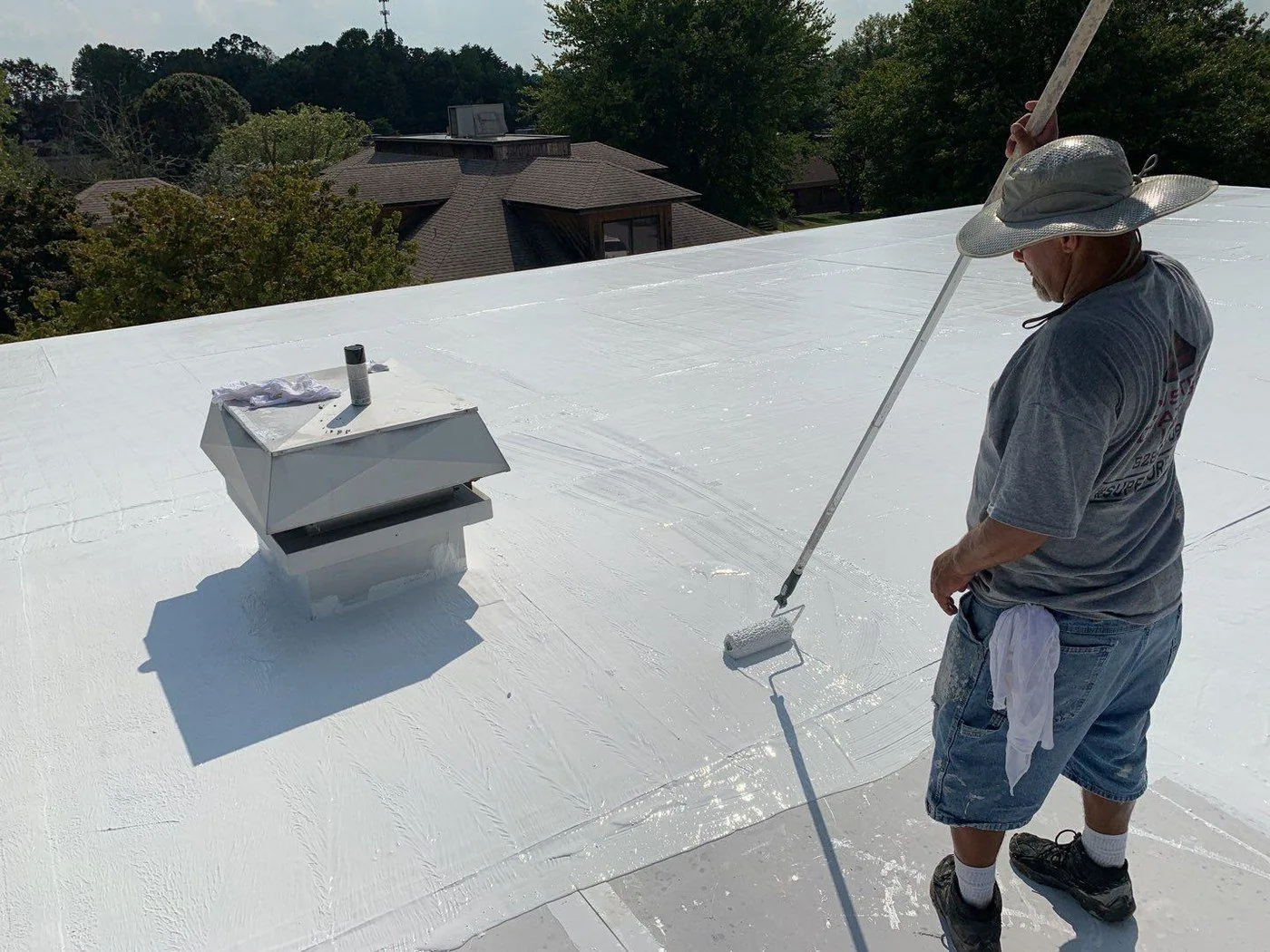
Roof Seam Failure Repair in Denton, TX
A seam that has separated along one short run is a measurable condition, not yet a replacement recommendation. In Denton, TX, mark the split's length, direction, adjacent membrane, and nearby drain or penetration. Add the inspection date and a close photograph with a wider roof view. The owner can then see whether the concern is isolated or repeats across another assembly phase.
Seams join membrane sheets and must remain compatible with the roof system and installation method. Dirt, movement, poor preparation, aging, or prior patch work may affect the observed bond. Do not decide cause from appearance alone. Our commercial repair review identifies what is open, what remains bonded, and what needs further confirmation before the price is set.
Measure the Split
Map each open or split seam by roof area, sheet direction, and approximate length. Photograph both the edge and the field so a reviewer can locate it later. Record whether the membrane is wrinkled, pulled, brittle, wet, contaminated, or covered by an older patch. Record those observations separately from the suspected cause.
Check nearby laps, T-joints, penetrations, terminations, and changes in elevation. A seam can open at a detail where the assembly changes, while an interior drip may show up several feet away. Keep interior reports and roof observations linked by area but not conflated. A roof inspection can record accessible sections and any limit that prevents a full seam review.
If the membrane is thermoplastic, the repair method may involve surface preparation and compatible welding. Other assemblies require a different tie-in. Confirm the system from available records or an appropriate field check. The TPO system overview and EPDM system review provide different material contexts; they are not interchangeable repair specifications.
Check What the Seam Connects
Trace the reported leak to the roof map and inspect the nearest seam, wall flashing, drain, and penetration. Water may travel beneath the membrane before it enters a room. Record the reported time, location, and whether the condition was active during the visit. If the pathway remains uncertain, identify the additional observation or testing needed rather than extending the repair area by guesswork.
Look for water trapped below the sheet, soft substrate, open corners, or a seam crossing a transition. A flashing failure review is a separate scope when the wall or curb detail is also open. If sharp debris or foot traffic punctured the membrane beside the seam, map that opening on its own and coordinate a puncture repair assessment.
A moisture survey can help locate confirmation points if the assembly and conditions support meaningful readings. Keep the method, date, map, and limits in the report. A single reading does not establish the condition of every roof section.
Specify a Compatible Tie-In
Repair preparation depends on the membrane type, contamination, moisture, and soundness of adjacent material. Define the cleaning or removal method, patch dimensions, tie-in width, materials, and inspection before the area is covered. Confirm whether a seam can be reworked or needs a separate patch. If product identity remains uncertain, keep it as a preconstruction item.
For a thermoplastic system, record weld settings and test results where the approved process requires them. For an elastomeric sheet, the specified adhesive, tape, or flashing components must match the system and preparation. A roof coating does not close an open seam by itself. Any restoration option needs a defined assembly, adhesion testing, and a detail that handles movement.
Cost depends on the repair length, access, material compatibility, test openings, substrate condition, and whether equipment or occupants constrain the work. A coating restoration review may evaluate eligible surfaces, but the seam correction and its closeout must remain visible as separate items.
Use Weather Context Without Overreach
Denton's normal weather record includes 38.44 inches of precipitation across the year, with summer mean highs above 95°F. These figures may inform a scheduling conversation, but they do not measure seam strength. The inspection date and assembly record control the repair method. Keep any weather event supplied by the owner linked to its date and reported area.
The National Weather Service publishes Denton County tornado climatology with reported events and annual, rating, intensity, and monthly summaries. That regional history can support a request for a post-event roof record. It cannot establish that a particular seam failed during a tornado. Compare dated photographs and prior repair records with the current mapped split.
Denton planning documents mention Loop 288 and US 380 when describing transportation and development. For the inspection, confirm which route reaches the property's actual loading entrance and whether work zones affect it. A corridor reference cannot set the access window. Westpark TIRZ is another city planning area, but its name does not identify the roof assembly or access rules. The Krum service area is a nearby municipality; confirm the actual address, permits, and site access for every repair.
Set Access and Scope Boundaries
List the roof zones to be inspected, areas excluded, access contact, tie-off requirements, and occupied hours. If a seam lies beside mechanical equipment, identify which trade controls the unit or lines. Protect interior operations before work begins. Record any temporary measure separately so the owner can see when permanent seam work is authorized.
Emergency response is available at night, on weekends, and during holidays. A temporary leak-control action may precede a permanent repair, but it needs its own location, materials, and follow-up check. Weather can also postpone preparation or welding. Put those triggers and the resequencing plan into the scope version.
If multiple seams fail in separate roof zones, compare the patch count and moisture evidence with a larger repair or replacement alternative. The replacement scope should use the same roof areas, access assumptions, and exclusions as the repair option. That keeps the budget comparison tied to observed conditions.
Retain the Seam History
Closeout should include the roof map, inspection date, original photographs, seam measurements, repair limits, product information, access records, exclusions, and completed-work images. Photograph the prepared seam and the finished tie-in. Record test results and any field change. Keep open questions visible instead of marking the whole roof complete when only the listed area was repaired.
For a reported weather event, preserve the owner's report and inspection date separately from county climatology. Our claim documentation support can organize the condition record, repair scope, and dated photos for review. The actual policy, cause, and coverage decision belong to the parties evaluating the evidence.
A later inspection can compare the mapped line with the repaired area. If water returns, the owner can see whether the new observation matches the prior seam, a nearby detail, or a different roof zone.
Commercial Roofing Questions
Can a split seam be patched without coating the whole roof?
A localized repair may fit when the seam boundary is clear and adjoining material accepts a compatible tie-in. We document other failed areas separately before recommending broader work.
What makes a seam repair fail again?
Preparation, moisture, wrong material, movement, or an unresolved substrate condition can affect the result. The scope should identify those items and the inspection required before closeout.
Does a leak beneath a seam prove that the seam opened?
Not by itself. Water can travel within the assembly. Compare the interior report with the roof map, adjoining details, and any moisture confirmation.
Can an owner compare a seam repair with replacement?
Use the same roof zones, exclusions, access plan, and temporary controls for both options. State the repeated failures or moisture findings that change the repair boundary.
Which documents should stay with the seam repair?
Keep the inspection date, roof map, product identification, repair dimensions, test records, completed photographs, and unresolved items under the same scope version.