
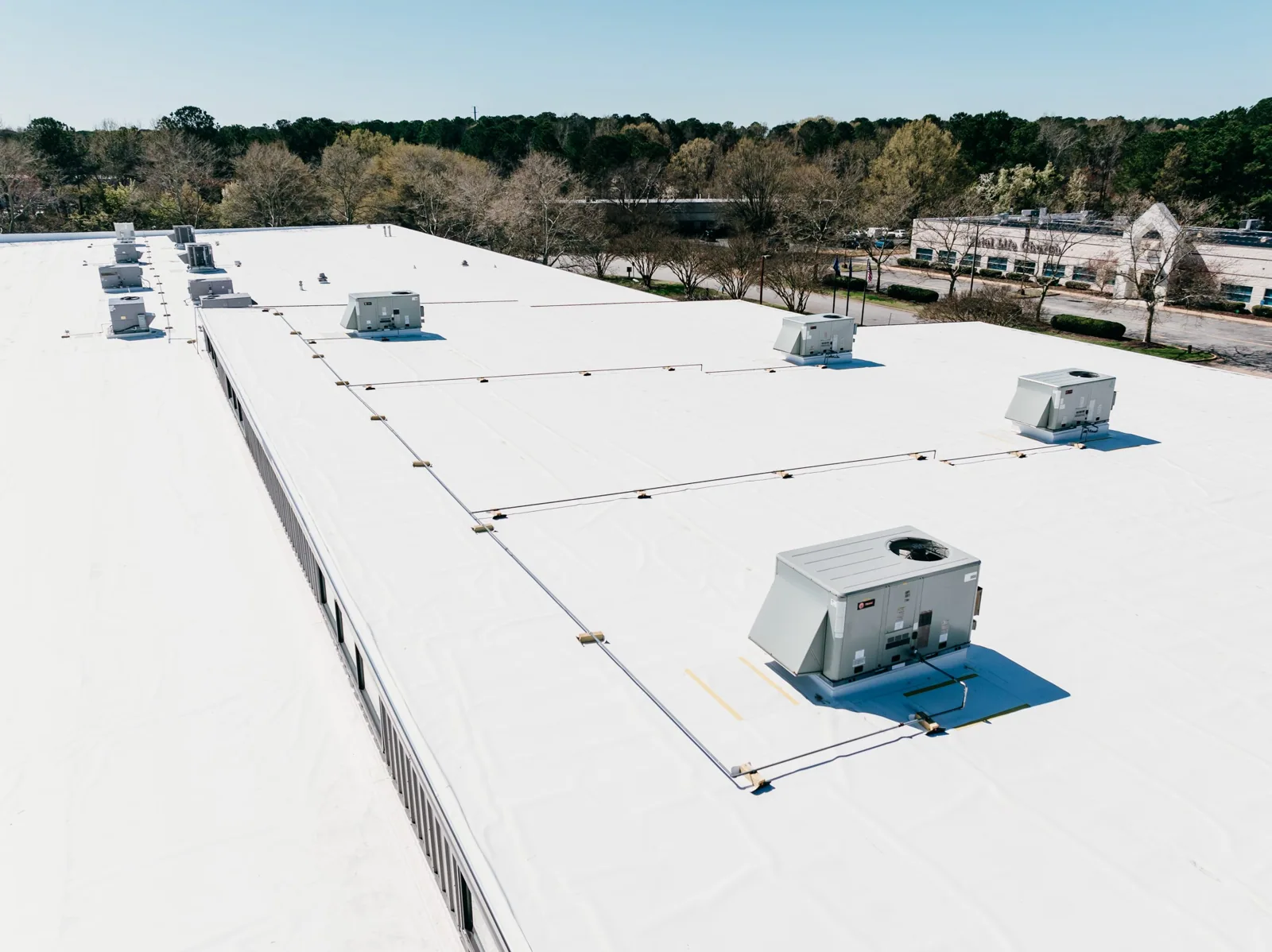
Flashing Failure Roof Repair in Denton, TX
A ceiling mark below a parapet points to an area for review, not a confirmed flashing defect. In Denton, TX, record the interior location and compare it with the nearest wall, curb, pipe, drain, and roof transition. Water may travel before it appears inside. The repair decision follows the actual termination, adjoining membrane, and the extent of any wet material.
Flashing ties the roof field into vertical surfaces and penetrations. Movement, poor termination, incompatible materials, or a damaged substrate can open that transition. Photograph the full detail before describing the suspected entry point. Our penetration and flashing service can document the detail, repair boundary, and access limitations for an owner review.
List Each Transition
Map walls, curbs, pipes, skylights, drains, scuppers, expansion joints, and perimeter edges separately. Record flashing height where it can be measured, termination method, counterflashing, sealant, metal condition, and visible movement. A roof with several additions may contain more than one assembly. Keep each phase and material identified rather than applying a single repair detail across the whole property.
Close photographs should include a wide view and enough context to find the location again. Record loose metal, open corners, split membrane, cracked mastic, failed fasteners, exposed substrate, or a missing termination bar only where observed. A commercial roof inspection can map those findings and label what remains concealed.
At a drain or scupper, check the clamping area, outlet, and surrounding membrane. Where water is also retained, a ponding-water assessment can separate drainage work from the flashing correction. The scope should not combine them unless the observed conditions support one coordinated detail.
Trace the Entry Before Patching
Compare the interior report with the roof map, but do not assume the closest penetration is the entry point. Water can move between insulation layers, along a deck, or beneath a membrane. Record the stain, active drip, and roof observations as separate items. If the path remains uncertain, record what additional review would resolve it and where access is available.
Inspect the flashing and adjoining field for a continuous water path. Look at laps, corners, counterflashing, termination, and any sealant bridging a movement joint. A fresh bead may hide an open condition without restoring the intended detail. If a seam or sheet opening is also visible, seam repair planning or a membrane puncture review may be needed as separate lines.
Moisture testing can support the boundary where the assembly allows useful readings. Identify the method, date, roof area, and limits. Do not label inaccessible insulation or deck as damaged without confirmation. Keep test openings and their restoration in the approved scope.
Match the Repair to the Assembly
A durable repair begins with the existing membrane, flashing material, substrate, and termination. Confirm these from records or an appropriate field review. Then specify surface preparation, compatible materials, tie-in width, fasteners or termination method, and the inspection before the detail is covered. If the system is unknown, keep product identification as an open item rather than guessing from color.
Metal transitions need attention to corrosion, movement, gauge, attachment, and adjoining materials. Membrane flashings need compatible accessories and a sound substrate. A repair at a curb may also require coordination with the mechanical contractor if equipment, lines, or supports move. The scope should name who disconnects, lifts, resets, and protects those items.
Cost changes with access, height, material availability, concealed substrate, and how much adjoining field must be opened to make the tie-in. A commercial repair scope should show the limits and unresolved assumptions. Keep replacement as a separate comparison when similar failures recur or the field assembly no longer accepts localized work.
Plan for the Property, Not the Map
Loop 288 and US 380 appear in Denton's development planning as routes tied to access. That reference cannot tell a crew which driveway opens or whether a site restricts loading. Get the current entrance and roof contact from the property manager. Near Krum, confirm which municipality governs permits for the address.
Bonnie Brae Street improvements follow a segment between Scripture Street and Loop 288. Check the City's current project information before setting a site visit. Construction can alter the approach to a property, while the flashing review still depends on the roof map, transition, and assembly record.
Denton's NWS climate normals include hot summer air temperatures and annual precipitation. Those regional measures may inform when the roof can be safely inspected, but they do not measure a membrane surface or prove that a transition leaked. The field record remains the basis for repair selection.
Sequence Access and Occupied Work
Set a work window around building operations, roof access, deliveries, and other trades. Identify any room or equipment that requires temporary protection. For an occupied property, specify noise, odor, hot-work controls if applicable, and the contact who can authorize access. Record excluded roof areas so an estimate does not imply a complete inspection where one was not possible.
If water is active, use a temporary measure suited to the system and document its location, inspection interval, and removal plan. Permanent flashing work requires preparation conditions that may differ from an emergency visit. Our response line is staffed nights, weekends, and holidays. Stabilization can proceed while the owner reviews the permanent scope, but each step should retain its own record.
Timing can change if a wall or curb needs other-trade access, if concealed material is wet, or if weather interrupts preparation. Put those triggers in the scope version. A clear sequence lets the manager coordinate occupants and avoids treating an unapproved detail change as completed work.
Retain the Flashing Record
Keep a marked roof plan, dated wide and close photographs, assembly records, scope version, access records, product information, repair boundary, and exclusions together. Photograph preparation and the completed transition before metal or membrane covers the work. Record any field adjustment and why it was needed. That record lets a later reviewer compare the same wall, curb, or penetration.
For insurance or capital review, retain the owner's reported event date separately from the inspection date. Denton County's tornado climatology describes regional event history, not damage at a specific building. The claim documentation service can assemble repair records and photographs without replacing the property-specific assessment.
After work, record whether the interior area was monitored and whether any water report continued. Do not close an unresolved question by changing its label. Carry it forward with the next inspection date or the confirmation required for a final repair boundary.
Commercial Roofing Questions
Can new sealant correct an open flashing joint?
Only when the specified detail, material, and movement conditions support that method. We inspect the substrate and termination before including sealant as the repair.
How do I know if a wall flashing is the leak path?
Compare the indoor report with the roof map and inspect the transition, adjoining field, and nearby openings. The nearest detail is not automatically the entry point.
Should a curb repair include the mechanical equipment?
The scope should state which trade controls the unit, lines, supports, and reset. Roof work can proceed only within the access and protection plan approved for that property.
What makes flashing repair take longer?
Height, access, occupied operations, concealed substrate, compatible material availability, and other-trade coordination affect sequence. Record those conditions before setting the work window.
Which photos belong in the closeout file?
Keep the original condition, prepared substrate, completed transition, adjoining roof area, and any excluded location. Each image should map to the repair boundary and scope version.