
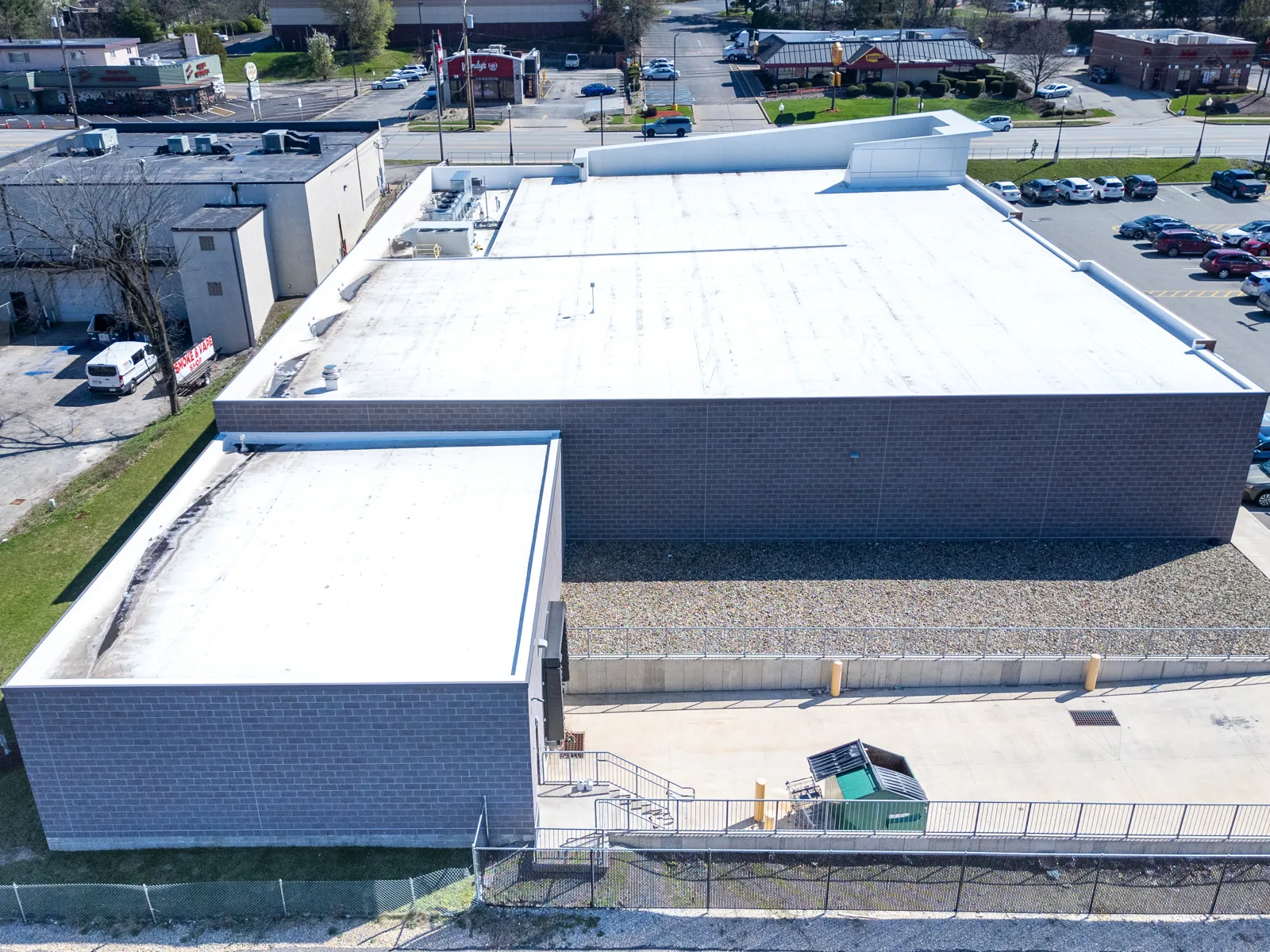
Ponding Water Roof Repair in Denton, TX
A water line that remains after a storm belongs on the roof map with its depth, outline, and inspection time. In Denton, TX, the next decision is whether the observation reflects blocked drainage, settled insulation, a deck condition, or the roof's intended slope. A single pond does not identify its cause. Record the roof area and photograph the water boundary before cleaning or moving anything.
Standing water can add load, accelerate deterioration, and complicate leak tracing. It can also remain where the assembly is designed to drain slowly, depending on conditions. We check drains, scuppers, overflows, low points, membrane seams, and the supporting structure before pricing a correction. The commercial roof inspection ties those observations to the owner decision instead of assigning a repair from a stain alone.
Trace the Water Path
Mark every drain, scupper, overflow, roof edge, and visible low area. Record debris, displaced strainers, sediment lines, vegetation, and any obstruction that can be removed without disturbing the assembly. Photograph the condition before maintenance. Record whether water is present during the inspection or whether the outline comes from a prior report.
Then compare pond boundaries with seams, penetrations, interior reports, and changes in roof elevation. Water may migrate before entering the building. A ceiling mark cannot be treated as the exact entry point without supporting evidence. If the assembly is not clear, an infrared moisture survey can help select test locations when the roof construction and field conditions make the readings useful.
At a roof with multiple drainage zones, label each one separately. A blocked outlet and a broad low area require different scope lines. The flashing-failure review may be relevant where water collects against a curb or wall, but the flashing should be inspected directly before a tie-in is proposed.
Check the Outlet and Backup Path
Inspect the drain bowl, clamping area, strainer, outlet, and surrounding membrane. Look for loose components, cracked sealant, open seams, debris, or a height difference that traps water around the drain. Confirm the overflow path is not obstructed. A clear drain opening does not prove that the downstream line flows correctly, so record which parts were visible and which need owner or plumbing-trade coordination.
Separate routine cleaning from changes to drain height or roof slope. Raising an outlet, adding a drain, or changing a scupper affects more than one detail. Check deck direction, insulation layout, water path, and applicable design requirements before defining that work. A roof drain and scupper scope can list maintenance, replacement, and redesign as distinct alternatives.
If water lies near electrical equipment, roof hatches, or occupied areas, notify the responsible site contact and follow the property's safety procedure. Record the affected area and any restricted access. Do not direct water toward an edge or drain without an approved plan.
Confirm What Lies Below
A low point may follow deck deflection, insulation compression, drainage layout, or a prior repair. The visible membrane alone cannot distinguish these conditions. Review available drawings, prior scopes, warranty files, and water-entry reports. If further confirmation is needed, define the opening location, protection method, restoration detail, and who approves the test before disturbing the roof.
Moisture readings have limits that depend on the assembly and survey conditions. Use them to select confirmation points, not to label an entire roof wet without checking. A roof condition report should map the readings, method, date, and areas that were inaccessible. For a larger area, the condition report process keeps observations separate from conclusions and supports a comparable bid review.
When insulation or deck is affected, list the repair boundary and any quantity assumption. That record lets the owner see whether a localized correction remains reasonable or whether the assembly needs broader work.
Plan Around Local Access
NWS normals for Denton show substantial annual precipitation and hot summer air temperatures. Those values describe regional climate, not the water volume or roof temperature at a property. Use the actual drainage map, visit conditions, and reported history to set inspection priorities. If the roof is in the Krum service area, confirm property access and the governing authority just as you would for a Denton address.
The City identifies Downtown TIRZ as an area established to provide public infrastructure that encourages downtown redevelopment. That is context for a city district, not evidence about any particular roof or drainage design. A building near Downtown may have access constraints that change staging, but only the property contact can confirm loading, roof entry, and work hours.
Bonnie Brae Street improvements extend from Scripture Street toward Loop 288. The City describes a project segment of roughly three miles; confirm active work and property access before a visit. A route change affects arrival planning, not a ponding diagnosis.
Compare Maintenance with Capital Work
Cleaning may resolve an obstruction when the water path and outlet function are otherwise sound. A repair may fit when a drain detail, seam, or flashing defect has a defined limit and adjacent material can accept a compatible tie-in. Broader work deserves review when several drainage zones retain water, wet insulation is confirmed, or repeated repairs leave the same area unresolved.
Cost and timing depend on access, test openings, drain configuration, roof assembly, occupied operations, and whether a slope correction requires design or other trades. Keep maintenance, localized repair, and redesign as separate bid lines. A repair scope should state the limit, preparation, materials, temporary controls, and closeout checks. If the roof needs a larger assembly change, compare a replacement alternative using the same roof area and exclusions.
Do not price a new drain or tapered insulation from a photograph alone. Confirm elevations, deck conditions, overflow provisions, and the approved design path. Keep assumptions visible so a budget decision does not conceal unresolved structural or plumbing questions.
Set a Repeatable Check
After the repair or cleaning, revisit the same mapped low areas and outlets under comparable conditions. Record whether water remains, how long after rainfall the observation was made, and whether the outline changed. A preventive maintenance plan can assign drain checks, debris removal, photographs, and follow-up dates separately from capital work.
Denton County's published tornado climatology is useful for understanding regional event history, but it does not diagnose water retention at a particular building. If a storm preceded a new pond, retain the event date supplied by the owner and compare the roof record before and after. A wind damage assessment can address displaced edges or components if those observations are present; do not merge unrelated findings into one cause.
Keep the final scope version, roof map, test records, maintenance records, and closeout photographs together. Identify what was corrected and what remains. The next reviewer should be able to see why the selected action fit the observed drainage condition.
Commercial Roofing Questions
How long can standing water remain before it needs review?
The roof design, weather, depth, drainage path, and assembly condition matter. We record the observation time and revisit the mapped area rather than assigning a repair from one snapshot.
Does ponding prove the roof deck has settled?
No. Deck movement is one possibility among several. Compare elevations, drainage details, prior drawings, and any test results before specifying a structural correction.
Should a drain be raised to clear a low area?
Only after confirming the assembly, drain geometry, overflow path, and approved design. A height change can redirect water or affect adjacent roof details.
Can a roof coating correct persistent ponding?
A coating does not create slope. First identify the water path, substrate, and drainage limits. Any restoration option needs compatibility and eligibility checks.
What should the owner include in a bid comparison?
Keep the mapped zones, maintenance items, repair boundary, test assumptions, access limits, and exclusions consistent. Separate a drainage redesign from routine cleaning or patching.