
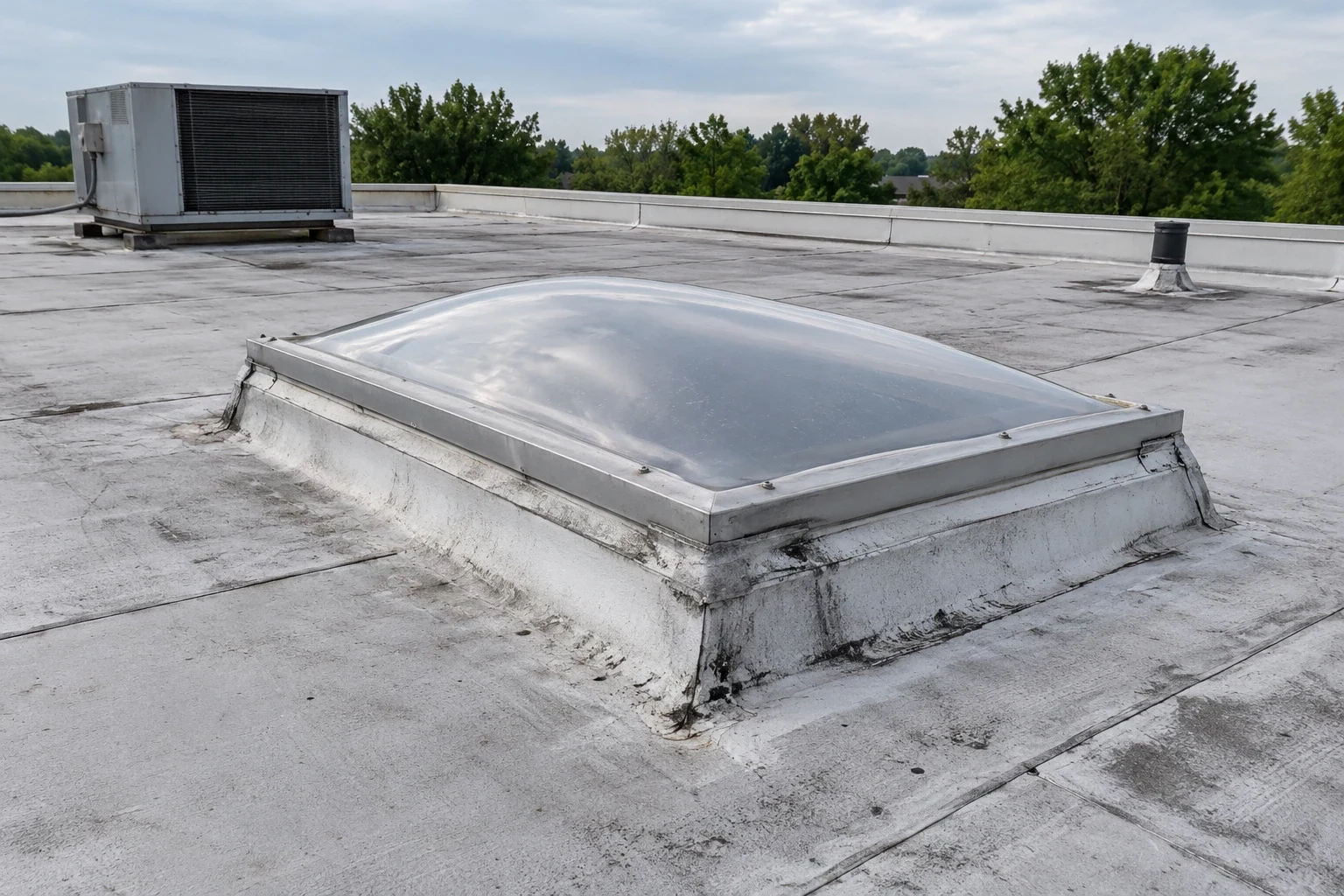
Commercial Skylight and Penetration Flashing in Denton, TX
A skylight leak can start at the curb, glazing, fasteners, or nearby membrane. In Denton, TX, the repair record should name the opening, roof area, interior effect, and condition observed before assigning a cause. We inspect the curb, flashing, seals, and surrounding assembly, then define what can be repaired and what needs testing. Do not assume a visible stain sits below the entry point. A roof inspection maps the detail and the path available for review.
Identify the Opening and Its Assembly
List each skylight, curb, pipe, conduit, exhaust, and equipment penetration by roof zone. Record whether the opening is new, altered, or part of an older assembly if the building file confirms it. Photograph the frame, curb corners, membrane laps, counterflashing, and nearby seams. Look for open sealant, cracked flashing, loose fasteners, splits, ponding, and incompatible patches. A mark around the glazing does not by itself prove the curb is the entry point.
Properties in Westpark TIRZ may have industrial uses, but that district context does not tell us the number or type of openings on a specific roof. The field record does. We record equipment clearances and access limits before the crew works around live systems. If a penetration needs a new curb or structural change, identify the responsible trade and approval step before pricing the membrane tie-in.
Trace Water Without Guessing
Inspect the detail above, beside, and below the reported interior mark. Water can travel along a deck flute, insulation joint, conduit, or framing before reaching the ceiling. Compare the opening with the roof plan and interior location. Use a controlled water test only when conditions allow and the test will isolate a question. Record the sequence and area tested. If several openings are close together, inspect each connection before replacing all nearby sealant.
Denton's annual precipitation normal is 38.44 inches in the 1991 to 2020 climate record. The number is regional context, not proof of leakage at this skylight. A repair should follow what is observed at the property. If moisture below the membrane remains uncertain, a moisture review can guide test locations under suitable conditions, while confirmation requires its own method and record.
Repair the Curb and Membrane Transition
A sound repair begins on compatible, stable material. Remove failed flashing or sealant as needed, prepare the substrate, and rebuild the transition in a way that directs water away from the opening. Check curb height, corner treatment, fasteners, counterflashing, and the membrane attachment. The selected detail depends on the roof system and product requirements. If the curb is corroded, loose, or damaged, a surface patch may not restore its connection to the roof.
At a pipe or conduit, account for movement, sleeve condition, and the space available for the flashing boot. Equipment service can disturb a previously sound penetration. Coordinate roof work with the technician responsible for the equipment, and document any hardware they remove or reinstall. A metal transition review can help when perimeter metal meets a wall or curb. Keep the skylight line distinct from a broader membrane repair.
Protect the Space Below
Before opening a curb or roof penetration, identify equipment, occupants, inventory, and sensitive finishes below the work area. Plan temporary protection and the sequence for closing the opening each day. Coordinate alarms, shutdowns, and access with the building contact. If water is active, show which interior areas need protection and who will monitor them. Temporary measures should have a boundary and follow-up action rather than being left as an undocumented patch.
Downtown TIRZ is a defined redevelopment area, but its label does not describe an individual building's operation. Site-specific access determines the work window. For a facility near Loop 288 or US 380, confirm current delivery routes and construction conditions with the property contact. Those corridors appear in Denton's planning context, but travel conditions must be checked on the work date. Use the actual gate, escort, and staging plan.
Before work, locate any suspended ceiling, process line, or equipment that could be exposed if the curb is opened. Agree on a temporary cover and the person responsible for checking it at shift change. If the skylight cannot be removed in one visit, document the interim condition and secure the opening against weather. The owner should know what protection remains in place overnight and when the crew will return.
Decide Whether the Detail Can Remain
A localized flashing repair may fit when the curb and glazing are sound, the surrounding membrane is serviceable, and the defect can be fully accessed. Replacement may be necessary when the frame, curb, substrate, or adjacent roof assembly has broader deterioration. We describe the evidence and identify the condition that would change the recommendation. If the owner is comparing bids, each scope should state the same opening, surrounding roof area, and tie-in boundary.
When openings repeat across a roof, an inventory can help distinguish one damaged detail from a recurring coordination issue. Compare the repair with a replacement plan only when the broader assembly supports that decision. A condition report can group the photographs by roof area and keep excluded openings visible for later review. Do not bundle unrelated conditions into a single allowance.
When selecting a replacement unit, confirm rough opening dimensions, curb compatibility, load requirements, and glazing needs with the project design team. Roofing scope alone should not alter structural support or fire-rating requirements. We coordinate the membrane tie-in with the approved curb and frame detail, and record which items require owner or design approval before ordering.
Leave a Penetration Record
Record the opening identifier, roof zone, materials, preparation, flashing method, and closeout photographs. Record any equipment work performed by another trade and any inspection that remains open. The next maintenance visit can compare the same curb corners, fasteners, and membrane laps. If the interior stain continues after the repair, the record helps determine whether the original entry point was corrected or another water path needs investigation.
For buildings in Flower Mound or Lake Dallas, confirm the actual property authority and access requirements before the work date. A town name cannot determine roof assembly or permitting. We set the scope from the site plan, observed detail, and required coordination, then provide the owner a clear boundary and the items that remain unverified.
Commercial Roofing Questions
Can the skylight itself cause a leak?
It can, but water may also enter at the curb, flashing, nearby seam, or another penetration and travel before appearing inside. We inspect the entire connection and use testing when it can narrow the cause.
Should all sealant around a skylight be replaced?
Only where the detail and product requirements call for it. We check the curb, fasteners, flashing, substrate, and glazing connection before deciding whether sealant is part of the correction or a symptom of a larger failure.
How do equipment trades affect penetration work?
Service work can move boots, disconnect conduits, or disturb fasteners. We coordinate the opening and reinstallation with the responsible trade, then photograph the completed roof transition and identify anything outside our scope.
What if the curb is damaged?
A patch may not restore a loose or deteriorated curb. We record the substrate and connection, identify any structural or glazing work required, and separate those responsibilities from the membrane flashing line.
What should the closeout include?
Identify the opening, roof area, materials, preparation, finished transition, and any remaining inspection. Before-and-after photographs help the owner compare a later report with the condition that was repaired.