
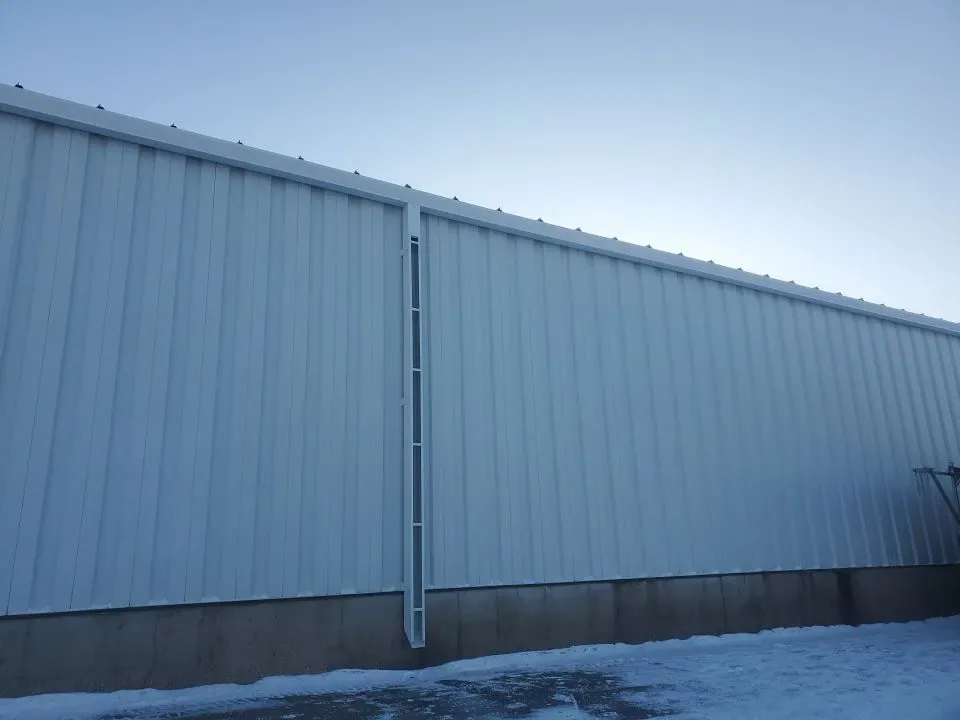
Commercial Roof Edge Metal and Gutters in Denton, TX
A roof edge is a transition, not a decorative strip. In Denton, TX, coping, fascia, gutters, and downspouts must connect to the roof assembly and discharge water without an open path behind the membrane. We inspect the edge condition, joints, attachment, sealant, and adjacent roof surface before writing a repair line. Local heat and rain are planning context, but the actual metal and substrate decide the work. Start with a roof inspection that records the elevation and detail where water or movement appears.
Trace the Roof-to-Wall Transition
At a parapet, review the coping cap, cleats, joints, corners, end dams, and membrane termination. Check for loose sections, open laps, rust, distortion, failed sealant, and movement at the wall. A missing or loose cleat can allow wind to move metal even when the field membrane looks sound. Photograph the joint and the roof area behind it. Mark whether the defect is isolated or repeats along an elevation.
At a building in Westpark, the industrial district context may make staging and delivery coordination relevant, but it does not reveal the edge assembly. We inspect the property itself. The owner gets the observed metal condition, adjacent membrane details, and any opening that requires testing. If edge work overlaps with a larger repair scope, separate the metal line from membrane work so each boundary remains clear.
Follow Water Through the Gutter
Gutters and downspouts should collect and discharge roof runoff without backflow, loose connections, or uncontrolled splash at the wall. Look for debris, sagging supports, separated seams, damaged outlets, and discharge points that return water toward the building. Confirm whether the roof edge feeds a gutter, scupper, or internal drain. A blocked downspout and a failed membrane termination may create similar interior symptoms but need different corrections.
Record whether the gutter was clear during the inspection and whether active flow was observed. Do not call it functional based only on an empty trough. If a water test is suitable, define the area and outlet route before beginning. A drain and scupper review can show how the edge detail fits into the wider drainage path. The closeout should show the outlet and the receiving area, not just the repaired seam.
Check Attachment and Movement
Metal edges depend on the substrate, cleat, fastener, spacing, and joint design. Inspect for loose or missing fasteners, pull-through, movement, and corrosion. Confirm whether the proposed repair can attach to sound backing. If the substrate is concealed or damaged, identify the opening or test needed before finalizing quantities. A sealant bead cannot restore a failed attachment. The repair should address the condition that lets water or wind reach the assembly.
Denton's July and August mean maximum air temperatures are close to 96°F in the 1991 to 2020 normals. These are air values, not metal surface readings. Actual temperature and product instructions govern work conditions. For older coating or paint, check compatibility before applying a new sealant or finish. A wind-related edge review may be useful where movement appears beyond one joint.
Set the Repair Boundary
Write the elevation, length, corner, joint, gutter run, and discharge point included. Identify metal profile or material when known. State whether the scope includes removal, new cleats, substrate repair, membrane tie-in, sealant, paint, or replacement of the downspout. Separate confirmed quantities from allowances for concealed conditions. This makes two proposals easier to compare and shows what remains outside the work.
Limited movement at one joint may fit a repair. Repeated looseness, corrosion, or substrate failure can require a continuous edge replacement. Near Downtown TIRZ, district redevelopment context does not tell us which metal detail a building has. The site record does. We compare the proposed correction with a replacement scope when edge transitions need to be rebuilt as part of a broader roof project. A condition report can keep the photo log and scope version together.
Make the perimeter takeoff legible. Identify corners, transitions, terminations, and changes in wall height rather than applying one length to the full roof. If the metal profile is unknown, record a field measurement before fabrication. A sample or approved shop detail can prevent a mismatch at corners and end conditions. Keep the approval record with the order so any substituted gauge, finish, or joint treatment is visible to the owner.
Coordinate Access at the Elevation
Perimeter work may require lifts, barricades, pedestrian control, or coordination with neighboring operations. Confirm the access route, delivery window, fall protection, and the person who can close a walkway or loading area. For occupied buildings, identify windows, entrances, outdoor equipment, and vehicle paths below the repair. Keep weather and wind limits in the work plan. If a section cannot be reached safely, record the gap and schedule a return with suitable equipment.
Roadwork along Bonnie Brae Street may change access timing, and Loop 288 or US 380 conditions can change as projects proceed. Confirm current routes with the property contact rather than relying on a planning description. For properties in Flower Mound or Lake Dallas, confirm the local permit authority and site access before ordering metal. These are separate municipalities with property-specific requirements.
Photograph the Finished Edge
Closeout should show the metal profile, joints, corners, attachment, membrane termination, and discharge route after work. Record the material, fasteners, preparation, and any substrate condition found. Label each photograph by elevation and roof area. If a gutter or downspout remains outside the scope, mark that boundary so a later water report is not confused with the completed edge work.
Preserve the inspection date, scope version, and authorized changes in the property file. A later maintenance visit can compare the same joint and look for movement, corrosion, open laps, or loose supports. Do not treat a clean appearance as proof that a hidden connection is intact. The record should say what was opened, replaced, tested, or left unverified. That gives the next owner decision a clear starting point rather than a vague record that the edge was serviced.
Where work interfaces with masonry or another trade, state which party seals or finishes the transition. A gap at the wall can remain even when the coping itself is new. Photograph the completed connection and list any finish work that another contractor must complete before the edge is considered closed.
Commercial Roofing Questions
Can sealant alone secure loose coping?
No. Sealant can close a joint but cannot replace a failed cleat or attachment. We inspect the metal, backing, and connection, then specify the correction that matches the observed movement.
How do you tell a gutter problem from a roof leak?
We trace the water path and inspect the edge, membrane termination, gutter joints, downspout, and interior location. The visible drip alone may not identify the point of entry. Testing is added when it changes the repair boundary.
When does edge metal need full replacement?
Repeated movement, corrosion, failed attachment, or damaged backing can make a continuous replacement more reliable than isolated patches. We map the affected length and show which sections remain outside the scope.
Should downspouts be included with coping repairs?
Only when the scope includes them. We list gutters, outlets, downspouts, discharge points, and membrane terminations separately so the owner can approve each part of the water path.
What access details affect the work window?
Lift placement, pedestrian protection, vehicle routes, operating hours, and current construction access can change staging. We confirm them with the property contact and record any elevation that could not be reached safely.