
Commercial Roof Asset Management in Denton, TX
A portfolio list can show roof areas and installation dates. It cannot show what changed at the last inspection. For a Denton owner, that gap affects whether a repair belongs in this budget year or a larger scope needs review. We build the record from each property’s inspection date, roof area, observed condition, photographs, and open work items. The first task is separating what someone saw from what needs testing.
One building may have several assemblies or additions. We map those areas and tie each condition to the roof plan. A stain below a drain is an observation to trace, not a diagnosis. Our commercial roof inspection records accessible details and identifies limits. The owner can compare a repair line with the decision date instead of relying on a portfolio-wide label.
Gather the Property Record
Start with the roof plan, prior proposals, service tickets, closeout photographs, warranty file, and known leak locations. Add a roof-access contact and the next decision date. If documents use different building names, reconcile them before comparing conditions. A portfolio number helps only when staff can connect it to the physical roof area and correct record.
We preserve the scope version for each visit. The file shows whether a record came from field observation, an owner report, or an earlier recommendation. That prevents suspected moisture from becoming a confirmed replacement quantity. A written condition report can hold the photo log and area findings for a budget meeting.
Westpark TIRZ is an industrial district north of Airport Road. That context may help group nearby properties for access planning, but it says nothing about an individual roof. We identify each assembly and the person authorized to release access.
Compare Conditions by Roof Area
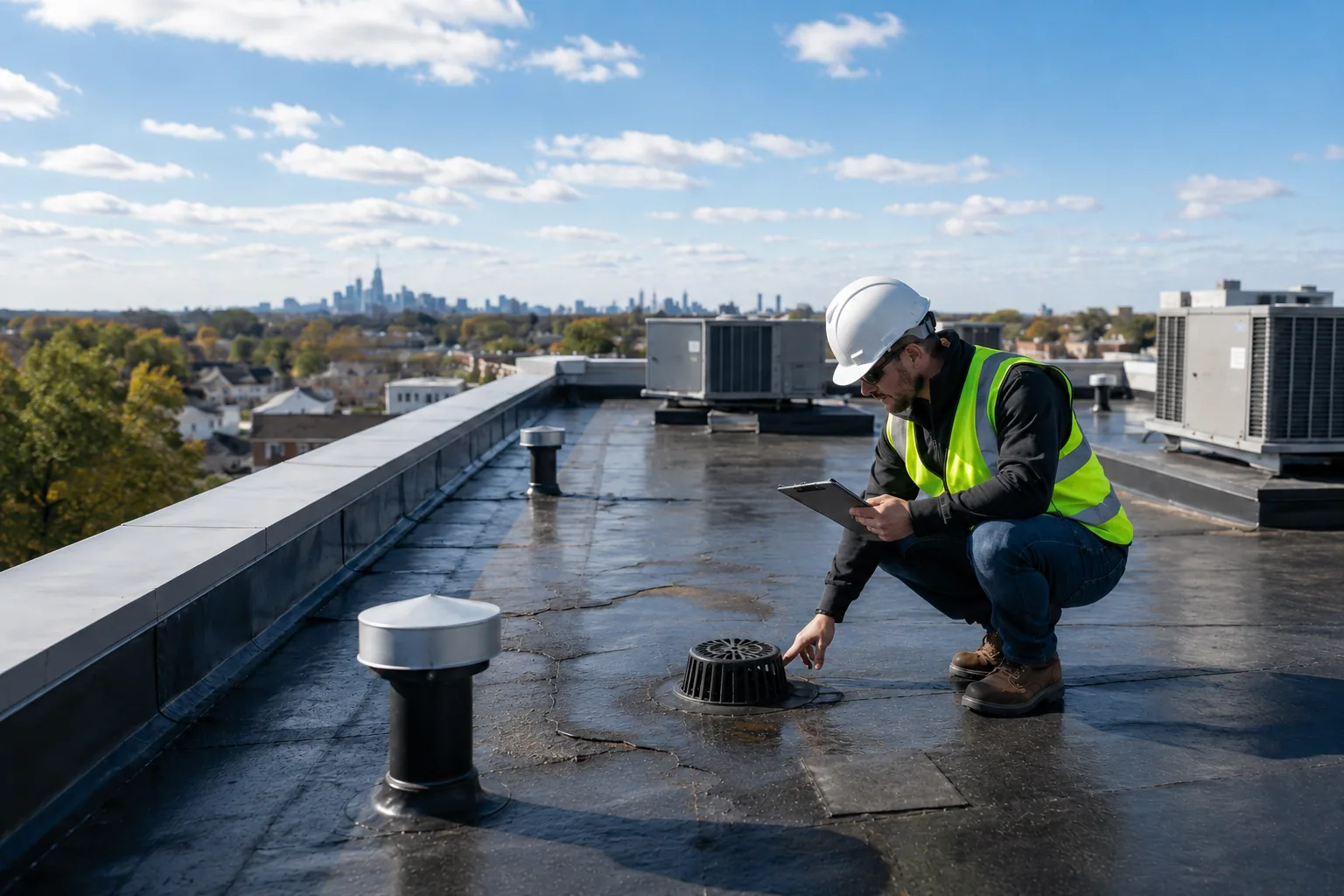
At the property, we mark membrane splits, open seams, loose edges, blocked drains, damaged flashings, and other visible conditions by location. We record whether an area was accessible and whether testing or an opening is needed. A photo without a roof-map reference is hard to use later; a map without a dated image leaves the record unclear.
We separate immediate water-entry concerns from maintenance and capital items. A small repair may protect operations while a broader review is scheduled. Repeated failures, wet insulation, or perimeter movement may change the scope. A condition score does not replace assembly, drainage, attachment, or repair-history review.
Denton’s NWS normals show hot summer air temperatures and substantial annual precipitation. Those measures are context, not a surface-temperature reading or evidence of a defect. We record the actual assembly and condition. After a storm, the report maps the location and next check without assigning cause from weather alone.
Set a Decision Point for Each Item
Each open item needs an owner decision, contact, and date. We separate a repair that can be scoped now from one needing testing, access approval, or another trade. The record states what happens if work waits: monitoring, temporary protection, or prompt action. One color label cannot replace those distinct decisions.
For budget planning, group work by roof area and state the scope basis. A repair line names the defect, correction, and concealed condition that could change it. A replacement candidate identifies the supporting areas and missing records. A capital planning review can organize findings against the budget year without turning an observation into an approved project.
Downtown TIRZ is a Denton development district established for public infrastructure and redevelopment. It is geographic context, not evidence of private roof age or ownership. Each asset file remains specific to its property.
Separate Repair from Capital Work
A useful record keeps corrective work distinct from system replacement. We record whether a repair addresses a bounded condition, whether nearby areas remain serviceable, and whether moisture extends beyond the visible defect. The owner can compare repair with overlay or replacement on the same roof plan. State exclusions, access assumptions, and any opening needed before final quantities are known.
On a low-slope membrane, seams, penetrations, edges, and drainage affect the water path. Standing seam and retrofit metal have different movement and fastening questions. We identify the system before adding work to the portfolio. An overview of TPO roof details can frame component questions, while field confirmation stays tied to the property.
Loop 288 and US 380 are Denton transportation corridors. They do not establish current traffic or a property entrance. For a multi-property visit, confirm each address, route conditions, roof contact, and access window before scheduling.
Keep Portfolio Timing Usable
A roof calendar should reflect condition and operating constraints. We set a review date for open repairs, a budget decision date, and a follow-up after completed work. If an inspection could not reach a section, the limitation stays visible. That prompts an access decision instead of implying the area was checked.
For a property near Krum or Corinth, start with the actual address and roof contact. Confirm the authority and site requirements for each project. A maintenance schedule can track drain clearing, sealant observations, and dated photographs separately from replacement capital.
When work is approved, save the final scope, field changes, closeout photographs, and product information by roof area. Reopen the item after a new observation or owner decision. The portfolio view summarizes; the property file retains the evidence.
Build the First Useful Inventory
Begin with a group of roofs and the available records. We can reconcile the property list, identify missing plans, and inspect areas where a decision is near. Each building receives a roof map, condition records, photographs, access record, and open-item list. The owner can expand the inventory without assuming every property shares an assembly or condition.
For acquisition or refinancing, preserve the inspection date and scope version beside the roof history. Keep active leaks and temporary protection visible until permanent work closes. Tie recommendations to a budget year and decision point. A claim documentation review stays separate when an event-related scope requires it.
Send the roof areas, known leak locations, available records, decision date, and access contact. We will identify what the record supports and what needs field review. The next deliverable is a property-level assessment with conditions, limits, and actions in plain terms.
Commercial Roofing Questions
What belongs in a roof asset record?
Keep the roof plan, assembly, inspection date, photo log, repair history, warranty file, access records, and open decisions together. We label items by roof area and scope version so a later reviewer can distinguish completed work from a recommendation.
Can one condition score compare different buildings?
A score can sort work, but it cannot replace the observation. We keep the defect, location, evidence, access limits, and next decision visible. Similar scores on different assemblies may call for different repairs or testing.
How should the owner handle an active leak during portfolio review?
Identify the affected interior area and arrange temporary protection if needed. We trace the roof path, photograph the condition, and separate immediate repair from broader assessment. The record states what remains open and who will confirm permanent work.
When does a portfolio item become a replacement candidate?
Repeated failures, moisture beyond a bounded area, or repairs that no longer address the condition can justify a capital review. We document findings by roof area and compare the assembly, history, and decision date before proposing replacement.
How often should each record be updated?
Update it after an inspection, repair, access change, or owner decision. We retain earlier scope versions rather than overwrite them. That preserves the sequence from observation to approved work and gives the next reviewer a usable closeout record.