
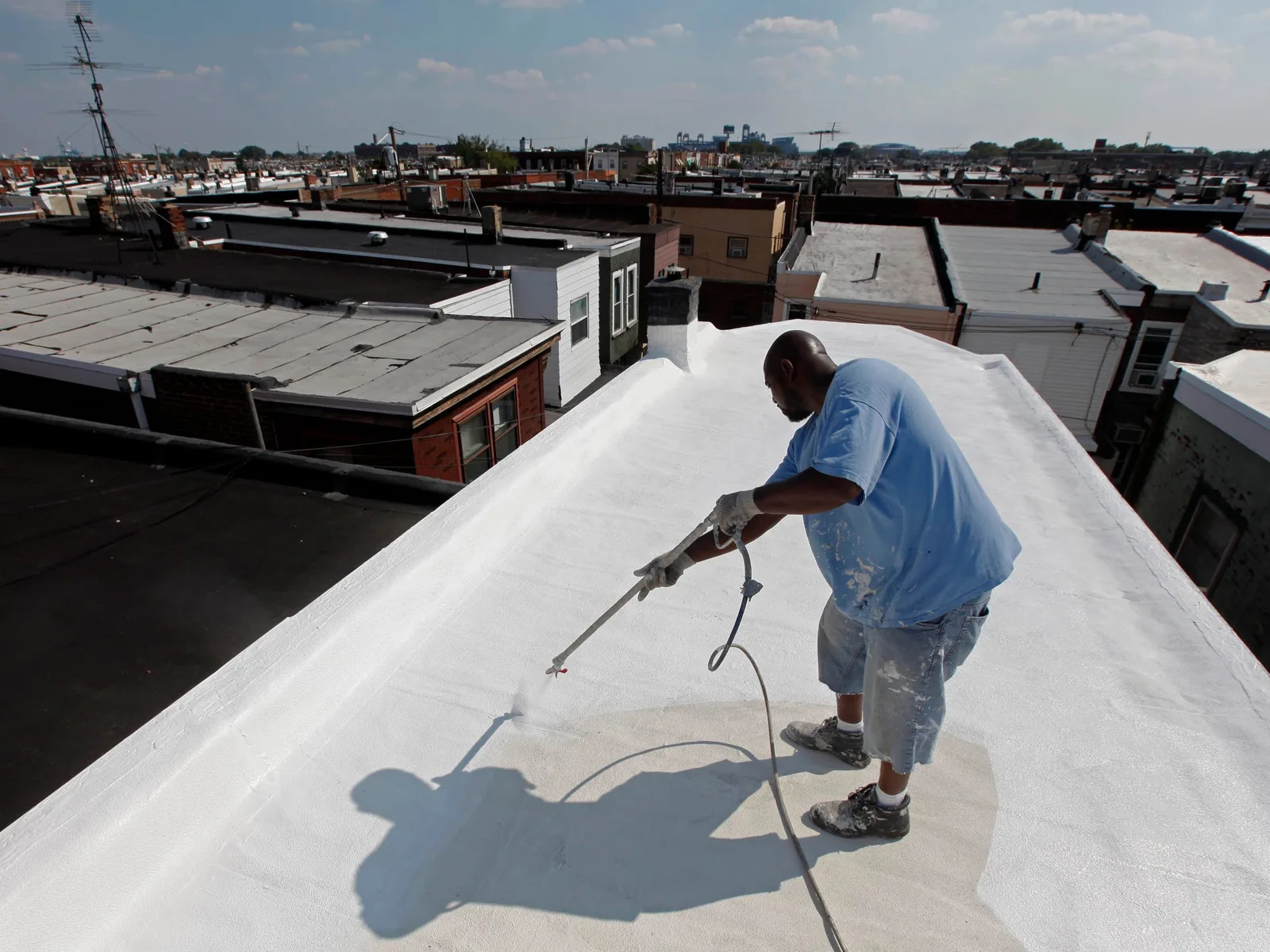
Cool Roof Installation in Denton, TX
A reflective roof changes how the surface handles sunlight, but it does not correct a wet assembly or failed detail. In Denton, TX, we first identify the existing membrane, insulation, drainage, and repair history. Then we compare a reflective coating or replacement surface with the roof condition and the owner’s decision date. The recommendation records what the system can address and what remains outside its scope.
Denton’s July normal mean maximum is 95.9°F. That air-temperature record is useful climate context, not a roof-surface reading or a forecast of energy savings. A roof inspection documents current conditions before anyone prices a reflective finish.
Choose the Reflective Surface
A cool-roof assembly may use a white membrane, a compatible coating, or a replacement system designed with reflectance in mind. The right choice follows the existing roof and its condition. We check whether the surface can accept the proposed material, whether seams and flashings need repair first, and whether a new layer would complicate later maintenance. The proposal identifies the specified product and application limits rather than treating every bright finish as interchangeable.
Coatings need a sound, dry substrate and preparation that matches the manufacturer’s instructions. A coating cannot stabilize a loose seam, replace failed insulation, or make standing water disappear. We record any wet or soft areas, test cuts, and surface contamination that could affect adhesion. If the roof is not a suitable coating candidate, a replacement scope may provide a more reliable comparison than adding a layer to a failing assembly.
Color alone does not define performance. The selected system has product-specific properties, thickness, application conditions, and maintenance requirements. We record the exact scope and ask the owner to compare it with the warranty documents available for that roof. No service life or utility reduction should be promised from reflectance alone.
Review the Layers Before Coating
Start with the membrane, seams, flashings, insulation, and deck. We look for open laps, blisters, trapped moisture, soft cover board, corrosion, and prior coatings that may not bond with the proposed system. The report separates visible findings from conditions that need testing. A moisture survey can help choose confirmation points when roof and weather conditions support useful readings; thermal images do not prove moisture without corroboration.
Moisture below the surface can continue to affect the assembly after a reflective layer is installed. If test openings show wet insulation, the scope should identify removal, replacement, and tie-in work before a coating decision is made. If the existing roof is sound but its surface needs restoration, a coating-restoration review can distinguish preparation and repair from the finish application.
We also check attachment and movement at edges, curbs, penetrations, and transitions. A coating that bridges an active gap may split as the detail moves. The estimate lists repairs that must precede application and those that remain optional. That lets the owner compare a prepared coating scope with a membrane replacement on the same roof areas.
Keep Drainage in the Scope
Reflective material does not change roof slope. We inspect drains, scuppers, crickets, and low areas before work, then show any correction separately. A drain with debris or damaged connections needs its own repair. If water remains after a storm, we document the duration and area rather than assume the finish will solve ponding. A drainage repair may be required before the surface work proceeds.
Edges and penetrations need compatible details. At a parapet, curb, skylight, or pipe, the coating must terminate according to the selected system. We mark where reinforcement is required, how the surface transitions to metal, and which sealants are permitted. A metal-edge review can separate loose coping or perimeter attachment from the coating itself.
Connect Heat to a Measured Decision
Reflectance can reduce solar energy absorbed at the roof surface, but its effect inside a building depends on insulation, ventilation, equipment loads, hours of use, and the full assembly. We do not calculate savings from color or a regional temperature normal. If the owner needs an energy comparison, the building’s actual operating data and a qualified energy analysis belong in that decision.
The National Weather Service’s Denton normals record 95.9°F as the July mean maximum and 95.8°F in August. Those values describe air temperature at the reference station. They do not measure roof surface, indoor conditions, or a particular property’s cooling demand. We use them only to frame the local scheduling context, then check actual surface and application conditions on the work date.
Westpark TIRZ is an industrial district where infrastructure investment is intended to encourage development. Downtown TIRZ is a defined area established to support downtown redevelopment. Those district descriptions help identify different property contexts, but neither says what a particular roof needs. We inspect the building in Westpark or Downtown and document its assembly before comparing a reflective system.
Compare Preparation, Application, and Timing
Price the work by roof area and task. Separate cleaning, surface preparation, seam repair, flashing, primer, coating quantity, and protection. List excluded drains, equipment work, and concealed conditions. If an allowance covers repair discovered after cleaning, state the boundary and approval point. This gives the owner a way to compare bids that use different assumptions about preparation or film thickness.
Application depends on substrate temperature, moisture, wind, and the product’s cure requirements. We schedule each area so it can be prepared and protected through the required interval. If weather interrupts the shift, the crew records the area completed and the temporary condition at the stop point. A maintenance plan can then set inspection checks for drains, seams, and coating wear after installation.
Tenant hours and equipment access can narrow the work window. For a building that must remain open, a phased roof sequence can identify which zones stay protected while others are prepared. The proposal states the access assumptions and the contact who can approve a change. That keeps schedule and scope tied to the property rather than to a generic application calendar.
Record the Finished Roof Surface
Closeout documents the surface before and after preparation, repairs completed, material identification, application conditions, and any area excluded from the work. Photographs show transitions, drains, curbs, and edge details. If a test or repair remains open, it stays visible in the report instead of being hidden by a completion label. A roof condition record can keep this work with the property’s inspection history.
Owners in Krum and Corinth may have different property contacts and permit paths from a Denton project. We confirm the location and requested scope for each site. The city’s residential-permitting information does not decide a commercial roof permit. If the work changes from a coating to assembly replacement or structural repair, we identify that change for review with the governing authority.
Send the roof plan, prior coating records, leak history, and intended budget date. We will inspect the assembly, define preparation and repair limits, and present a reflective option only where the existing roof can support it.
Commercial Roofing Questions
Can a reflective coating fix ponding water?
No. It changes the surface finish, not the roof’s slope or drain capacity. We document the low area and drainage condition separately. Any correction needs its own scope before coating begins.
How do you decide whether a roof can be coated?
The membrane, moisture, seams, flashings, and prior coatings must be reviewed. We test where the condition is concealed and confirm product compatibility. If the substrate is not sound, the proposal identifies repair or replacement options instead.
Will a cool roof lower this building’s energy bill?
Reflectance alone cannot establish a savings figure. Insulation, equipment, operating hours, and the full assembly matter. We describe the specified roof work; a property-specific energy analysis is needed to estimate operating effects.
Can the building stay open during installation?
Often, with a defined work zone and access plan. We coordinate roof openings, equipment service, debris control, and tenant routes with the site contact. The proposal states any hours or protections that affect the sequence.
What should the coating closeout include?
Record the product, prepared areas, completed repairs, application conditions, photographs, and exclusions. List any unresolved drain, seam, or moisture finding with its next action. That gives future inspections a dated baseline.