
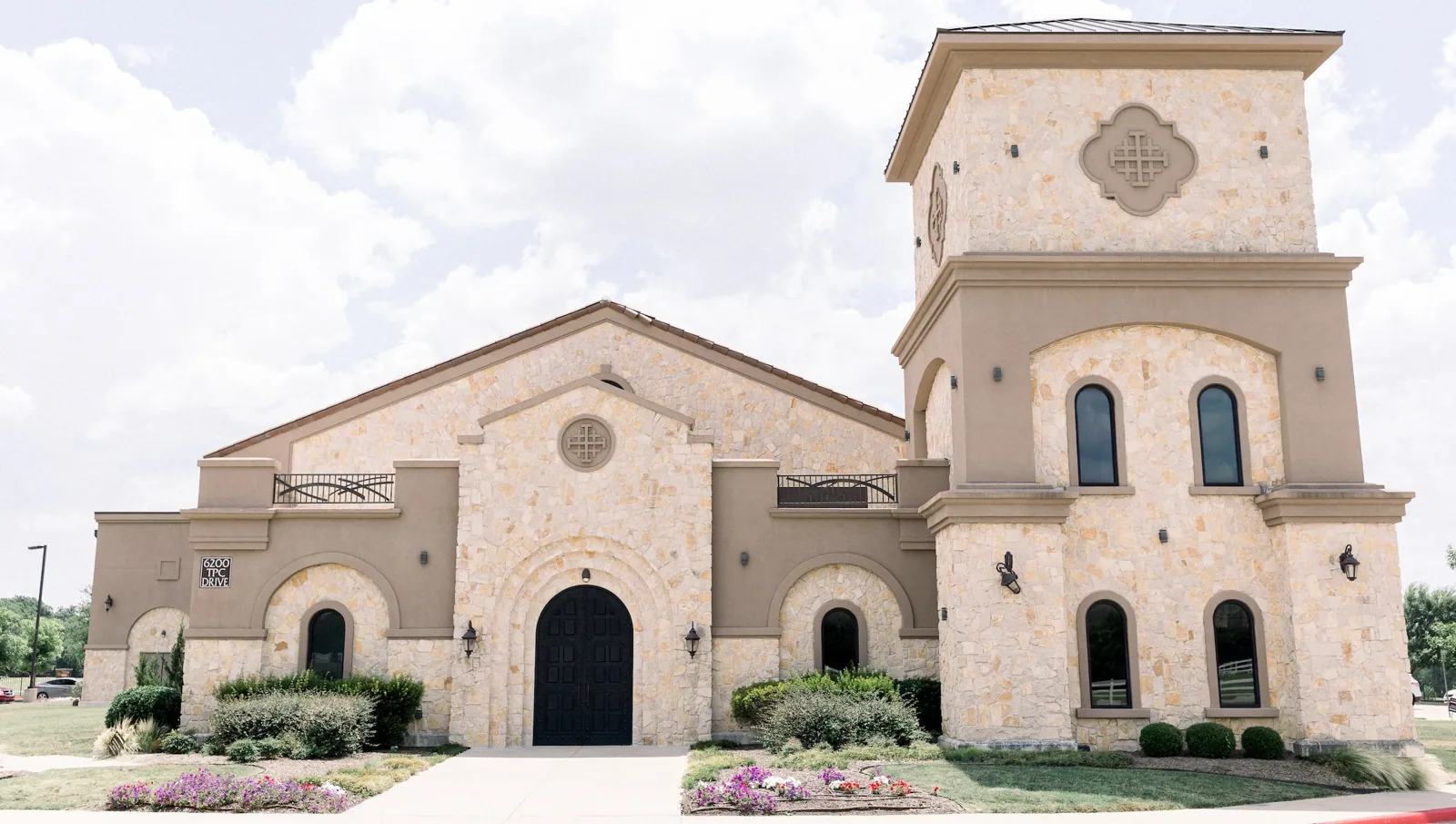
Church and House of Worship Roofing in Denton, TX
The fellowship hall calendar can affect the roof work window. A leak above a sanctuary, classroom or food-service area also has a specific interior consequence. In Denton, TX, we begin with the reported room, roof assembly and date of the observation. We separate a visible ceiling mark from a confirmed roof defect, then record the path we can inspect. A report can arrive after office hours as readily as before a service. We respond day or night to help shield the interior while the suspected leak path is checked. The repair scope should identify the work boundary, material and any remaining uncertainty. That gives the church administrator a usable decision point before worship, community programs or scheduled building use is disrupted.
Church properties can combine several roof sections and uses under one operating schedule. A sanctuary roof, education wing and kitchen may have different equipment, drainage and maintenance records. We label the areas separately. Photos and records should let a board member compare the proposed repair line with the actual condition, not with a broad statement about the entire campus. For occupied-space planning, our senior living roof work also accounts for daily building routines, while municipal building scopes show how access and documentation can change the work sequence.
Locate the reported condition
Record which room is affected, when the stain or drip appeared, and whether it changed after rainfall or rooftop work. Then compare that report with drains, roof edges, penetrations and transitions above the area. Water can move along a deck or insulation before becoming visible indoors. A matching point on the roof is useful, but it should be confirmed by inspection rather than assumed from the ceiling location. We photograph each observed condition and record whether the leak path is established or still under review.
For older assemblies, the roof record may be incomplete. We identify visible membrane type where possible, record transitions and repair patches, and flag concealed conditions that need a test cut or other approved investigation. That distinction matters if a repair is proposed before the next board meeting. A focused commercial roof inspection can create a current baseline. When a leak is affecting a room in use, our leak repair service starts with water control and a traceable work area.
Set a defensible repair boundary
A repair can be contained when the defect is local and the surrounding roof remains suitable for service. We check the seam, flashing or penetration involved and inspect the nearby field for related movement or moisture. The estimate identifies the repair area and the condition that supports it. If several leaks share a drainage problem or failures recur across connected sections, the scope can show those items separately.
Replacement becomes a comparison when findings show widespread deterioration, extensive wet insulation, repeated patching or an assembly that no longer supports a reliable repair plan. We can prepare distinct repair and replacement scopes, each with area, sequence, access needs and exclusions. A coating or recover may be another path only if the existing assembly and moisture condition support it. The roof coating assessment should begin with those checks, not a color choice. The decision record can then compare immediate cost drivers, disruption and capital timing without presenting an unverified outcome as certain.
Coordinate around building use
Before work is scheduled, identify worship services, funerals, school or community events, food deliveries and rooms that must remain available. We need a site contact who can confirm roof access, alarm procedures and the route for materials. If a lift or staging area is required, mark it on the plan and check that it does not interrupt accessible entrances or emergency access. These records belong in the scope version so a change in schedule does not erase the original constraints.
Roof noise and odor may affect the plan differently by assembly and work type. We review the sequence and proposed materials with the church contact, then identify when a section will be opened and protected. Weather can also shift an exterior schedule. We do not set a work date from a forecast alone; the access record and current conditions should be reconfirmed. A A phased reroof plan can separate active areas from rooms that need uninterrupted use. Closeout photos and a record of remaining work help the facilities committee track the next decision.
Keep Denton context in its lane
The Denton normal series lists 95.9°F as July’s mean maximum. August is recorded at 95.8°F. That summary is a city weather measure, not a roof survey. For a church, we inspect penetrations, membrane and edge attachment at the building. County tornado climatology can place a reported date in regional context; the property inspection determines whether a repair is supported.
In Denton, Downtown TIRZ and Westpark TIRZ are development districts. Loop 288 and US 380 appear in the city’s transportation planning. We use those names only to orient the project. The church contact confirms current routes, access hours and jurisdiction; the roof record comes from the property itself. For nearby congregations, our commercial roofing work in Krum and roof service in Argyle uses the same record-first method, with travel and access confirmed for the property.
Prepare the board decision file
Gather the most recent inspection, roof plan, prior repair invoices, warranty file and photographs of interior conditions. Add the date of any storm report and identify whether temporary protection was installed. If the property has several wings, label each roof area on a sketch or plan. The file should distinguish a current inspection from older records and show which supporting documents informed the scope. Missing information can be listed as a question for the next site visit.
For a board review, a short comparison table can make the decision easier: observed condition, proposed repair, alternate scope, access impact, schedule assumption and information still needed. We can provide dated photos, a condition report and a written scope. For a claim, those materials describe roof observations and work; the insurer decides coverage. Our roof condition reporting can keep the record tied to specific roof areas. If the proposed repair involves seams, compare the details with our membrane seam repair service before approving the work.
Commercial Roofing Questions
Can roof work be planned around weekly services?
Yes. We use the service calendar, room use and access rules to build a sequence with the church contact. The scope can identify work areas and proposed hours, but weather and site conditions still need confirmation before mobilization. If an event changes the schedule, we update the access record and work boundary before the crew returns.
Does a sanctuary leak mean the whole roof has failed?
No. A ceiling report identifies where water appeared, not the full roof condition. We inspect the related area, trace the likely path and check nearby details. If the findings extend beyond one location, the report explains which observations support a wider scope and which conditions remain uncertain.
What records help a church compare repair bids?
Use the same roof plan, inspection date, repair boundary, access assumptions and closeout requirements for each bid. Ask that exclusions and any concealed-condition assumptions be listed. A photo log tied to roof areas gives the board a way to compare the proposed work with the observed condition.
How should a storm-related roof concern be documented?
Keep dated photographs, the event date, interior reports and any temporary protection records. We inspect the roof and document visible conditions, then prepare a repair scope where warranted. Those findings can support a property file or claim submission, but they do not decide insurance coverage.
Can several church buildings be reviewed in one visit?
They can be included if the owner identifies the buildings, access contacts and roof areas in advance. We keep observations and photos assigned to each structure. A combined visit does not mean the roofs share the same assembly or condition, so the recommendations remain building-specific.