
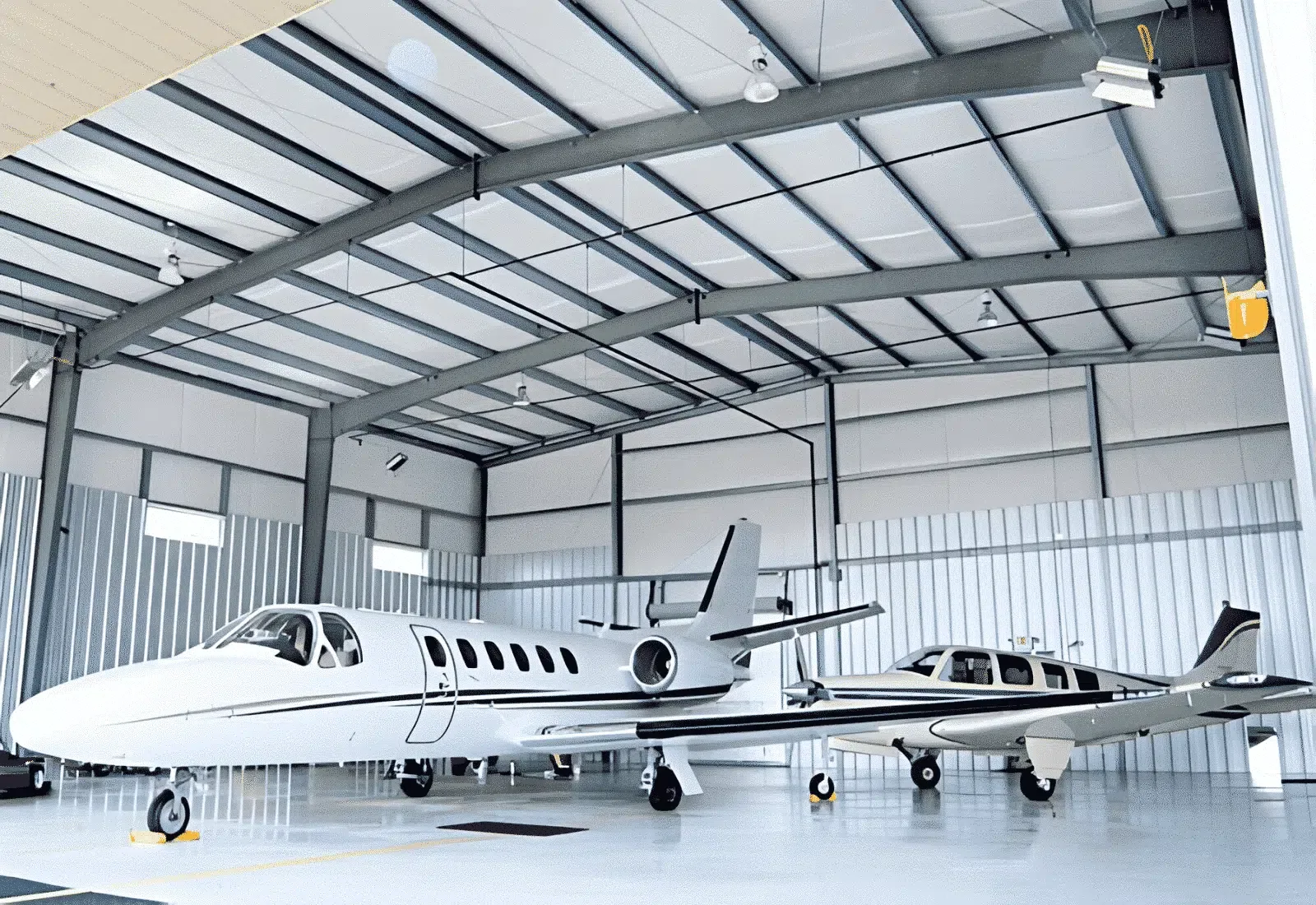
Aircraft Hangar Roofing in Denton, TX
A hangar door has to clear the opening after roof work is complete. That makes the frame, edge detail and work sequence part of the initial review, not a closeout surprise. In Denton, TX, we inspect the roof assembly, drainage, penetrations and attachment points, then record the areas that may affect door travel or aircraft access. For water entering outside standard hours, crews can respond at any hour to protect the space and investigate the roof area involved. A permanent repair scope follows the observed condition and the operating limits supplied by the facility contact.
Hangars often rely on large door systems, clear interior spans and controlled movement of equipment or aircraft. The roof can include metal panels, membrane sections, curbs, exhaust points or transition details, depending on the building. We identify what is present rather than assume one assembly across a property. Photos and measurements keep the scope tied to a roof area and door line. For adjacent industrial buildings, our manufacturing roof inspections and warehouse repair scopes also account for overhead operations and access restrictions.
Inspect the roof and opening together
Record where water appears, when the issue was noticed and whether the report followed wind, rain or maintenance activity. On the roof, we inspect seams, fasteners, flashing, roof edges and drainage near the affected area. Around a large opening, the frame, head flashing and connected wall details deserve a separate look. A ceiling report does not reveal which detail failed. We keep the suspected path distinct from the condition visible at each roof location.
Metal systems need attention at panel laps, fasteners, closures and movement joints. Membrane roofs require a different review of seams and penetrations. We document the system as observed and identify any concealed area that needs owner authorization before opening. A commercial roof inspection can establish those findings before a maintenance or capital decision. If active water requires quick action, our emergency roof response can protect the interior and isolate the immediate work area while permanent repair is scoped.
Set the clearance and access limits
The facility representative should identify the door operating envelope, aircraft movement windows, equipment routes, security rules and any area that must remain clear. We check where ladders, lifts, material staging and temporary protection can fit without entering that envelope. If the door cannot be cycled while a work zone is active, the restriction belongs in the sequence. The same record should show who authorizes access and how a schedule change is communicated.
Denton’s Loop 288 and US 380 corridors are identified in the city’s economic development plan as transportation routes relevant to access and development. That citywide context does not set a delivery route for an individual hangar. Current construction, traffic and facility instructions should be checked before materials move. We confirm the approved entry and staging point with the site contact. For work over an occupied industrial building, a phased reroof sequence can define active areas and preserve required clearances, subject to the actual hangar’s operating plan.
Choose work that fits the assembly
A local repair may fit when a defect is limited to a seam, fastener, flashing transition or penetration and the surrounding roof remains suitable. We state the area and repair method, then record what was not visible. If corrosion, movement or water entry appears across multiple panels, the scope may need broader investigation. A hangar opening can make even a small edge repair operationally important, so the estimate should identify the affected door line and any temporary restriction.
Replacement becomes a planning option when panel or membrane failure is widespread, repair history is recurring or the assembly no longer supports the requested service life. The owner can compare a defined repair with a larger scope by area, access, aircraft downtime and capital timing. A recover or coating requires compatibility and moisture review first. Our standing-seam metal roof work and edge metal repairs can be scoped to the observed assembly. The recommendation should state why the selected method fits the roof and the door clearances involved.
Use Denton weather records as context
Denton’s NWS series assigns a July mean maximum of 95.9°F and an August mean maximum of 95.8°F. The series describes the city’s air, not a metal panel surface. Our visit records panel, closure, fastener and edge conditions at the hangar. County tornado summaries provide regional event history; the specific roof needs an inspection.
Westpark TIRZ sits in an industrial district north of Airport Road. Denton planning materials list Loop 288 and US 380 among local transportation corridors. Neither regional reference identifies hangar ownership, equipment or roof condition. The operator supplies the current gate process and approved route; we inspect the building before proposing work.
Preserve the closeout details
Before inspection, gather roof drawings, prior repair records, door maintenance records, access procedures and any dated photographs of reported water. Identify the building and opening by the facility’s own reference system. Add the decision date and operating windows. We can relate roof observations to a marked plan, list the areas reviewed and explain which details could not be inspected safely. That record can support a maintenance line or a larger capital comparison.
At closeout, retain the approved scope, change records, work-area photos, material details and final observations. The person who can cycle the door should be present when the opening and head flashing are reviewed. The door should be checked under the facility’s procedure after work affecting its opening or frame. If wind has been raised as a concern, our wind-related roof inspection records visible conditions without assigning an unsupported cause. A condition report for the asset file connects findings with the roof area and inspection date. For service nearby, commercial roofing coverage in Lewisville can be discussed with the same access and documentation requirements.
Commercial Roofing Questions
Can roof repairs be made while aircraft remain in the hangar?
That depends on the work area, interior protection and the facility’s operating rules. We review the roof access and staging plan with the owner before setting the sequence. If aircraft or equipment must move, the scope should identify the affected area and the contact who authorizes that change.
What should be checked around a large hangar door?
We inspect the roof edge and connected flashing, then review frame conditions and the operating clearance affected by the work. The facility contact supplies the door procedure and any maintenance restrictions. A roof finding should remain separate from a door-system diagnosis unless that system is part of the authorized scope.
Does a metal roof always need replacement when fasteners move?
No. The inspection should identify panel condition, attachment pattern, movement and the extent of any water entry. A repair may fit a limited detail; wider deterioration may call for more investigation or replacement pricing. We document the evidence before comparing options.
How do weather concerns affect the inspection record?
The event date and regional weather information can help frame the review. They do not show what happened at one building. We compare dated photos with the roof’s observed seams, edges and attachments and record the conditions that support a repair recommendation.
What records help plan work around hangar operations?
Provide roof plans, access instructions, door operating windows, prior repairs and any restricted movement areas. Add a site contact who can approve staging and schedule changes. Those details let the work plan address the facility’s actual operating envelope.