
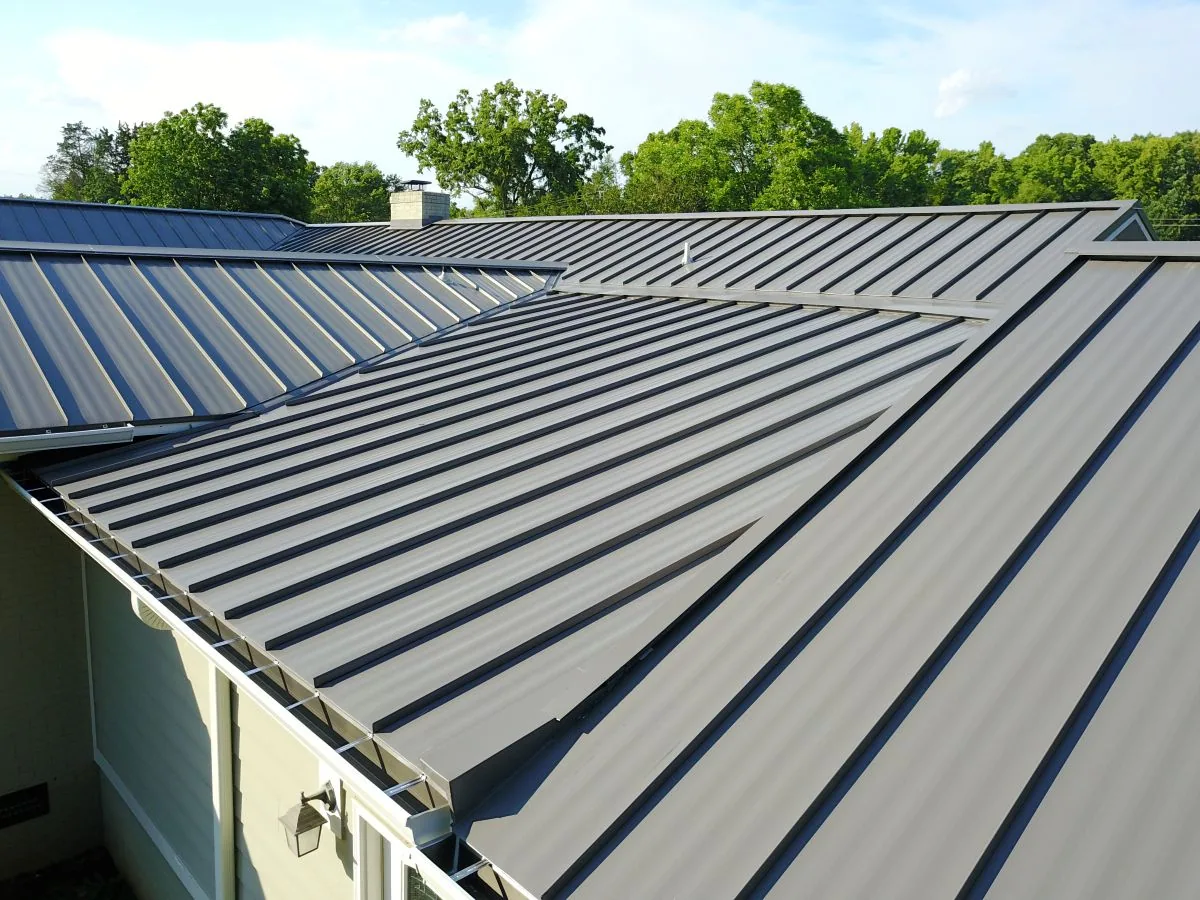
Standing Seam Metal Roofing in Denton, TX
A standing seam panel that has lifted at an eave needs a detail review before a repair is priced. Record the panel run, seam profile, clip spacing where visible, adjacent flashing, and any prior work. In Denton, tie the observation to a roof map and inspection date. A single lifted area does not establish a system-wide failure.
Standing seam roofs use raised vertical seams to join metal panels. Panel material, coating, clip design, substrate, and attachment vary by project. Confirm the assembly from closeout files or field review. The commercial roof inspection should distinguish the panel field from edges, transitions, and penetrations.
Identify the Panel and Attachment
Gather approved submittals, shop drawings, warranty documents, repair records, and product data. Record panel material and finish only when documents or labels support the identification. Record the profile and whether the roof uses fixed or sliding clips if the detail can be confirmed. Do not infer hidden attachment from the visible seam alone.
Panel lengths, slope, substrate, and movement allowances affect the assembly. Review transitions between roof sections, ridges, valleys, curbs, and wall conditions. If records conflict with field observations, document both and request clarification before specifying replacement parts. Keep each roof phase separate where different systems meet.
A metal roof retrofit review covers a different set of questions for exposed-fastener panels. That distinction matters when a property has more than one metal roof type. A TPO system overview offers a separate low-slope reference where the building has multiple roof forms.
Trace Panel Movement and Seam Conditions
Inspect seam engagement, panel ends, clips, and areas where panels meet fixed objects. Look for disengagement, distortion, fastener movement, punctures, or prior sealant repairs. Record the observed length and location. A seam issue may reflect local impact, installation detail, or movement; confirm the cause before assigning corrective work.
Metal panels change dimension as temperatures vary. The system needs a compatible method to accommodate that movement at clips, end laps, and transitions. Check for binding, oil canning, buckling, or stress at fixed penetrations without treating appearance alone as proof of failure. Compare the affected detail with the approved drawing.
If a leak is reported, map the interior area and inspect the roof path around seams, laps, and openings. Water can travel beneath the panel before entering the building. An isolated repair scope should identify the actual correction and any area that remains untested.
Inspect Flashings and Penetrations
Review eaves, ridges, hips, valleys, parapets, gutters, curbs, and pipe penetrations. Check closures, sealant condition, fasteners, underlayment exposure, and transitions between metal and another roof material. Photograph the whole detail, then the specific opening or distortion. Keep the image location on the plan.
Mechanical equipment can introduce supports and penetrations that interrupt panel runs. Record how each support connects and which trade controls adjustment or removal. An edge metal and gutter review can define work at perimeter details, where water collection and panel termination meet.
Do not assume a new sealant bead corrects a moving or poorly supported detail. Confirm the intended transition and compatible accessories. If the assembly cannot be confirmed from the accessible side, list the limitation and the next inspection needed.
Check Water Flow and Finish Condition
Look for debris at gutters, blocked downspouts, overflow marks, standing water, and staining below joints. A metal roof still depends on correct slope, drainage, and flashing. Record the flow path and the observed location. A drainage condition can contribute to deterioration, but it does not establish the water-entry point of every interior leak.
Inspect the finish for chalking, scratches, corrosion, or coating loss. Identify whether the condition is surface-level or exposes base metal. Do not apply a coating recommendation without identifying the existing finish, substrate preparation, and product compatibility. Where the owner requests a coating option, an assessment of coating restoration can record eligibility checks and limits before the scope is priced.
Denton's NWS normals report hot summer air temperatures and annual precipitation. Those regional measures do not determine panel temperature, corrosion, or a roof's present condition. Use field evidence and product requirements for the actual assembly.
Compare Detail Repair with Panel Replacement
A detail repair may fit when the problem is bounded, adjoining panels remain serviceable, and compatible parts can restore the water path and movement allowance. Panel replacement deserves review when distortion, corrosion, or failed seams recur across separate runs. State the condition and evidence supporting each option.
Before replacing panels, confirm profile, gauge, finish, attachment, underlayment, and perimeter details. A substitution that looks similar may not fit existing clips or seams. Keep manufacturer confirmation and field measurements with the scope version. Compare the affected square footage, access needs, and equipment coordination across bids.
Westpark TIRZ is a city-designated industrial district north of Airport Road. Denton’s materials describe infrastructure investment there as a development measure; the designation offers geographic context, while panel measurements and property records determine this roof assessment.
For routine work, a preventive maintenance plan can schedule gutter checks, seam observations, and dated photos separately from capital replacement.
Set Access and Inspection Timing
Confirm the roof access contact, tie-off requirements, occupied hours, staging space, and inspection date before mobilization. Denton’s planning record links US 380 and Loop 288 with local development. That citywide reference cannot establish site entry or current travel conditions. Confirm the roof contact’s arrival instructions and check active closures before setting the panel survey.
Krum is a nearby incorporated city, but its name does not define the project's route or service availability. Confirm the actual property address and site rules. If the facility has an operating schedule or restricted roof zones, list those limits before estimating repair duration.
Keep temporary leak protection separate from permanent panel or flashing repairs. Document who will remove it, how the area will be checked, and when the permanent work can proceed. A later inspection should compare the same marked locations and retain the prior photo log.
Retain the Panel and Repair Record
The closeout file should include the roof map, panel identification, inspection date, photographs, scope version, access records, product data, and repair boundaries. Record measurements and the basis for any panel or clip substitution. Add exclusions where concealed attachment or substrate was not reviewed.
After work, photograph the completed seam, eave, ridge, penetration, and gutter transition before access changes. Record adjustments made in the field and confirm that the finished detail matches the approved scope. Preserve warranty correspondence with the project file, while keeping coverage conclusions tied to the actual terms.
If a future leak is reported, the owner can compare the new observation with the documented panel run and earlier repair. That makes the next inspection more direct and keeps the roof history tied to actual conditions.
Commercial Roofing Questions
Can a standing seam panel be repaired without replacing the full run?
Sometimes. Confirm the panel profile, seam condition, clip attachment, and extent of damage first. A repair should preserve the intended movement and water path.
How can panel movement problems be identified?
Inspect clips, end details, penetrations, and transitions for binding or distortion. Compare them with the approved drawings and record what remains concealed.
Does a lifted seam mean the roof is leaking?
Not necessarily. Record the seam condition and compare it with interior reports, adjacent flashings, and water paths before linking it to an entry point.
Can standing seam metal be coated?
Eligibility depends on the finish, corrosion, preparation, and selected product requirements. Identify the existing assembly and complete compatibility checks before pricing a coating.
What should a metal roof closeout include?
Keep panel and finish data, measurements, dated photos, repair boundaries, product documents, access records, and any field changes with the scope version.