
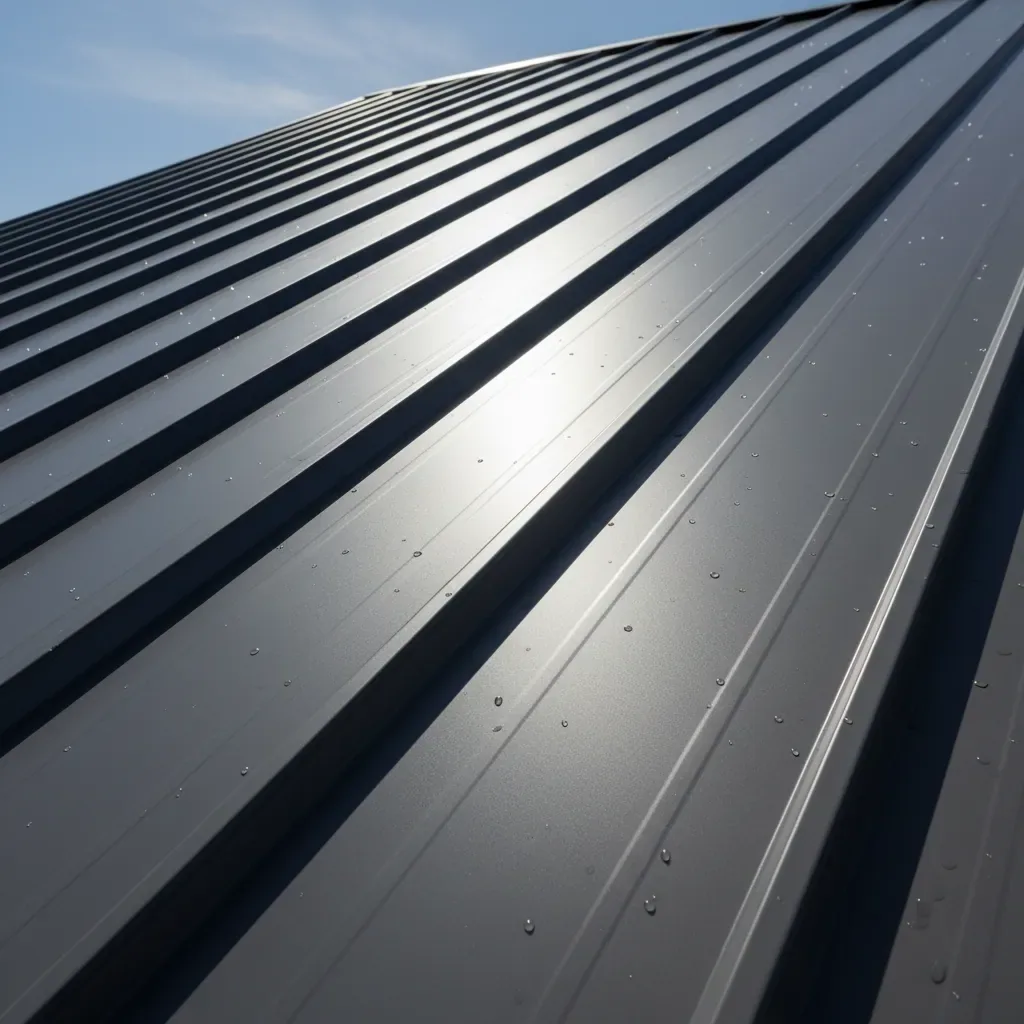
Metal Roof Retrofit in Denton, TX
A row of backed-out fasteners is a reason to map the panel and support condition. It does not prove that a retrofit can be installed over the existing roof. For a Denton building, record panel profile, fastener pattern, washer condition, laps, and known repairs before comparing options.
Exposed-fastener metal roofs attach through the panel with screws and sealing washers. Age, movement, support condition, corrosion, and previous work all affect the repair line. A commercial roof inspection should identify what can be seen and which areas need confirmation from below or through an approved test.
Document the Existing Roof
Gather original panel specifications, attachment drawings, repair records, warranty terms, and any previous coating or overlay details. Map the roof by elevation or section. Record panel widths, end laps, ridge conditions, valleys, curbs, and perimeter edges. If a roof has multiple additions, label them separately rather than treating the full area as one assembly.
Check whether screws engage the intended support and whether the support itself is sound. A surface view cannot confirm hidden purlin or deck condition. Where that information changes the proposed method, coordinate access below or define an approved test opening. Record the location and restoration.
Standing seam panels use different connections. The standing seam review covers raised seam and clip details; a TPO system page offers a separate low-slope comparison. Confirm the actual roof type before using either as a bid alternative.
Inspect Screws and Sealing Washers
Walk the fastener rows where safe access permits. Look for backed-out screws, missing heads, split washers, compression loss, corrosion, or overdriving that deforms the panel. Record recurring patterns and the supporting member where it can be confirmed. Do not assume tightening every screw is appropriate; the panel and substrate may not accept that repair.
Check the washer material and compatibility against the panel finish and repair method. A replacement fastener must suit the support and application. Document the specified size, location, and installation method in the scope. For repeated failures, investigate panel movement, support alignment, and prior attachment rather than pricing only a fastener count.
If a leak is reported, compare the interior location with fastener rows, end laps, penetrations, and trim. Water can travel before it enters the building. A repair scope should separate confirmed openings from areas that need follow-up.
Trace Laps and Perimeter Details
Inspect side laps, end laps, ridge caps, eaves, valleys, gutters, and wall intersections. Look for open joints, displaced closures, cracked sealant, bent trim, and debris that redirects water. Photograph the panel run and each detail. A repair photo without a roof location is difficult to use later.
At curbs and pipes, identify how the metal panel terminates and whether an accessory flashing moves with the panel. Record added equipment, unused openings, and signs of repeated patching. A edge and gutter detail review can assign work at transitions where panel drainage meets perimeter collection.
Do not bridge a moving joint with a rigid patch unless the approved system allows it. Record the detail that must remain flexible and list any product confirmation needed before installation.
Assess Corrosion and Finish Limits
Map scratches, coating loss, rust staining, perforation, and contact between dissimilar materials. Separate surface discoloration from metal loss. If a panel is perforated, identify the extent and the condition of the supporting assembly before selecting an overlay or replacement detail.
A coating may be part of a restoration plan only when the surface, preparation, attachment, moisture, and product requirements are suitable. Record cleaning, corrosion treatment, repairs, and adhesion testing as separate steps. A coating restoration review can define the checks without implying that paint alone corrects loose fasteners or damaged supports.
Where multiple panels show corrosion or the substrate is uncertain, compare panel replacement with a retrofit assembly. The selected option should state what is retained and how the new work attaches to confirmed support.
Compare Repair with Retrofit Work
Localized repair may fit when the defect is bounded, panels remain attached, supports are sound, and compatible replacement parts are available. A retrofit option needs a broader review of structural capacity, attachment, drainage, edge height, transitions, penetrations, insulation, and existing layers. List each assumption that affects feasibility.
Do not present a new roof over the existing panels as a default. For a retrofit, keep the proposed attachment pattern and structural assumptions on the same drawing set. Identify which existing members carry the work, where access from below is required, and any area excluded from the load review. Record the review date and drawing version used for pricing. A changed panel layout can alter both the load path and construction sequence. Confirm the engineering path, applicable code, added load, and permit requirements for the actual project. Include access from below if needed to confirm framing. Keep panel or insulation removal zones visible in the scope.
Denton's economic development plan references infrastructure and transportation connectivity in the Westpark industrial area. That context does not establish the roof type or structural capacity of a specific property. The project record should rely on drawings, measurements, and property-specific review.
A recover evaluation can outline existing-layer checks, while a replacement scope can document removal and restoration limits. Compare both against the same roof area and exclusions.
Set the Denton Work Window
Coordinate the roof contact, tenant hours, lift zone, utility clearances, delivery space, and owner decision date. Denton’s planning documents discuss development and transportation around US 380 and Loop 288; treat that as citywide background. Confirm current notices and the property’s receiving instructions before dispatching panels or a lift.
Krum is a nearby incorporated municipality. Confirm the property address and governing authority before planning an inspection or permit path. A city name is not a statement about travel time or contractor availability.
Document weather limits and temporary protection for open panels or removed fasteners. Keep leak protection distinct from the permanent repair. If a visit cannot cover every elevation, list the excluded sections and the follow-up access required.
Retain the Fastener and Panel Record
Keep a dated roof map, fastener observations, panel identification, photographs, support findings, scope version, product data, access records, and exclusions together. Record which attachment points were confirmed from below and which remain concealed. Identify any engineering or permit review still open.
At closeout, photograph completed fasteners, washers, laps, trims, and transitions. Record the repair line and any panel replaced. If the work changes drainage or adds an assembly, save the approved details and inspection record with the project file.
When a leak returns, compare its location with the earlier map before repeating the same repair. The history should show what was observed, what changed, and what remains outside the completed scope.
Commercial Roofing Questions
Can exposed-fastener screws simply be tightened?
Not in every case. Check the washer, panel deformation, support engagement, and attachment pattern. The correct repair may require compatible replacement hardware or broader investigation.
What does a metal roof retrofit assessment include?
It reviews panel and support condition, attachment, drainage, edge details, existing layers, added load, engineering, and permit questions for the actual building.
Can a coating fix rust around fasteners?
A coating does not correct loose attachment or perforated metal by itself. Confirm corrosion extent, preparation, support condition, and product requirements before pricing restoration.
How should a recurring metal roof leak be documented?
Map the interior report and inspect nearby fasteners, laps, penetrations, and trims. Compare prior repair photos and record any inaccessible panel area.
Which records should be kept after a metal roof repair?
Retain the dated map, panel and fastener details, product information, completed-work photos, exclusions, support findings, and remaining review items.