
Roofing for Retail and Restaurant Chains in Denton, TX
A roof call from a store manager needs a property address, not just a brand name. In Denton, TX, we identify the affected location, inspect the roof area, and record the conditions that support a repair line. Keep the manager’s report, interior impact, and field observation distinct. That lets a facilities lead decide whether to protect merchandise, arrange a contained repair, or open a larger investigation. Emergency response remains available at any hour, including weekends and holidays, when water is active.
A chain can use consistent reporting fields without treating each site as the same building. Record the inspection date, roof-zone label, access record, scope version, and store contact. A hospitality portfolio file addresses a different guest-service environment, while property managers may control access for leased retail space. Confirm who authorizes work at each address.
Map the Store Report to Roof Evidence
Record the room or sales area, time, weather reported, and whether water is still entering. Then inspect the accessible roof details: seams, drains, curbs, penetrations, edge metal, and previous patches. A stain above a dining area or aisle does not establish the entry point. Photos and a roof map connect the report with observed conditions and show areas that could not be reached.
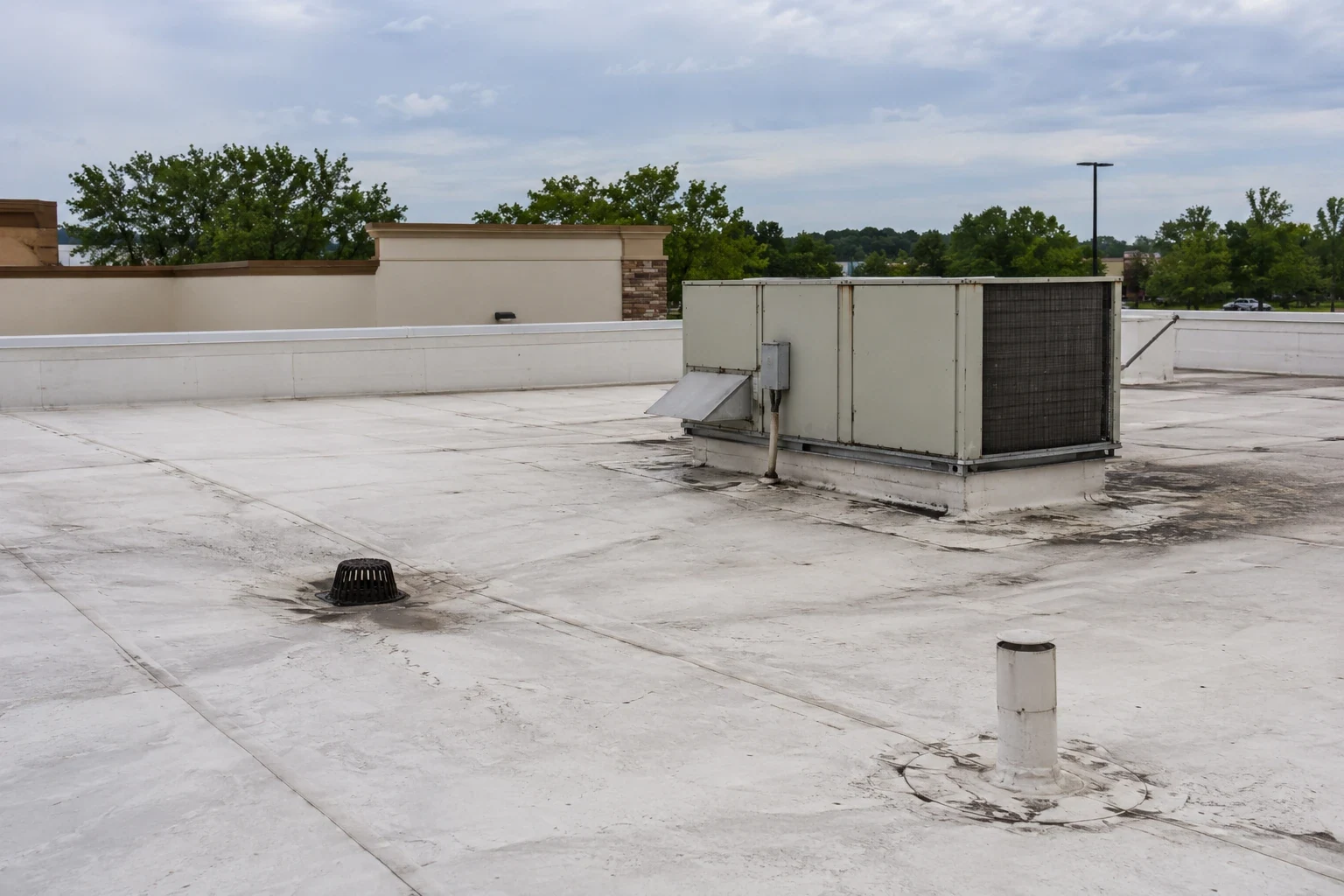
Restaurants may have exhaust equipment, grease-related maintenance, and rooftop supports near membrane transitions. Retail properties may include canopies, signage, and later tenant improvements. We confirm the details at the building rather than assume a chain standard. A curb and support inspection can identify flashing interfaces. If the roof system is unclear, a commercial roof inspection records the assembly and open questions before a material-specific repair is priced.
Schedule Around Store Hours
Confirm customer hours, delivery windows, kitchen operations, roof access, lift staging, noise limits, and interior protection. Name the manager who can close an affected room and the facilities contact who can approve a schedule change. If the store remains open, divide the work area and state how customers and staff stay clear. Include setup and cleanup in the sequence, not only the roof installation hours. A restaurant may need a different exhaust shutdown than a retail sales floor needs for fixture protection.
Denton planning names Loop 288 in its access discussion. The separate US 380 project has its own status; a closure or detour could change the delivery route, so confirm current work and the store’s receiving entrance before dispatch. Downtown TIRZ and Westpark TIRZ are separate Denton development districts, not retail property inventories. A location in The Colony needs its own store contact and municipal review. For occupied properties, phased roofing work can define nightly access and room handoffs.
For a multi-site rollout, confirm that each location can provide the same minimum information before placing it in a bid group. A missing roof plan or access contact should remain an open item, not be filled by copying the previous store's assumptions. Set separate work dates where delivery or tenant rules differ. The rollout table should name the location, status, owner decision, and the next action due.
Separate the Store Fix From the Program
A single flashing, seam, drain, or puncture may support a localized repair when nearby materials remain serviceable. We identify the boundary, correction, exclusions, and any condition that could change the recommendation. A recurring issue at one address does not prove a chain-wide defect. Compare each roof with its own assembly, repair history, moisture findings, and equipment layout.
For a portfolio program, keep immediate protection separate from permanent repair and replacement. A repair scope can be compared with a replacement option using the same area and operating assumptions. Recovery or coating requires compatibility, moisture, attachment, and drainage review. A chain-level report may summarize work status, but the supporting photos and owner approvals should remain property-specific.
Use Denton References as Context
Denton weather normals show nearly forty inches of annual precipitation. That long-term context may affect inspection timing, but it does not describe a store roof or prove a leak. We record the actual condition at the store, including drainage and visible membrane or metal details. Work dates should account for forecast and product instructions.
Westpark TIRZ sits north of Airport Road, and Downtown TIRZ is a separate redevelopment area. Neither identifies a retail tenant. The city plan lists Loop 288 among access corridors; the separate US 380 work has its own status. Confirm the store entrance and delivery limits with its manager. A manufacturing roof program may share portfolio reporting needs, but production constraints differ from customer-facing hours.
Keep Brand Reporting Useful at Closeout
Before mobilization, provide the roof plan, store hours, delivery restrictions, prior repair records, manager contact, and facilities approval path. If a test opening is proposed, identify its location, protection, method, and restoration. State who can authorize a change and how the store is notified. A concealed-condition allowance should say what remains unknown rather than disguise an open question as a fixed repair.
At closeout, keep dated photos, completed roof areas, material records, change approvals, exclusions, and any remaining temporary protection. Mark the store contact who accepted the work area. Keep reporting fields consistent across locations, but preserve the evidence behind each repair in its site record. The corporate summary should link status back to that dated inspection.
When several sites are reviewed in one budget cycle, group them by decision date and urgency, not by the assumption that each roof has the same defect. Show immediate work, testing, and future capital as separate entries. An operations manager can then see which store needs a closure, which can remain open, and what owner approval is still pending. Keep that table tied to the underlying dated inspection.
A closeout record should show which doors, rooms, or customer areas returned to use and who accepted them. If a temporary cover remains, identify its review date and the responsible contact. Add any site-specific restriction that the next crew needs before access. These records prevent a store status report from showing a job complete while an interior protection or follow-up item remains open. Give each remaining item an owner and review date.
Commercial Roofing Questions
Can a restaurant roof be repaired after closing?
The schedule depends on access, weather, staging, kitchen exhaust, and how the interior will be protected. We define the work window and the store contact who can approve changes. The proposal should include setup and closeout, not only active repair time.
Does the same leak report mean every location has the same issue?
No. A chain-wide report can identify a pattern to investigate, but each address needs its own roof observations. We record the building, area, assembly, and findings before recommending a shared repair standard.
What information should a store manager provide?
Give the property address, affected room, time, current water status, access contact, and store hours. The report helps us prioritize protection and plan inspection. It does not replace roof access or a field assessment.
How should a chain compare bids for several stores?
Use comparable work areas, scope versions, access assumptions, exclusions, and decision dates. Keep each location’s photos and approvals attached to its own record. A portfolio table can summarize status without merging the evidence.
What should be documented after an overnight repair?
Retain the dated photos, roof area, materials used, work performed, exclusions, and any temporary measure still under review. Record who accepted the store area and when it reopened. If permanent work remains, assign an owner and a decision date.