
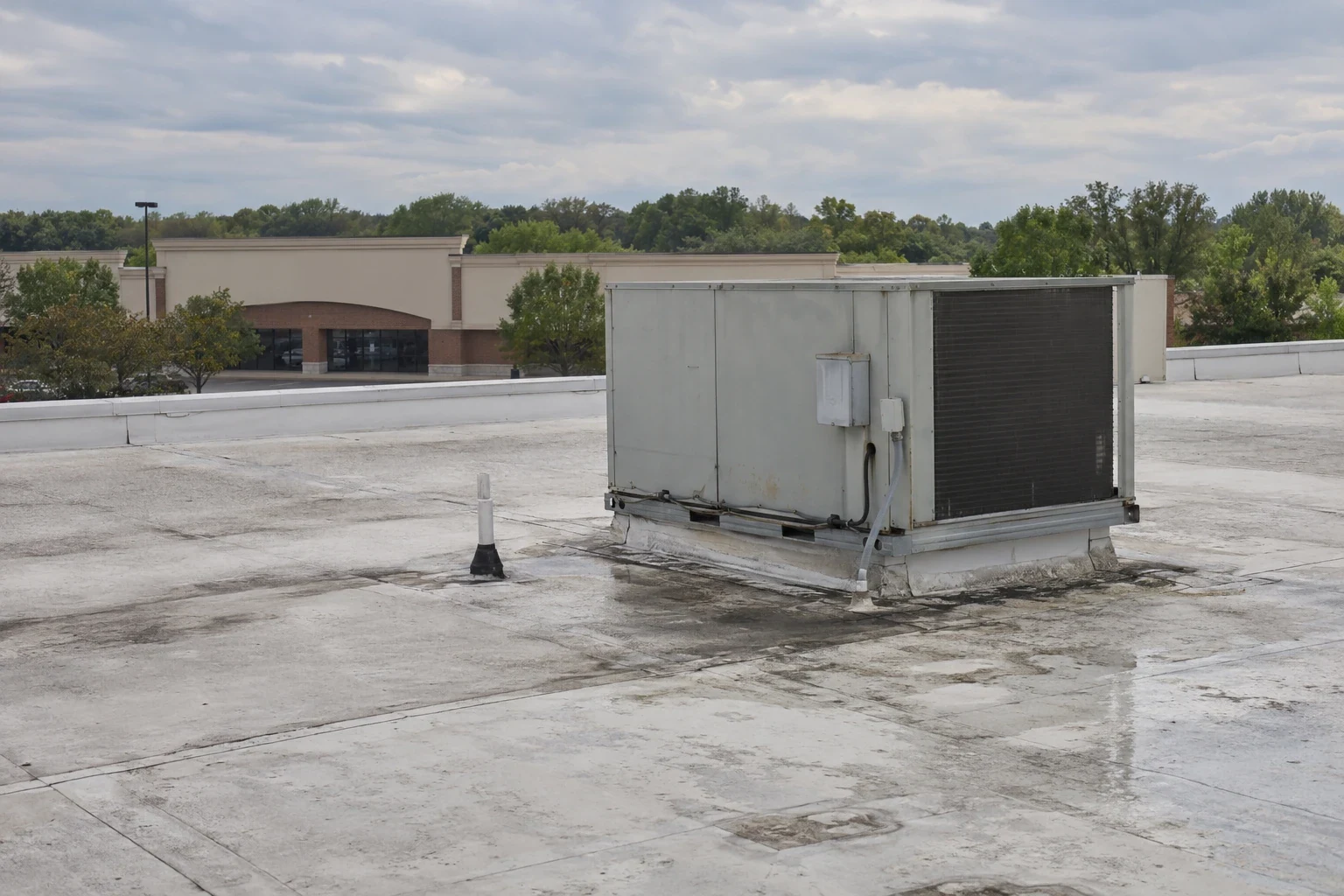
Shopping Center Roofing in Denton, TX
A shopping-center roof can serve several suites, storefronts, and service areas while one leak appears in a single tenant space. We record the reported interior location, time, and operating contact, then map it against the roof plan. That separates the tenant's symptom from the roof condition and gives the property manager a defined decision point.
Denton's Downtown TIRZ and Westpark TIRZ are active development districts. Their infrastructure purpose is area context, not a condition finding for a shopping-center roof. We assess the actual center in Denton, Lewisville, or Corinth, including the assembly, drainage, penetrations, and access conditions.
Connect Suite Reports to the Roof
Ask the tenant to identify the room, ceiling bay, date noticed, and whether water is still active. We compare that report with roof drains, curbs, wall transitions, seams, and previous repair records. Water can travel before it reaches a ceiling. The first visit therefore records the suspected route and the limits of what was visible.
For a multi-tenant property, we agree on a single manager contact and a notification method. Roof access, ladder placement, and interior entry are coordinated through the owner. The service record keeps observations by roof zone rather than combining unrelated leaks into one open-ended repair line.
Use a property plan to distinguish storefront rows, rear service space, canopies, and roof sections over common areas. We confirm the reported suite against the plan and photograph the accessible roof zone. A lease responsibility question may affect who approves work, but it does not change the need to identify the assembly and the water-entry path before pricing a permanent repair.
Water that reaches a tenant space can affect inventory, finishes, and business operations, but each consequence belongs in the owner record rather than the roof diagnosis. We record the reported interior impact, temporary protection, and any area that remains wet. The roof recommendation then stays specific: identify the detail to repair, the limits of the work, and the inspection that will confirm whether the path was resolved.
Review Drainage and Shared Details
Debris, a blocked drain, a failed seam, and a low area can create similar interior reports but require different work. We inspect drains, scuppers, overflow paths, membrane seams, penetrations, and perimeter details. Ponding by itself does not identify the cause or establish a repair. We document the water path, drainage components, and any slope or substrate question needing further review.
Retail roofs often include equipment, signs, parapets, and later tenant improvements. Each penetration or attachment can interrupt the roof system. We check whether flashing is integrated with the assembly and identify repairs that may need coordination with another trade or the property manager.
At the drain, we check the bowl, strainer, connection, surrounding membrane, and overflow route. At a wall, we inspect the termination and any counterflashing interface. Around equipment, we look at curb height, flashing continuity, and nearby seams. These observations help distinguish a maintenance item from a roof-system failure and identify where water could move below the surface.
Phase Work Around Open Businesses
Work can be sequenced by roof zone, tenant access, delivery hours, and interior protection. The center's manager sets operating constraints and notices. We list staging, lift access, noise-sensitive periods, and temporary weather protection in the proposed sequence. If a condition changes, the owner can see which work area is affected and whether the decision date moves.
Emergency water control and permanent correction are not the same scope. The response record names the affected area, what was protected, and what remains to inspect. A permanent repair can then address the confirmed defect without treating a temporary covering as a final system.
Tenant reports need a consistent handoff. We ask the manager to identify the suite, reported time, whether water is active, and any interior protection already in place. The report remains linked to the reporting contact. If two occupants describe different symptoms, we keep the locations separate until the roof evidence supports connecting them.
Compare the Repair with Capital Work
An isolated failed flashing or puncture may support a bounded repair. Recurring leaks at several suites, widespread seam distress, or moisture in insulation can justify a replacement comparison. We document visible conditions, test limits, and any concealed areas that could change the quantity. The owner can then review repair, recover, and replacement options against operating plans.
The City's plan identifies Loop 288 and US 380 as transportation corridors relevant to Denton development. That context can help frame scheduling questions, but current traffic and individual site access must be checked before mobilization. Keep the inspection date, scope version, tenant notices, photos, and closeout record together for the next budget review.
A bounded repair can suit one damaged penetration when the adjacent field membrane and insulation remain serviceable. Repeated seam failures or moisture across a larger area may change the choice. We mark repair limits and explain what testing could expand them. For a center with several grocery or retail tenants, the grocery roof review can inform use-specific coordination; an office roof review addresses a different occupancy.
Lewisville and Corinth are nearby municipalities in the service area; their names do not imply a shared roof condition or operating schedule.
For food tenants, a grocery roof review can focus on refrigeration and receiving interfaces; an office roof review addresses another occupancy. We can trace a commercial roof leak repair, inspect roof drains and scuppers, or prepare a replacement comparison if conditions span several zones. For a shopping property in Corinth, the manager provides current entry, delivery, and tenant-notice requirements.
Retail roof scopes should account for boundaries between landlord and tenant work. A sign attachment, exhaust duct, or later refrigeration line may involve another trade. We identify the roof flashing that belongs in the roofing scope and list any owner coordination needed at the penetration. For a temporary dry-in, the closeout records the material used, the area protected, and the inspection needed before permanent work. That distinction helps a manager track open items across tenant turnover. If the cause is still uncertain, we leave the repair line conditional on further testing instead of pricing an assumed failure as confirmed.
After a repair, compare the closeout photograph with the original leak map. Record whether the tenant reported another event, whether the roof area was revisited, and whether interior drying or ceiling work remains with the owner. Those items have different responsible parties. We leave the open roof question visible until a follow-up confirms it. A manager can then close the repair line, authorize more testing, or add a separate capital scope without mixing tenant restoration into the roofing quantity.
Commercial Roofing Questions
Can the inspection start from a tenant leak report?
Yes. We use the report to locate the interior symptom, then compare it with roof conditions. The report stays labeled as a report until the inspection identifies a supported water path.
Who coordinates access to occupied suites?
The property manager or owner supplies the contact and approval path. We document any interior entry, roof access, delivery, or notification requirement before work is scheduled.
When should a center compare repair with replacement?
Compare both when failures recur across zones or moisture appears broader than one detail. We describe observed areas and unknowns so the owner can judge whether a repair remains bounded.
What does a roof repair closeout include?
The record should identify the work area, repair performed, photographs, any limitations, and follow-up needed. We keep the closeout tied to the same roof-zone reference used in the inspection.