
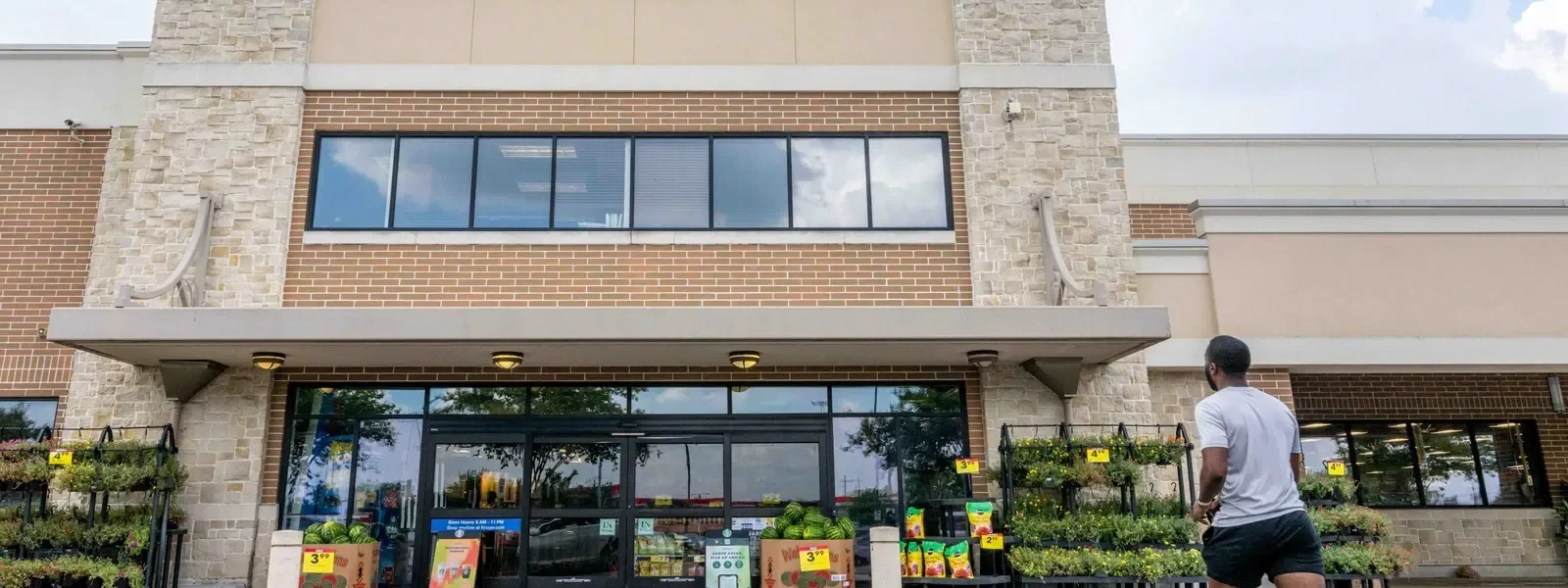
Grocery Store Roofing in Denton, TX
A roof leak over refrigeration or food preparation needs a location record before it needs a repair label. We record the affected room or equipment zone, the time reported, whether water is active, and the contact managing operations. Then we compare that report with roof drains, curbs, penetrations, seams, and prior repairs. A ceiling symptom is evidence of water inside, not proof of where it entered.
Denton's July mean maximum temperature normal is 95.9°F. That describes outdoor air, not the roof surface. For a grocery property in Denton, Lewisville, or Frisco, we inspect the assembly and its actual drainage before recommending work.
Trace the Reported Water Path
Grocery buildings may contain coolers, freezers, exhaust, and other equipment with roof penetrations. We map each reported interior location to the roof plan, then examine nearby flashing, seams, drains, and transitions. Water can move laterally within an assembly, so the report keeps the first observation separate from the suspected entry point.
If the route is not visible, we identify the next test and its limits. An infrared moisture survey may help select areas for confirmation, but it does not replace confirmation of the assembly or authorize an opening. We mark what was accessible, photograph the inspection boundary, and ask the owner to approve any intrusive step.
A grocery roof may combine membrane fields with metal edges, rooftop units, and additions that do not share the same installation date. We record changes in elevation and flashing type before assigning a repair quantity. A seam that opens at a transition is not the same detail as a puncture in the field membrane. The scope names the observed condition and the material needed to restore that specific interface.
Protect Food and Operating Areas
The owner sets food-safety procedures, interior access, and equipment shutdown rules. We coordinate with the designated facilities contact before entering a store area or approaching rooftop units. The work plan records any interior protection, temporary dry-in, material staging, and the person who can approve a change. Roofing work should not interrupt a refrigeration circuit or other building system without the responsible trade and owner.
For a leak response, immediate water control and permanent correction are separate tasks. We record what was protected, the roof zone involved, and the follow-up inspection still required. If the condition changes while the building remains open, the manager can identify the affected area and update the sequence.
Where refrigeration or exhaust equipment is close to a leak report, we check the curb, pitch pocket, conduit support, and nearby membrane. We photograph the flashing and mark any adjacent mechanical work that needs another trade. If an equipment line enters the roof, its support and seal must be reviewed together. The owner decides whether a unit shutdown or removal can be scheduled.
For a membrane repair, the proposal identifies the patch boundary, seam preparation, compatible material, and restoration at the curb or wall. A detail that cannot be prepared dry may need a different work window. We include the sequence for drying, cleaning, and tying the new work into sound material. The owner can see whether the quoted repair addresses only a puncture or also corrects the adjacent flashing that allowed water to move.
For a facility owner, the final comparison is easier when the report states one decision per roof area: repair now, test further, or plan system work. We list the conditions behind that choice and the date the inspection occurred. If the owner selects a repair, the closeout identifies the completed detail and any excluded adjacent work. That record is useful when the next leak report arrives or a later capital review considers the same roof.
Inspect Drains and Equipment Curbs
At each drain, we look at the strainer, bowl, connection, surrounding membrane, and overflow path. At a curb, we review flashing height and continuity, fasteners or counterflashing, and nearby seams. A clogged drain and a failed membrane detail may produce similar water reports but need different work. The report ties each observation to a photograph and an owner-readable roof reference.
Repeated patches around refrigeration or exhaust equipment can hide a larger interface issue. We identify where the flashing stops and whether another trade's work crosses the roof assembly. The scope states the roofing work and any owner coordination separately. That prevents an equipment repair from being assumed inside a roof proposal.
Drainage review includes the flow path to the roof drain, not only the drain bowl. We record debris, standing water, overflow details, and low areas visible during the visit. If ponding remains after drainage maintenance, slope and insulation conditions may need further review. The report distinguishes a maintenance item from a defect requiring membrane or substrate work.
Before mobilization, confirm whether deliveries, lift use, roof access, and material staging can occur during the proposed hours. The plan should identify where materials will be set, how the roof will be protected at shift end, and who can approve a weather change. If a cooler or exhaust unit is part of the work area, the responsible trade and owner contact are named before any shutdown or removal is considered.
Compare a Repair with a System Scope
A bounded repair may fit one split seam or failed curb when surrounding membrane and insulation remain sound. Broad wet insulation, repeated failures, or deteriorated edges can change the recommendation. We list repair limits, concealed-condition allowances, and any testing not included in the base. For a broader choice, the owner can compare a replacement scope against the current maintenance plan.
Where a multi-tenant store has several food and retail areas, a shopping-center roof review can address shared access; a warehouse assessment may fit a receiving building. We also inspect drains and scuppers, document a roof inspection, and define repair work. For projects in Lewisville, the owner confirms local access and permit details.
A recover may reduce tear-off only when the existing assembly is suitable and moisture findings support that option. We check attachment, layers, and substrate limitations before it is priced. If moisture is widespread or the deck needs review, replacement and recover should not be presented as equal choices without explaining the difference. The proposal identifies which condition could change the recommendation.
Cost and timing follow roof area, access, assembly, material availability, dry-in needs, and any equipment coordination. A grocery manager can review those drivers by zone and separate immediate protection from permanent work. The inspection date, photos, base scope, alternates, exclusions, and closeout records belong in the same record. A later report can then be compared with the repair boundary instead of treated as a new, unrelated event.
Commercial Roofing Questions
What should be reported when water appears near a cooler?
Identify the interior area, time noticed, whether water is active, and the equipment or room contact. We use that report to locate the inspection zone, then confirm what the roof assembly shows.
Can roof work proceed while refrigeration remains online?
The facilities contact and responsible trade determine shutdown rules. We can plan roof access and protection around owner requirements, but the scope must state any equipment work that is excluded or separately coordinated.
How do drains affect leak investigation?
A drain review checks the strainer, bowl, connection, membrane, and overflow path. Those observations help distinguish a drainage issue from a failed seam or flashing detail.
When should a grocery roof be considered for replacement?
Compare replacement when repairs recur, moisture extends beyond a bounded area, or the existing assembly cannot support the required scope. We document the evidence and identify concealed questions before pricing.