
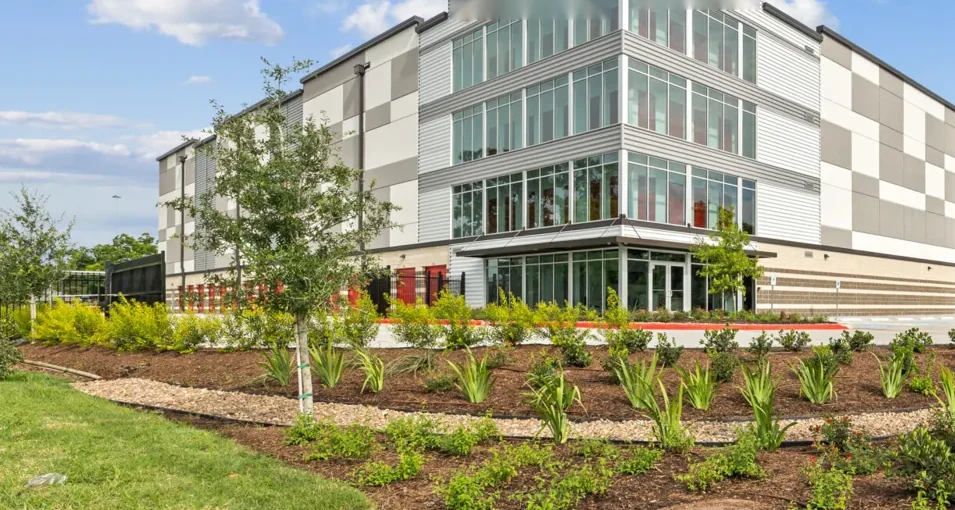
Self-Storage Facility Roofing in Denton, TX
A wet storage unit starts an investigation, not a building-wide conclusion. The first useful record identifies the unit row, date, ceiling or wall condition and any change after rain. In Denton, TX, we trace the report to the roof area above it, then record the assembly, drainage and visible defects. Calls about active water are handled at any hour, with the first work focused on limiting exposure to stored contents and checking the roof area tied to the report. The permanent scope should define each repair boundary and what remains unknown. That lets the operator decide whether to authorize a focused repair, further testing or a broader capital review without treating every unit as equally affected.
Self-storage sites may include climate-controlled buildings, drive-up rows, office space and covered loading areas. The roof layout and operating model differ by property. We label each structure and roof area rather than group them under a single facility name. That distinction helps staff connect tenant reports to the inspection record while keeping other units in service where conditions allow. Our warehouse roof inspections and multibuilding property scopes use similar area-by-area documentation when a single site contains different roof sections.
Match the unit report to the roof
Ask staff to record the unit number or corridor, when the issue appeared and whether the contents or interior finish were affected. The roof review then checks drains, scuppers, seams, wall transitions, equipment curbs and penetrations above the reported area. A stain may appear away from the opening where water entered, so the inspection follows the assembly and drainage path. We photograph each observation and keep the suspected cause separate from a confirmed defect.
Where plans are missing, we can build a practical roof-area reference during the inspection. The photo log labels each building, hatch and repair location. If a test cut or other invasive check is useful, the owner authorizes its location before the assembly is opened. A commercial roof inspection establishes what is visible and what needs further review. For an active intrusion, leak investigation and repair can start with temporary protection, followed by a defined permanent repair when the leak path is understood.
Compare isolated repairs with a full section
A repair can remain local when the membrane and surrounding details are in serviceable condition. We state the roof area, repair method, access needs and any nearby condition that should be watched. If moisture extends below the surface or repeated leaks appear along one building line, the scope can separate added investigation from immediate work. That gives the operator an option to address the affected portion first while the remaining roof is evaluated.
A larger replacement scope may fit when deterioration is widespread, insulation is wet across several areas or repeated repairs no longer resolve the operating problem. The comparison should show how much roof is included, which buildings remain in service and how tenant access will be protected. A recover or coating can be considered only after assembly and moisture review. Our roof recover assessment checks whether the existing roof can support that approach; the coating review documents substrate and drainage conditions before that option is priced. The owner can compare immediate repair with a capital plan using the same findings.
Keep storage access usable
Work planning begins with the manager’s access rules, gate hours, unit traffic and delivery routes. Identify rows that require a clear drive aisle and whether tenants need advance notice before a roof crew enters a nearby space. If the office or a climate-controlled building must stay open, list those operating requirements beside the proposed sequence. Roof access, lift placement and material staging should be reviewed before the work date is confirmed.
Noise and odor depend on the repair materials and method. We state what section is active, how it will be protected at the end of each shift and which route remains available. A rain delay may change the sequence, so the manager needs a contact for schedule updates. In Denton, Loop 288 and US 380 are transportation corridors named in the city’s development plan. Current traffic and construction should be checked for deliveries and crew routing. A roof work in Krum can keep separate buildings and drive-up rows distinct in the schedule and closeout record.
Read climate and district facts carefully
Denton’s annual precipitation normal is 38.44 inches; the climate series also records mean maximum and minimum air temperatures of 76.2°F and 54.5°F. A storage manager can use those measures to prioritize a drain, seam and flashing check, but they do not locate a water entry point. NWS county tornado climatology adds event context. Dated photos and roof observations determine the repair area.
Westpark TIRZ, north of Airport Road, is an industrial district; Downtown TIRZ is a separate Denton redevelopment area. These municipal names can orient a work order. An operator with buildings in Frisco or Prosper should keep unit maps, dates and photos assigned to each property. A district, city or regional weather record does not establish the condition at an individual storage roof.
Tie repair records to each building
Collect the last inspection, roof plans, warranty file, previous repair tickets and dated tenant reports. Add the building identifier used by the property manager. If unit numbers change between systems, include a map or row reference that can be used during inspection. We can mark each observed condition on a roof-area plan and connect it to photos and a repair line. The record should distinguish a reported leak from a confirmed roof opening and show any area that could not be accessed.
After work, retain the approved scope version, photos before and after repair, change records and closeout findings. For a claim file, we can document roof observations and work performed; the insurer decides coverage. The same record can support a budget-year comparison when the owner reviews multiple buildings. Our multi-property roof program can keep inspection dates and findings grouped by asset. If a membrane seam is involved, our seam repair work can be compared against the adjacent roof condition. That gives a manager a concrete record to use when scheduling follow-up inspections or repairs.
Commercial Roofing Questions
Can the crew inspect only the row with a reported leak?
We can begin with the reported row and the roof area above it. If inspection shows a connected condition elsewhere, we will identify it separately and explain why that area needs review. Staff can use the unit map or building plan to keep the initial report and any added findings assigned to the correct location.
What should staff do while a unit is taking on water?
Protect contents where it is safe to do so, record the unit and time, and contact the site manager. Our around-the-clock response can help contain active water and inspect the roof area. Keep photos of the interior condition and any temporary protection for the property record.
Will roof repairs require closing the storage facility?
The answer depends on the work area, access route and material sequence. Many repairs can be planned around gate operations, but lift placement or roof access may require a temporary restriction. We identify the affected row or building and coordinate notice and routing with the manager before work begins.
When should an operator consider replacement instead of another patch?
Compare replacement when inspection shows widespread wear, recurring leaks, extensive wet insulation or many repair areas that no longer fit a local scope. We can state the observed condition and price the immediate repair separately from a broader project. The decision then reflects roof condition, operating impact and budget timing.
How can an owner compare roofs across several storage properties?
Use a consistent record for each building: inspection date, roof area, observed condition, photo log, repair scope and remaining questions. Keep the city and property identifier attached to each file. That prevents a condition at one facility from being treated as a finding at another.