
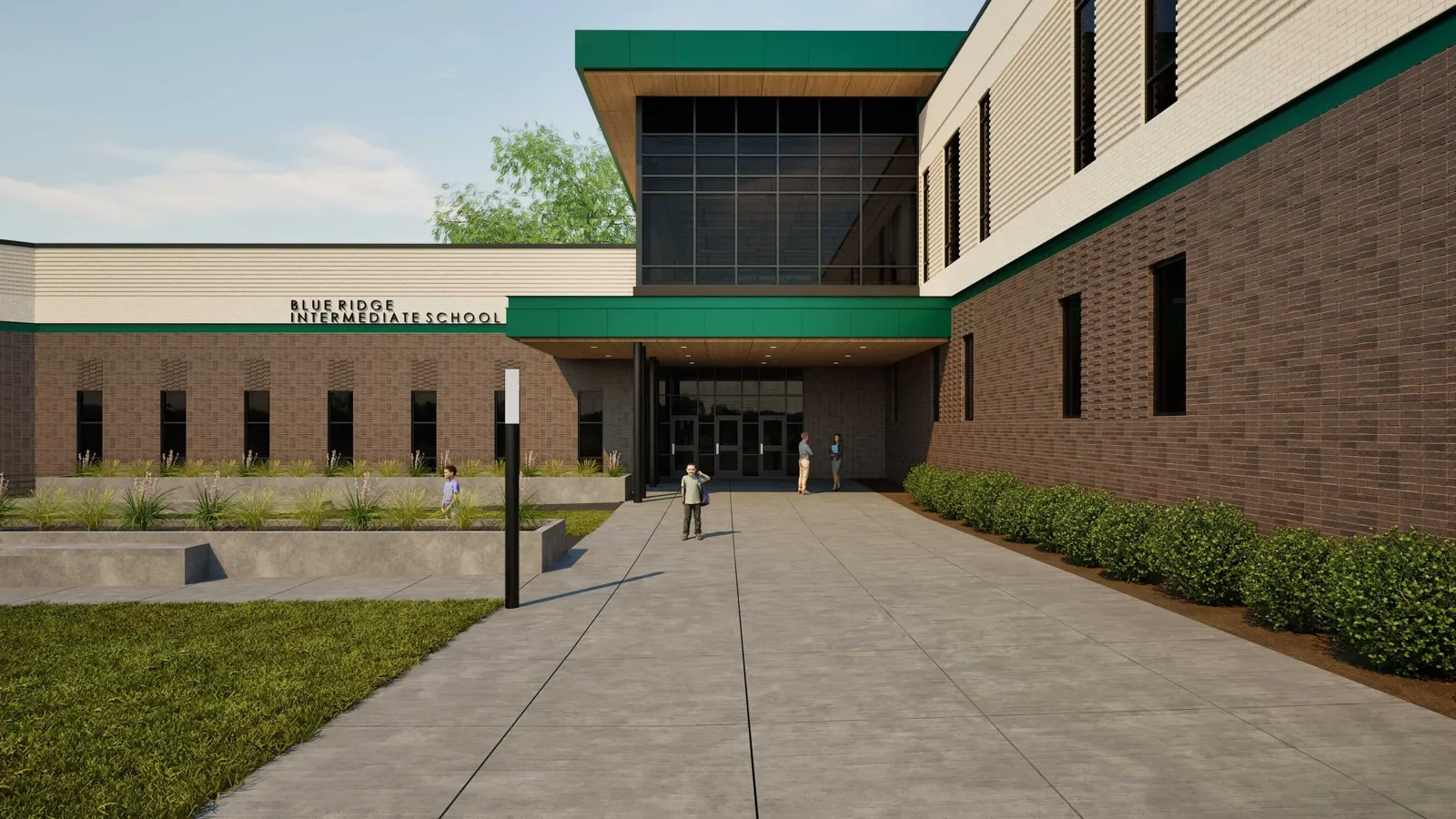
School Roofs in Denton, TX
A ceiling stain during the school year creates two separate questions: where did water enter, and what work can fit the campus calendar? We record the report, map the roof area, and keep the suspected path separate from what an inspection can actually see. The scope then gives the facilities team a decision point before a repair window or budget year closes.
Denton's July mean maximum temperature normal is 95.9°F. That is outdoor air context, not a roof-surface reading. For school buildings in Denton, Krum, or Corinth, assembly, insulation, drainage, and attachment must be checked at the property.
Map the Leak to a Roof Zone
A room number alone is not a roof location. We connect the interior report to the roof plan, mark the nearest drains, wall transitions, equipment curbs, and seams, then photograph the inspection boundary. If the path is not visible, the report says what remains unknown instead of turning a stain into a cause.
Schools may have multiple additions and roof sections built at different times. We record each accessible assembly and identify where a tie-in, expansion joint, or elevation change interrupts the water path. The finding can then be priced by roof zone, with exclusions and access limits visible to the owner.
A roof plan helps the inspector separate a classroom wing from a cafeteria, gym, or later addition. We confirm the area name against owner records, record visible changes in roof height, and photograph transition lines. If a roof section is covered by equipment or blocked from safe access, it stays outside the inspected boundary until the district approves another method.
Choose Work That Fits the Calendar
Class schedules change when roof access, noise, staging, or interior protection affects an occupied wing. We ask the district for the decision date, access contact, restricted areas, and available work periods. A repair can be sequenced by zone. A larger replacement may need bid documents and a summer or break window. The calendar is a constraint to plan against, not a reason to skip inspection.
On a first walk, we check seams, penetrations, perimeter metal, drainage, and any prior repair. Where moisture is suspected below the surface, we explain whether additional testing or an opening is needed and secure approval before it proceeds.
Denton County planning can include Krum and Corinth, but a school calendar and access policy belong to the district serving each property. We use the owner contact to confirm inspection windows and interior entry. A schedule record should identify the affected building, work period, and notice responsibility, not assume every campus follows the same operating rules.
Compare Repair with Replacement
A repair line is useful when the defect is isolated and the surrounding membrane, insulation, and attachment remain serviceable. Repeated wet areas, widespread seam distress, or soft cover board can change the choice. The recommendation should connect each observed condition to a defined quantity of work and say whether concealed conditions could alter the scope.
We separate urgent water control from permanent correction. If a temporary measure is proposed, the report labels its limits and the follow-up inspection needed. That lets a facilities director compare the near-term repair with replacement planning without presenting a patch as a long-term system.
The estimate should distinguish a leak repair from work that restores a larger roof section. We list the repair area, materials visible at inspection, adjacent details included, and any moisture testing or opening excluded from the base. If a replacement alternate is useful, it gets separate quantities and tie-in assumptions so the district can compare it with the repair line.
Build a Record for the Next Budget
Keep the inspection date, roof area, photographs, assembly records, repair line, exclusions, and closeout record together. A school district can compare bids only when each scope uses the same roof zones and describes the same access assumptions. We identify alternates separately so the owner can see what changes the amount of work and when a decision is due.
Denton's official economic development information records two state universities in the city. That is useful area context, not proof about a particular school roof. Work in Denton and nearby municipalities such as Krum still starts with the individual roof record, owner permissions, and the authority handling the permit path.
On a roof with insulation above a deck, the condition of the membrane alone does not show whether moisture is trapped below. We look for soft areas, displaced insulation, repeated patches, and changes around penetrations. Additional investigation may be needed. A moisture survey can help define the next test, while a repair scope should remain tied to confirmed locations.
The same record-first approach applies from Denton through Krum and Corinth; each project is scoped to the property inspected.
For a district inventory, a campus building roof review can help set shared roof-zone labels; an office roof assessment addresses a different use but still records assembly and access. When concealed moisture is in question, consider an infrared moisture survey before setting a broader repair boundary. We can then define a commercial roof repair or compare it with a replacement scope. For work near Corinth, the owner confirms the governing permit path and school access contact.
When the school has several sections nearing the same budget year, an inventory can show which evidence is current and which areas need another look. We record the inspection date next to each observation, not just in a cover record. A previous repair may close one leak line while a nearby drain or wall transition remains unresolved. We state that distinction and identify the next inspection area. For a replacement bid, the owner can compare the base scope, alternates, access assumptions, and closeout documents against the district's decision date. That record supports a review without turning a single classroom report into a campus-wide condition claim.
Before a permanent repair, confirm whether the district has a roof plan, prior leak log, and closeout record for the same zone. A repair completed in one season can change where water appears later, especially near a transition or drain. We compare the new report with the earlier photographs and record whether the original repair boundary remains sound. If a test opening is requested, we identify its location and restoration detail before work begins. The district can then approve an investigation and a repair as separate decisions, with a clear record of what each step is intended to establish.
Commercial Roofing Questions
What should a district send before an inspection?
Send the roof plan, reported room and date, prior repair records, access contact, and the date a scope must be ready. We will map reachable areas and list any testing or opening that needs separate approval.
Can a leak be repaired while classes are in session?
The answer depends on the roof zone, interior exposure, access rules, and noise or staging limits. We document those constraints, then propose a sequence the district can review against its operating calendar.
When is replacement preferable to another patch?
Replacement merits comparison when defects are broad, moisture is not isolated, or prior repairs no longer define a durable boundary. We tie that recommendation to observed areas and list what remains concealed.
How are alternates handled in a school bid?
We define a base scope by roof zone and separate alternates for added areas or details. The bid comparison should make quantities, access assumptions, exclusions, and closeout records comparable.