
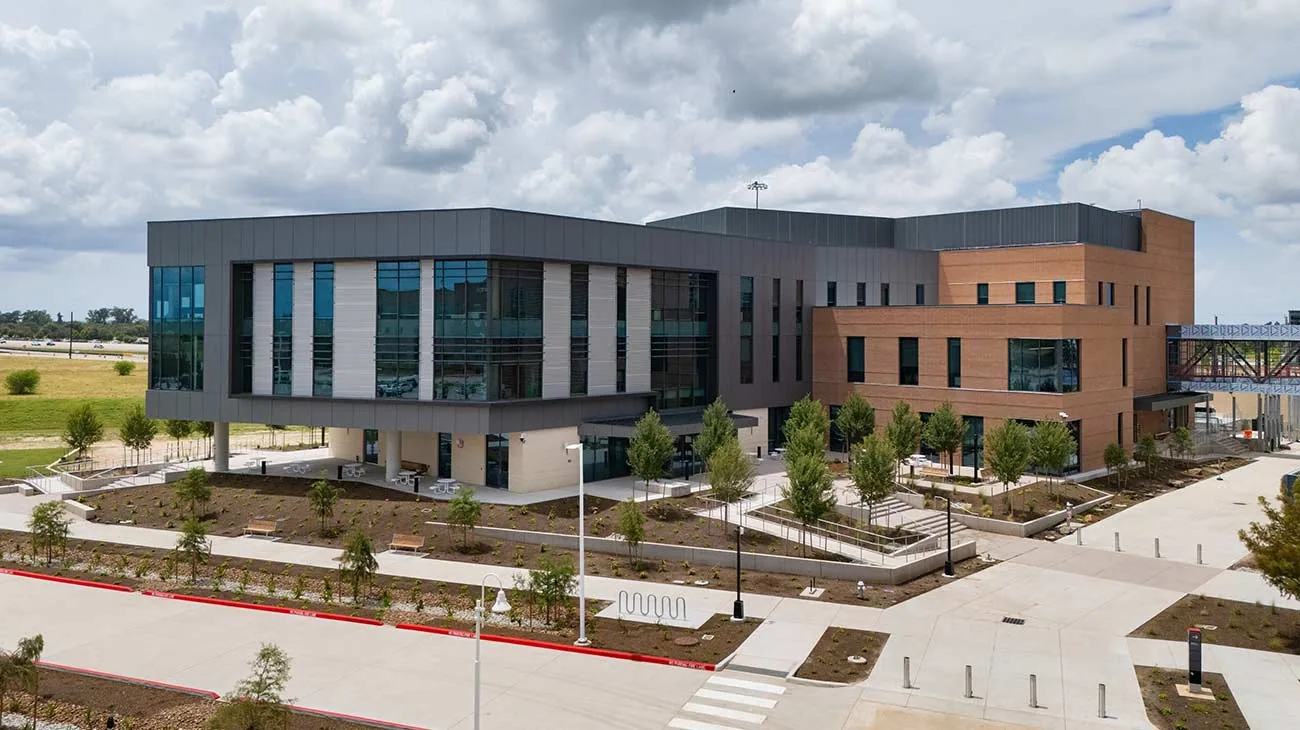
College and University Roofing in Denton, TX
A campus roof decision often spans more than one building. Start with the building identifier, roof area, reported condition, inspection date, and capital deadline. We keep each observation tied to a roof zone so an owner can separate a local repair from a program-wide priority. Shared language across the inventory matters when bids and budget requests are reviewed by different teams.
Denton is home to two state universities. That is useful market context, but it does not establish any roof assembly or condition. We inspect the actual property in Denton, Lewisville, or Frisco and record what the accessible roof shows.
Create a Roof-Zone Inventory
Give each roof section a stable name before observations are compared. Record the building, elevation, approximate area from owner records, membrane or metal system observed, drainage points, penetrations, and access limits. When records conflict with field conditions, show both versions and identify the measurement still needed.
A campus can contain additions, transitions, and separate maintenance histories. A single condition label can hide those differences. We use photos and location records to distinguish a seam opening from a perimeter detail or a drain issue, then assign repair lines to the zones the owner can authorize.
For a portfolio review, the building list needs to match the roof areas being compared. We record the institution's identifier, section name, inspection date, and accessible boundary. If a building has several roof levels or additions, each gets a distinct line in the photo log. That prevents one wet area from becoming a campus-wide condition rating without evidence.
When a report will be used for refinancing or a capital request, tie each conclusion to the inspection date and roof area. State whether the observation was visible from the roof surface, an interior report, or a test result. A reviewer can then distinguish a confirmed defect from a question still awaiting access. Keep the scope version with its exclusions and any approved change so the final cost can be compared to the original decision.
Coordinate Entry and Work Windows
Academic operations, events, residence life, laboratories, and security policies may affect access. The institution sets those rules. We request the responsible contact, badging or escort requirements, delivery instructions, restricted areas, and usable work windows before scheduling. If the scope touches an occupied interior, we include protection and notification steps for owner review.
A leak response and a permanent repair may use different access plans. The first visit can document the affected area and control immediate exposure. A later scope may require testing, material lead time, or sequencing across several roofs. The record keeps those steps distinct so the decision date remains clear.
In Denton, Lewisville, and Frisco, the owner still controls site entry and operating rules. A contact may need to coordinate badging, escorts, deliveries, restricted work areas, or event calendars. We record the requirements the institution provides and build the work sequence around them; we do not infer a campus procedure from a neighboring property.
Select a Scope by Evidence
Repair fits a bounded defect when adjacent materials and attachment remain sound. Replacement may deserve comparison when similar failures recur across zones or moisture extends beyond the visible entry point. We state what was observed, what was inferred, and which condition would change the recommendation.
For membrane systems, the review includes seams, flashings, penetrations, transitions, drainage, and substrate where accessible. For metal, we inspect fasteners, laps, clips, penetrations, and movement details. Coating or recover options require checks for adhesion, trapped moisture, and compatible substrate. No system choice follows from a building label alone.
Different roof assemblies require different observations. On a single-ply membrane we check seams, flashing, penetrations, terminations, and attachment details. On metal we review panel laps, clips, fasteners, and transitions. For a coated assembly, adhesion and substrate condition matter. If the assembly is uncertain, we identify the evidence needed before recommending recover or replacement.
Make the Capital Comparison Usable
Separate immediate repair from planned replacement. Record quantities, exclusions, access assumptions, phasing, and closeout requirements in the same scope version. If an owner needs an annual plan, group work by condition and decision year, but retain building-level evidence behind each grouping. That makes the budget explainable when the person approving funds is not the person who walked the roof.
Denton's Loop 288 and US 380 corridors may affect travel to a project. Current traffic and property access still need confirmation before work is scheduled. The same discipline applies across Denton and nearby municipalities: use area context for planning, then confirm each property's logistics.
When multiple roofs are ranked for capital work, groupings should retain the evidence for each building. We can flag active water entry, recurring repairs, and broader system concerns separately, then record the budget year and decision date. A multi-site roof program can organize that record without treating all roofs as identical.
Frisco and Lewisville are part of the same service map, while each building retains its own inspection boundary, records, and owner decision.
A campus-wide multi-site roof program can preserve building-level observations while using one report format. A healthcare roof review or office roof assessment may require different access coordination. Where a test area is needed, an infrared moisture survey can help target follow-up; a commercial roof inspection documents visible conditions. For facilities in Frisco, the property contact still confirms entry and schedule.
The comparison should make uncertainty visible. A roof with patched seams may need a closer look at the substrate before a recover option is considered. A metal roof may need review of clips, fasteners, and movement rather than a membrane-style repair allowance. We label the assembly observed and record any concealed layers that remain unknown. If an owner is ranking roofs, each building should retain its own photographs and action line even when several scopes are awarded together. That is how a capital list stays traceable after the original inspector and project manager have changed.
A scope that crosses several buildings also needs a clear handoff between facilities, procurement, and the project contact. We list the owner-provided building identifiers, the roof areas included, the dates of observation, and any access limitation. If the institution asks for alternates, each should state what changes in the assembly work, phasing, or protection. Keep the inspection record with the budget request. A future reviewer can then see whether the requested amount reflects an active repair, a planned replacement, or a test that is still needed before either choice is priced.
Commercial Roofing Questions
Can multiple campus roofs be reviewed under one program?
Yes. We can use a consistent roof-zone inventory and inspection format while preserving separate observations for each building. The institution supplies its identifiers and access rules; we flag mismatched records before comparing scopes.
What belongs in a campus roof condition report?
Include the inspection date, area reviewed, accessible boundaries, assembly records, photographs, observed defects, recommended action, and unresolved questions. Separate a reported interior symptom from a confirmed roof condition.
How should occupied buildings be phased?
We build the sequence around owner-set access and work windows. Roof zones with active water entry may need earlier attention; other areas can be grouped by condition, material lead time, and the capital date.
Does a university setting determine the roofing system?
No. The existing assembly, deck, moisture, attachment, drainage, and use of the building drive the recommendation. A campus name does not establish any of those conditions.