
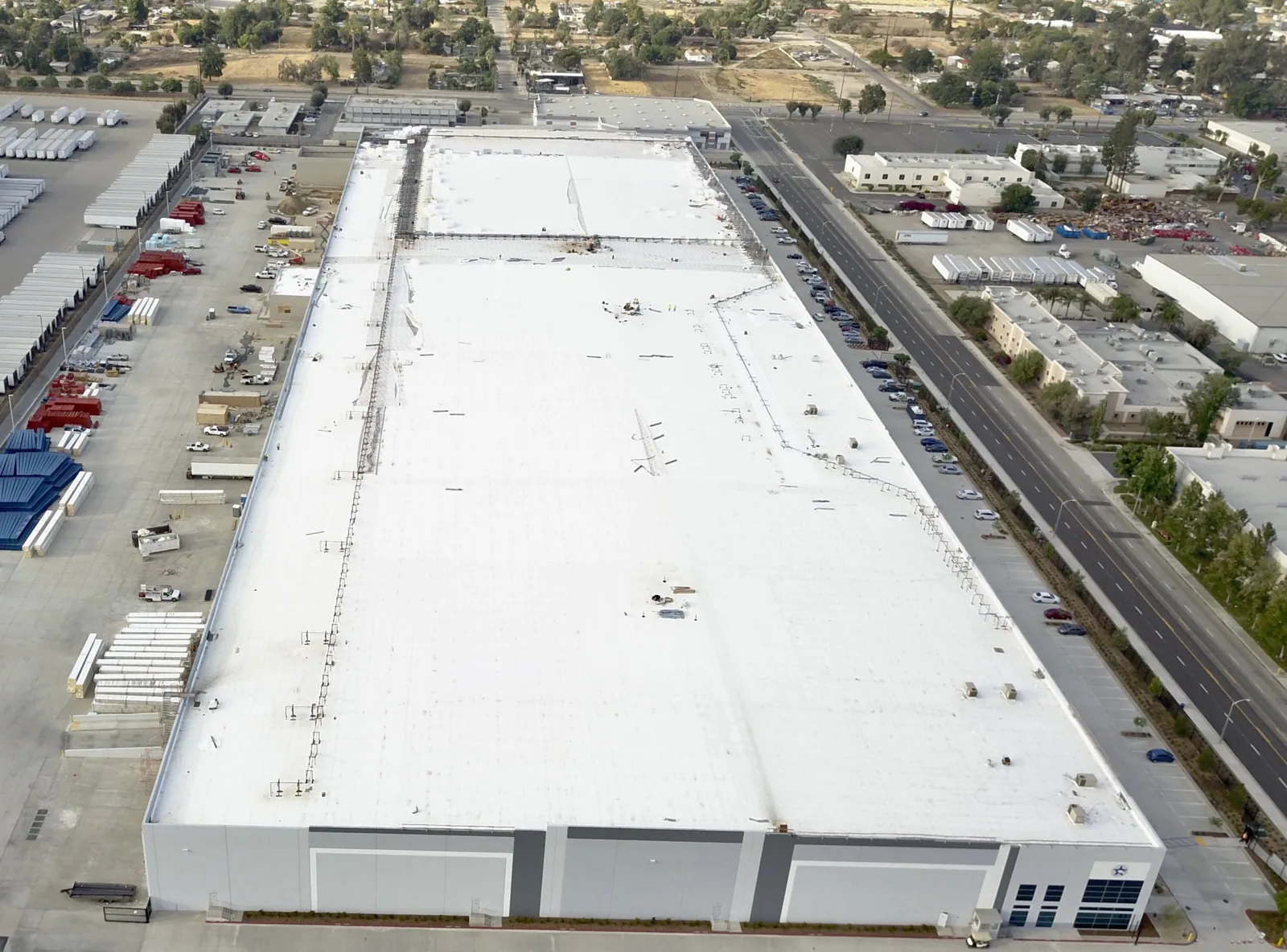
Versico Commercial Roofing in Denton, TX
The repair invoice says Versico, while the roof plan covers more than one phase. The owner needs to know which roof area the record describes and whether the current condition matches it. At a Denton, TX property, we map the membrane, seams, flashing, and repairs before comparing a patch with broader work.
Versico offers commercial low-slope roofing products. The correct repair follows the installed membrane and its accessory requirements, not the name alone. Our roof inspection ties field observations to a dated plan and identifies areas that need product confirmation.
Separate Roof Phases in the File
Pull product submittals, shop drawings, closeout records, invoices, warranty documents, and repair tickets. Mark the phase and roof area shown by each record. One building can carry a later addition, reroof, or patch using materials that differ from the original project. Keep those records in sequence so the next estimator can see which evidence applies to each section.
Compare a Versico product identification with the sheet, reinforcement, seam method, flashing, insulation, cover board, and attachment. A thermoplastic sheet and an EPDM area require different repair checks even when their paperwork sits in one binder. If the label is missing, document the visible details and the record needed for confirmation. A weld review can frame thermoplastic seam questions. For an alternate system comparison, check GAF commercial product records and Duro-Last roof documentation.
Do not carry a manufacturer identification past a transition unless the file and field support it. Mark the boundary, photograph both sides, and record any work that could have altered the original assembly.
Inspect the Repairable Boundary
On thermoplastic sheet, examine representative welds for edge separation, dirt, wrinkles, open corners, or a patch that bridges a damaged area. On EPDM, record seam tape or adhesive condition and surface preparation. Record the roof location and defect extent. Use only a test method appropriate for the system and field conditions. A small sample cannot establish the condition of the full roof.
At curbs, pipes, drains, parapets, edges, and expansion details, inspect flashing termination and movement. Record loose metal, unsupported corners, split laps, or sealant over a detail that needs a different correction. Take a context photograph and a close view. A repair scope should state the preparation, compatible material, tie-in, and closeout test. If water is active, list temporary protection separately from permanent work.
Map interior reports beside, but not on top of, the suspected roof-entry path. Water may travel before it appears below. Identify a concealed area or test opening as an open item rather than extending the patch boundary without evidence.
Check Where Water Leaves the Roof
Inspect drains, scuppers, overflow routes, low areas, and the membrane around each outlet. Record debris, loose strainers, standing water, and any movement at the bowl or flashing. Distinguish routine cleaning from work that changes slope, drain height, or the assembly. If ponding overlaps a seam or prior repair, photograph both the water condition and the detail after conditions allow access.
Denton County's tornado climatology includes reported events over many decades. That history is regional context, not proof of impact at an individual Versico roof. If a manager reports storm damage, record the stated date separately from inspection findings. Then inspect edge metal, membrane, curbs, and rooftop equipment for documented displacement or damage. A storm-related roof review should keep the event report and observed condition distinct.
Shady Shores and Denton are separate municipal places in the service area. A property near Shady Shores still needs its own roof map and access plan. City names help locate the assignment; they do not identify the membrane or authorize access.
Compare Each Route to the Evidence
A bounded defect may support repair when the surrounding sheet is serviceable and product compatibility is established. Repeated seam opening, multiple failed details, moisture beyond the visible area, or uncertain attachment may justify a wider comparison. Map the findings and state which new test or opening would change the recommendation. A single repair does not prove that the rest of the roof is sound.
Before proposing recover or replacement, review the deck, layers, insulation, drainage, edge height, attachment, and equipment interfaces. A replacement comparison should show tear-off limits, temporary dry-in, phasing, transitions, disposal, and owner responsibilities. Keep upgrades and unresolved substrate work outside the base scope unless they are defined.
For planning, the City identifies Downtown TIRZ as an area created to support redevelopment through public infrastructure. That planning purpose does not say what roof exists on a nearby building. It can be useful context for coordinating an occupied project, while the scope remains based on inspection findings and the owner decision date.
Set Access and Weather Assumptions
Denton's long-term weather series places the July mean daily maximum at 95.9 degrees Fahrenheit. Treat that as background for the schedule, not as a measure of membrane heat or weld quality. The roof surface and live forecast inform the work decision. Confirm the current forecast and product installation requirements before setting a start date or leaving an area temporarily open.
Loop 288 and US 380 are transportation corridors in city planning materials. Check current traffic, construction, delivery restrictions, and the actual property entrance before dispatch. Confirm occupied hours, roof access, staging, fall protection, and the site contact who can release each work area. If a building cannot be shut down, state the phasing and protection requirements in the scope.
For a project near Krum, use the actual property address and authority having jurisdiction to confirm permit steps. A capital plan can separate immediate repair from a later replacement phase when the condition record supports staged work.
Keep the Versico History Traceable
Retain the approved product records, marked roof plan, inspection date, scope version, access records, repair materials, preparation photos, and final images. Record where the roof phases differ and which product identification remains unconfirmed. If the field scope changed, record who authorized it and why the repair line moved.
Closeout photographs should show the completed seam or flashing and enough roof context to find it later. Record exclusions, inaccessible areas, and any follow-up test. Keep warranty correspondence with the assembly information it concerns. A future review can then distinguish an earlier repair from a new condition without relying on a broad manufacturer label.
Provide the plan, Versico submittals, prior repair records, and site access contact. We will map the installed phases, record confirmed conditions, and return a defined repair boundary with any unresolved tests listed.
Commercial Roofing Questions
How can a manager confirm a Versico product by roof section?
Compare submittals and closeout records with the membrane, seam, flashing, and accessory details. We map each confirmed area and record where a phase boundary or repair leaves identification uncertain.
Can the same Versico repair method be used on every roof phase?
No. The installed membrane and accessories control preparation and compatibility. We check the assembly by area before selecting a method or pricing a patch.
What information makes a seam repair bid useful?
It should name the defect location, preparation, materials, tie-in, access assumptions, and closeout check. The scope should also separate temporary water protection from permanent correction.
Does a storm report establish that the Versico membrane needs replacement?
No. We record the reported event separately, inspect actual roof details, and map visible conditions. The repair or replacement decision follows the field evidence and any needed testing.
What records should remain after Versico roof work?
Keep product documents, area map, scope version, dated photographs, repair locations, access records, exclusions, and relevant warranty correspondence together. Mark the phase each record covers.