
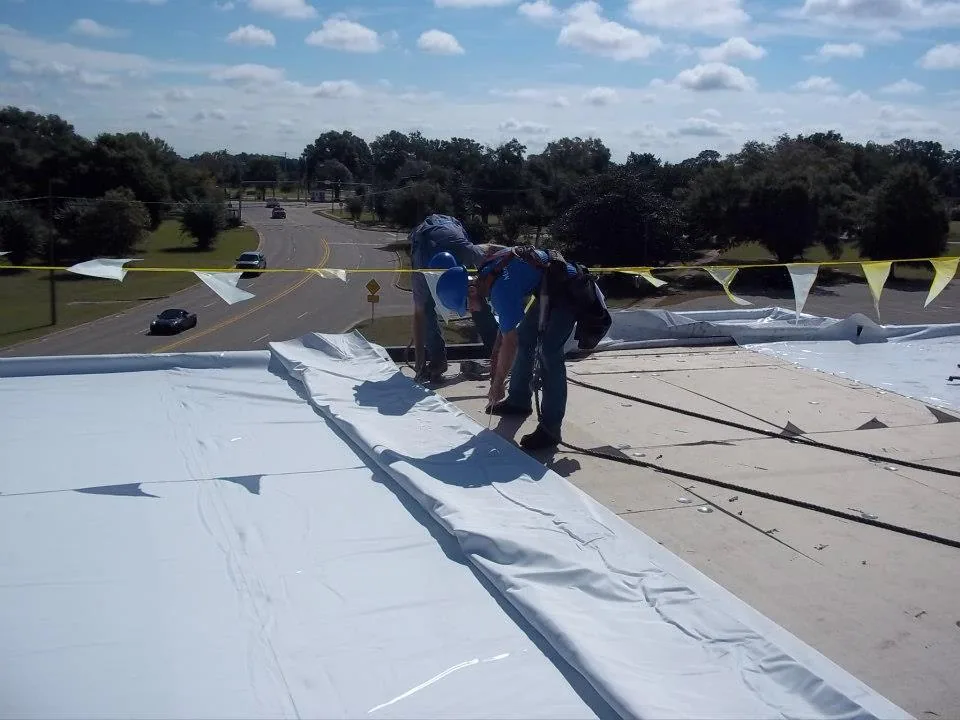
Duro-Last Commercial Roofing in Denton, TX
The roof plan may have been drawn for prefabricated Duro-Last sections, but the field still controls the repair decision. We compare the approved layout with the installed sheet, seams, penetrations, and later repairs. For a Denton, TX commercial building, the owner needs a dated record of what matches, what changed, and which detail remains open before pricing work.
Duro-Last is known for PVC single-ply roofing with factory-prepared membrane details. The specific layout and accessories should be checked against the project submittal and field condition. Our roof inspection maps seam lines, flashing, drains, curbs, and attachment by roof area.
Match the Prefabrication Plan to the Roof
Start with the approved roof plan, shop drawings, product data, closeout package, warranty records, and repair history. Mark the building section and phase shown by each file. Compare sheet layout, seam placement, prefabricated corners or flashing pieces, and field cuts with the installed work. A later curb, rooftop unit, or service change may create a detail that was not part of the original package.
Do not assume every seam follows the drawing. Confirm actual dimensions and transitions at the property. Record where prefabricated details are intact, where a field repair has altered them, and where the plan cannot be confirmed because of access or equipment. For a system comparison, see GAF commercial membrane records and Versico low-slope documentation; compare only the roof areas those documents actually cover.
Save the document date and revision. If an owner has multiple roof plans, identify which one matches the current building configuration. A marked-up copy should not replace the original submittal in the closeout file.
Inspect Field Welds and Factory Details
Review representative hot-air welds for open edges, contamination, wrinkles, fishmouths, and prior patches. Check corners, penetrations, pipe boots, and equipment curbs for a complete termination. Photograph each condition with an orientation view and close detail. Use a seam probe only when it is appropriate and will not damage the sheet. Record the tested locations rather than extending one result across the roof.
A prefabricated detail can reduce some field seams, but it does not remove the need to inspect tie-ins and transitions. Check where field sheet meets the preformed piece, where a new penetration was added, and where service traffic may have disturbed the membrane. A penetration flashing review can identify scope at a skylight, pipe, curb, or similar opening.
Before a repair is priced, confirm the PVC material, accessory, surface preparation, and weld procedure. A repair assessment should state the cutback, tie-in boundary, final check, and closeout photographs. If active water needs temporary protection, list that measure separately.
Check the Outlets and Water Path
Inspect drains, scuppers, overflows, low points, and membrane around each outlet. Record a blocked strainer, loose bowl, standing water, or stress where the sheet turns down. Drain maintenance may be separate from a membrane repair. If a drain height or slope correction is needed, show it as a defined scope item rather than burying it in a patch description.
Interior stains should be mapped as reports, not assumed entry points. Water may travel along an insulation joint, deck flute, or flashing transition. Compare the room location with roof observations, then identify where a test or follow-up access could narrow the path. If water is active, protect the interior and record the temporary work separately from the permanent repair.
Denton County's published tornado climatology includes reports over many decades. It is regional context, not evidence that a specific Duro-Last roof experienced damage. When storm work is reported, record the reported date and inspect edge metal, field sheet, curbs, and equipment for observed conditions. Do not turn regional history into a property conclusion.
Set the Repair Boundary
A repair may be suitable when damage is contained, adjacent sheet remains serviceable, and the correct PVC materials can be joined to the existing membrane. State preparation, patch size, weld perimeter, transition, and confirmation. If an earlier patch has an irregular edge or contamination, define its removal before adding another layer.
Repeated open seams, widespread detail separation, moisture beyond a limited area, or multiple changes to the original layout can warrant a broader review. Map each finding and show the evidence that supports the next step. A single open seam is not a whole-roof diagnosis. Conversely, several similar findings should not be collapsed into one small repair without checking their distribution.
For a replacement comparison, inspect the deck, insulation, attachment, edge height, drainage, rooftop equipment, and existing roof layers. A replacement scope should define removal, temporary dry-in, phasing, new transitions, and disposal. Keep a recover alternate separate when existing layers or moisture remain uncertain.
Schedule the Work Around the Building
Record the access contact, occupied hours, fall-protection rules, equipment paths, staging area, and work restrictions. A prefabricated plan does not remove field coordination. Confirm that delivery dimensions, hoisting, and the route to the roof fit the site. Identify who can release a roof area and who makes a decision if weather interrupts the day's sequence.
Denton climate normals list a 95.9 degree Fahrenheit July mean maximum air temperature and 38.44 inches of annual precipitation. These regional measures help frame scheduling and temporary protection. They do not measure a membrane surface or prove a seam failure. Check current weather, substrate, and manufacturer requirements before selecting a work window.
The Denton planning record discusses Loop 288 and US 380 as important movement routes. Confirm current construction, delivery timing, and the property's designated entrance before scheduling the crew. A roof near Argyle or Northlake still requires property-specific instructions and permit checks.
Save the Layout and Repair History
Keep the approved layout, marked roof plan, product submittals, scope version, inspection date, access records, and repair map together. Photograph the prepared surface and finished seam or flashing. Identify field cuts, replaced prefabricated details, and owner-authorized changes. If a detail was inaccessible, record it as an open item rather than implying it was inspected.
At closeout, show each repair on the same plan used for the inspection. Include the finished work, any deviation, and the conditions that remain. The next inspection can compare the same locations and see whether a new finding follows the previous repair boundary. Retain relevant warranty correspondence with the product and phase it concerns.
Send the roof area, decision date, available Duro-Last plans, and access contact. We will document the installed details and observed condition, then prepare the next scoped review for the Denton property team.
Commercial Roofing Questions
How do we check whether a Duro-Last plan matches the installed roof?
Compare the dated shop drawing with the field sheet layout, seams, corners, penetrations, and later repairs. We map matching areas and mark additions or details that still need confirmation.
Does factory-prepared flashing eliminate field inspection?
No. The field tie-in, curb, pipe, transition, and later modification still need review. We record the detail and check the completed weld against the applicable system requirements.
Can a Duro-Last PVC seam be repaired with any PVC patch?
Compatibility depends on the existing sheet, accessory, preparation, and specified procedure. We confirm those details before pricing a permanent repair.
What evidence supports a larger replacement scope?
Mapped recurring failures, moisture findings, compromised attachment, or multiple damaged details may change the scope. The report identifies each area and any test needed before comparing options.
What should be saved after a prefabricated roof repair?
Keep the original layout, marked plan, repair map, product records, scope version, dated preparation and closeout photographs, access records, and any warranty correspondence together.