
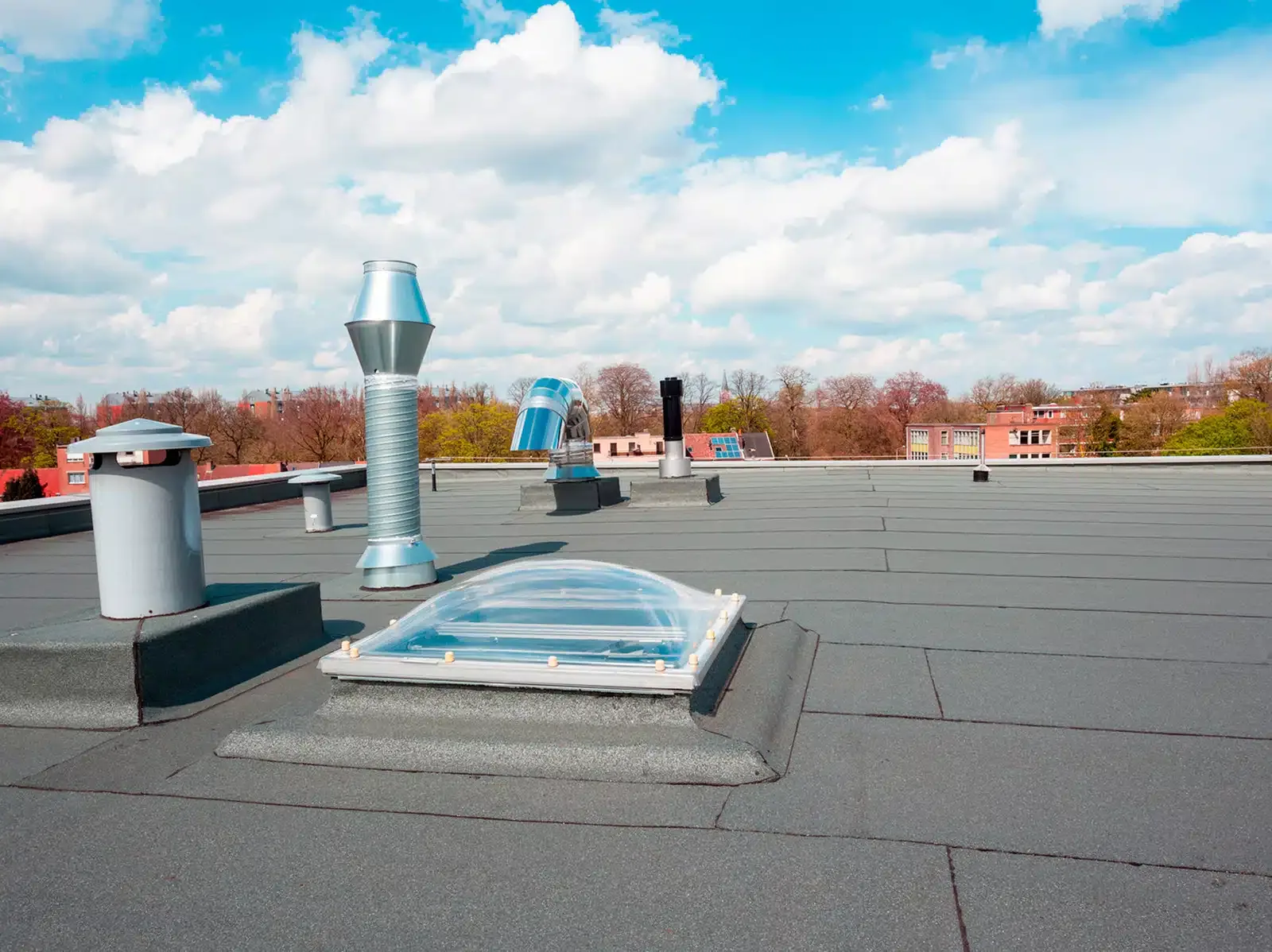
Soprema Commercial Roofing in Denton, TX
The product file says Soprema, but the repair method depends on the installed roof type and layer sequence. We identify the area, compare submittals with the field, and record the condition before setting a repair line. For a commercial property in Denton, TX, the record should show whether the assembly is single-ply, bituminous, liquid-applied, or a combination from different project phases.
Soprema supplies commercial roofing and waterproofing products across several system families. Product compatibility is specific to the materials and approved details on the roof. Our roof inspection documents the layers that can be confirmed, exposed edges, flashing, drainage, and prior repairs.
Establish the Installed Layer Sequence
Collect submittals, shop drawings, closeout records, invoices, warranty documents, and repair history. Mark the area each document covers and the project phase. A roof may include an original assembly, a later recover, and localized liquid-applied repairs. Those layers should not be collapsed into one product label when planning a new correction.
At an exposed edge or approved test location, record the visible membrane or cap sheet, surfacing, insulation, cover board, and deck evidence. Record whether the substrate was directly observed or inferred from drawings. For modified bitumen, distinguish the surfacing and reinforcement from the base sheet and attachment. A modified bitumen assembly review can help organize those distinctions. Compare with Johns Manville roof records and GAF system submittals only when those files apply to another documented phase or alternate.
Photograph each transition and label it on the roof map. If a product name appears only in an old proposal, list the field check needed before specifying a compatible repair. That is a scope question, not a reason to guess.
Read the Surface and Its Details
On an asphaltic surface, record granule loss, exposed reinforcement, splits, ridges, blisters, and areas where water or debris remains. On a single-ply sheet, inspect welds or seams for open edges, contamination, and past patches. For a liquid-applied area, check for discontinuity, exposed substrate, pinholes, or separation at terminations. Each finding must be linked to the specific system and roof area.
At curbs, drains, scuppers, parapets, expansion joints, and edges, review how the system turns and terminates. Look for unsupported flashing, movement, loose metal, and a repair that bridges a wet or unstable substrate. Edge and coping conditions can be defined separately from membrane work. If access is restricted by rooftop equipment, record what could not be seen and who can authorize a return visit.
Westpark TIRZ is an industrial district north of Airport Road. That broad setting may affect access sequencing at an occupied facility. It does not identify the roof materials or condition at a specific address. The field record must do that work.
Locate Moisture Before Setting the Repair Limit
A stain in an office or production area is a report location, not necessarily the roof entry point. Water can travel through insulation or along a deck before appearing inside. Map the reported area, inspect the nearest roof details, and mark any area where the assembly remains concealed. Do not cut into a roof without authorization and a plan for closing the opening.
Check drains, scuppers, overflows, and low points for blockage, movement, or membrane stress. Record ponding conditions and when they were observed. If moisture may extend beyond the visible defect, identify targeted testing and its limits. An infrared moisture survey may help select locations when roof construction and weather conditions make the readings useful. A drainage review can separate maintenance from a correction to slope, outlet, or flashing.
Denton's climate normals include 38.44 inches of annual precipitation. That figure provides regional context for drainage planning. It does not show how water moved on a particular roof or prove that a drain or membrane failed.
Write the Repair to the Material
A local correction may fit when the damaged area has a defined edge, surrounding material is stable, and the repair method is compatible with the existing Soprema system. Describe preparation, material, reinforcement or flashing where applicable, tie-in, and the final check. If a liquid-applied repair depends on dry substrate or a specific film thickness, put those acceptance conditions in the scope.
Broader deterioration, wet layers, repeated repairs, open seams in multiple areas, or a compromised deck can change the repair boundary. Map each condition and state what remains untested. A commercial repair scope should distinguish temporary weather protection from permanent work. Do not use a coating as a substitute for a system correction unless the existing assembly and selected product requirements support it.
For replacement planning, check layer count, deck, attachment, insulation, drainage, flashing heights, and occupied operations. A replacement comparison should define removal, phasing, temporary dry-in, and disposal. Keep a recover alternate separate from tear-off if unknown layers or moisture could change eligibility.
Coordinate Denton Access and Weather
For a Denton site, the City discusses Loop 288 and US 380 in its development planning. Check live construction notices and delivery conditions before scheduling a crew. Confirm the facility entrance, roof access contact, staging, material delivery, and occupied hours before setting the work window. Record who can release a restricted area and who makes the decision if the schedule shifts.
The Denton weather table places the normal July high at 95.9 degrees Fahrenheit. This is an air reading from a regional series. It does not test roof temperature, so confirm the actual substrate and forecast before planning an application window. Make the temporary dry-in boundary explicit in the daily plan.
For an assignment near Krum, confirm the property address and permit authority rather than assuming a municipal boundary from a mailing label. A capital timing record can connect mapped work to the budget year and keep unresolved testing visible beside the repair decision.
Keep Product, Repair, and Warranty Records Together
Retain the product submittal, roof plan, area identification, inspection date, scope version, access records, repair photographs, and closeout record. Record all confirmed layers and any uncertainty. If an installation or repair changed the assembly, record the location and material used. File warranty correspondence with the relevant section and date.
Closeout photographs should show the prepared surface, completed repair, and nearby transition. Identify any condition that prevented the planned method. A future inspection can compare the same labels, review whether the repair remains intact, and distinguish deferred work from new findings. Keep maintenance records separate from conclusions about system failure.
Provide the roof map, the date a decision is needed, Soprema submittals, and the person who can arrange access. We will return a field record with mapped findings and a defined repair or capital option.
Commercial Roofing Questions
How do we identify a Soprema assembly with several roof layers?
We compare submittals and closeout records with exposed edges or authorized test locations. The roof plan shows confirmed layers, phases, and transitions, with any concealed construction left as an open item.
Can the same repair material work on every Soprema system?
No. The existing membrane or bituminous layers, substrate, and approved detail control compatibility. We identify the assembly and preparation requirements before pricing a permanent correction.
What should be documented before a liquid-applied repair?
Record the substrate, moisture condition, preparation, reinforcement or flashing detail, application requirements, and acceptance check. If conditions are not suitable, state the correction needed before proceeding.
When should a roof be tested before replacement is priced?
Testing helps when concealed moisture or layer sequence could change the work. We map the proposed locations, method, authorization, and limits, then keep results tied to the affected roof area.
How do Denton weather conditions affect a Soprema project?
Climate records inform planning, while the current forecast, substrate, and product requirements govern the work window. We document temporary protection and the daily area left watertight.