
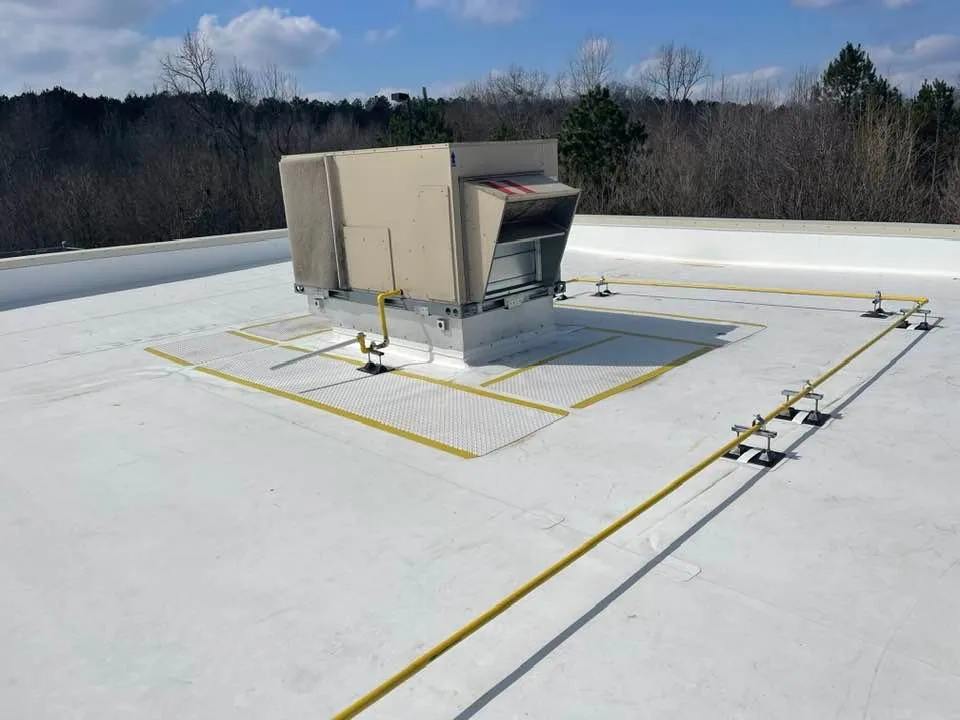
Johns Manville Commercial Roofing in Denton, TX
The closeout binder lists Johns Manville, but the next budget decision needs more than a manufacturer name. We identify the system documented for each roof area, compare it with the field, and record what the inspection actually shows. At a Denton, TX property, that distinction matters when the owner is weighing a bounded repair against a larger capital project.
Johns Manville supplies commercial roofing products across multiple assembly types, including single-ply membranes and built-up or modified bitumen components. The installed product and accessory package must be confirmed from the project record. Our commercial roof inspection maps seams, flashing, drainage, attachment, and prior repair locations before a scope is issued.
Read the Submittal by Roof Area
Gather approved product data, shop drawings, installation records, closeout photographs, invoices, and warranty correspondence. Record which phase or building each file covers. The same property may contain a membrane on one section and asphaltic materials on another. We mark every confirmed area on the roof plan instead of treating a single invoice as proof for the entire assembly.
Compare the named material with sheet labels, seam construction, flashing, cover board, insulation, and attachment records. If the records identify TPO, PVC, EPDM, modified bitumen, or built-up roofing, keep the system-specific details with that section. Do not select a patch solely from a broad material category. The modified bitumen review addresses a different seam and surfacing question.
A change order or field substitution may alter what was installed. Compare the project file with Carlisle SynTec records and Soprema commercial system documentation when reviewing alternate assemblies. Record its date, location, and supporting document. Where a product remains unconfirmed, state what record, label, or authorized test would resolve it before permanent work is priced.
Map Seams, Surfacing, and Flashing
For single-ply areas, inspect representative seams and sheet edges for separation, wrinkles, contamination, open corners, and earlier patches. For asphaltic areas, record splits, exposed reinforcement, displaced surfacing, blistering, or details that have lost continuity. These observations belong to specific roof areas. A finding at one transition does not establish the condition of a different assembly.
At curbs, pipes, drains, parapets, expansion joints, and roof edges, check termination and movement. Photograph the detail with a roof-plan reference. Trace interior reports to nearby areas without assigning cause from the room location alone. If an HVAC service path or equipment base hides the membrane, mark the limit and identify the access needed for follow-up.
Downtown TIRZ is a defined Denton redevelopment area supported by public infrastructure work. That broad setting may inform coordination for an occupied building, but it does not establish the age, use, or roof type of a particular property. We use the actual assembly and access records to frame the inspection.
Price the Correction That the Evidence Supports
A repair line should identify the defect boundary, preparation, compatible material, tie-in, and closeout check. For a membrane, that may require cleaning or removal of an earlier patch before the new material can bond. For an asphaltic detail, the scope may need a defined cutback, reinforcement, and surfacing restoration. The selected method follows the system record and manufacturer requirements.
When failures repeat at several seams or details, map their distribution before expanding the scope. Moisture findings, wet insulation, deck concerns, or multiple repair generations can change the choice, but each should be tied to a location and test method. An itemized repair scope can separate immediate water protection from permanent work and list conditions that remain concealed.
If the record supports a broader option, compare recover and replacement after checking existing layers, deck, attachment, insulation, drainage, edge height, and rooftop equipment. A replacement comparison should state tear-off limits, phasing, temporary dry-in, and disposal assumptions. Keep the repair alternative visible where it addresses a defined condition.
Set the Work Window
The climate table for Denton records 38.44 inches of precipitation across a normal year. July's normal mean high reaches 95.9 degrees Fahrenheit. Those observations inform the work window, while the roof surface and current weather determine whether a specific application can proceed. They support a practical scheduling question: which work steps depend on dry conditions, safe temperatures, and a protected building at each shift boundary?
Before mobilization, confirm the property contact, roof access, occupied hours, staging area, fall protection, equipment routes, and delivery window. City planning materials treat Loop 288 and US 380 as routes tied to Denton's development pattern. Their present condition is a day-of scheduling question. Confirm construction, the delivery path, and the property's gate before reserving a visit. We list the access record in the work order and confirm who can authorize schedule changes.
For a property serving Corinth or the Shady Shores area, use the address and jurisdiction that govern that property. The place name alone does not tell us permit requirements or arrival time. If rain interrupts the work, document the temporary barrier and the roof area left open before crews leave.
Keep Bid Assumptions in View
Compare the same roof area, scope version, and included details. Check substrate repair assumptions, membrane or surfacing materials, edge metal, drains, flashings, insulation, equipment coordination, disposal, temporary weather protection, and exclusions. If a bidder includes a test opening and another assumes a dry substrate, place that difference beside the price rather than treating the proposals as equal.
When moisture mapping could change the work boundary, name the method and locations. Record the test limits and any confirmation opening. Keep a coating or recover alternate separate from the base correction until eligibility and substrate conditions have been checked.
A capital timing record can show which items require action now and which can be staged for another budget year. Give each priority a basis from the roof map, inspection date, photographs, test results, or documented operating constraint. A manufacturer name does not decide the timing.
Close the Record After Work
Retain the product submittal, approved scope, marked plan, inspection date, access records, preparation photographs, daily reports, and closeout images. Tie each repair to a roof area. Record material substitutions, concealed conditions, and owner-authorized revisions. That file allows a later reviewer to distinguish completed work from an item that was deferred or inaccessible.
Photograph the finished seam, flashing, curb, or surfacing repair with an orientation view and close detail. Record any follow-up inspection date that the owner selects. The next visit can use the same labels and compare the observed condition without reconstructing which roof section was discussed.
Send the roof area, decision date, available Johns Manville product records, and access contact. We will document the condition and return a scoped next step for the Denton building team.
Commercial Roofing Questions
How do I know which Johns Manville product is installed?
Compare the approved submittal and closeout file with labels, seams, flashing, and roof areas. We map what is confirmed and identify where a phase change or field substitution needs documentation.
Can a Johns Manville roof be repaired with any product from the same manufacturer?
No. The installed assembly, membrane or surfacing, accessory package, and repair method control compatibility. We confirm those details before specifying materials.
What does a useful manufacturer roof file contain?
Keep product data, shop drawings, installation records, warranty correspondence, repair records, dated photographs, and a roof plan with locations. Mark the area each document covers.
When is a repair preferable to replacement?
A defined defect with sound adjacent material may support a repair. Repeated failures or moisture findings can warrant broader review when the affected areas and test limits are documented.
Can the work be planned around an occupied building?
Yes. We record occupied hours, roof access, staging, noise limits, equipment coordination, and temporary protection. The scope identifies work boundaries and the contact for a schedule decision.