
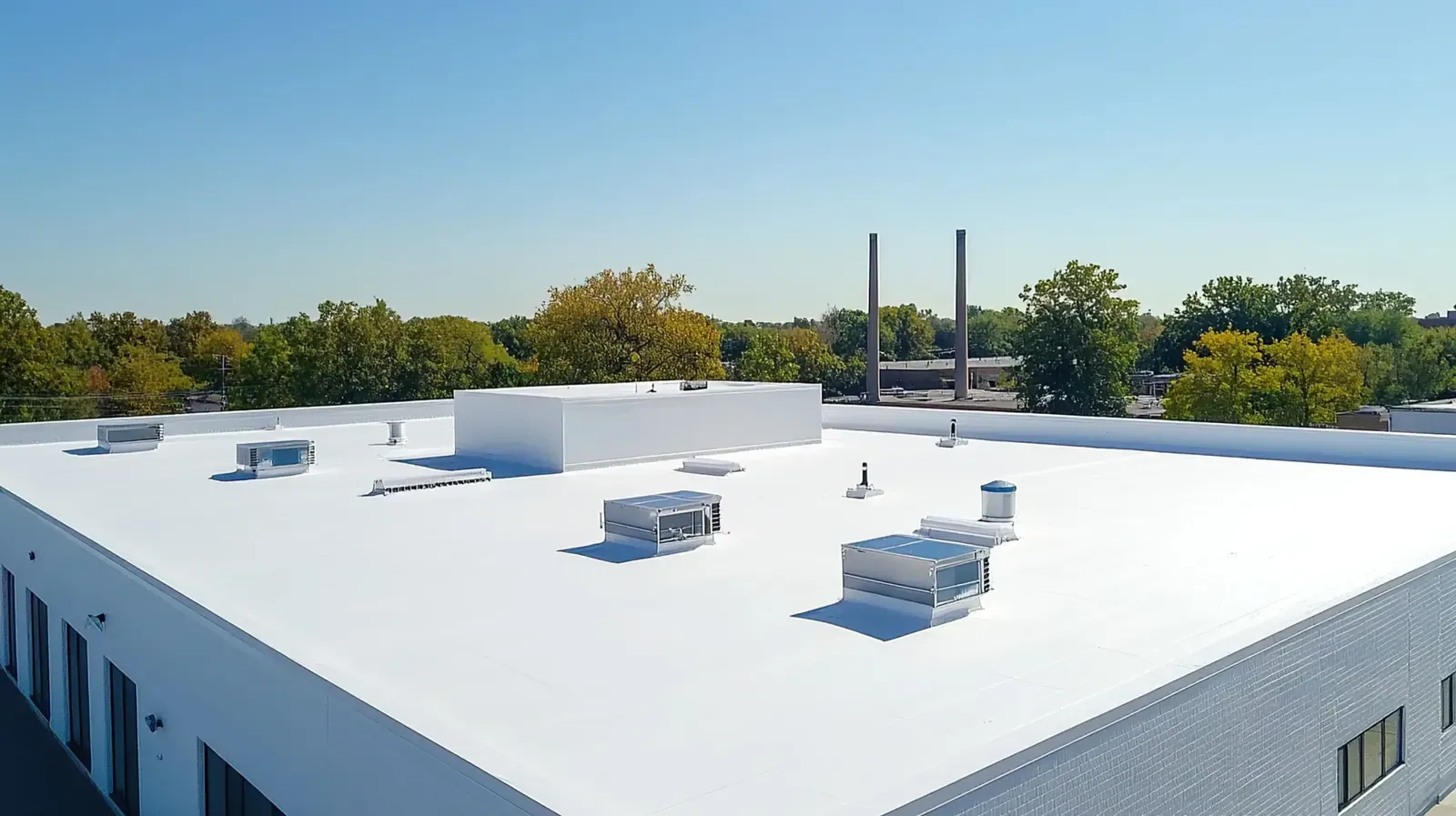
Carlisle SynTec Commercial Roofing in Denton, TX
A Carlisle label narrows the record, but the roof still needs an assembly-level review. The decision depends on which membrane and accessories are present, how the roof is attached, and what the inspection shows today. For a commercial building in Denton, TX, we map each roof area, reconcile submittals with field conditions, and keep product identification distinct from a repair recommendation.
Carlisle SynTec manufactures low-slope roofing products, including TPO and EPDM offerings such as Sure-Weld TPO and Sure-Seal EPDM. The exact product, accessories, and installation details must come from the building file and field review. Our roof inspection records seams, flashings, drainage, attachment, and prior repairs before the scope is priced.
Trace the Carlisle Assembly
Pull the approved submittal, shop drawings, closeout package, warranty file, invoices, and repair tickets. Record the date and roof area tied to each record. A reroof may have more than one phase, and a Carlisle document from one phase does not establish what is installed across the full property. We mark confirmed locations and retain questions about areas where records do not match the field.
For a Sure-Weld or Sure-Seal identification, compare the listed sheet with seam style, flashing materials, insulation, cover board, and attachment records. Color and a handwritten label are not enough. Compare the record with GAF commercial system records and Johns Manville roof records when reviewing alternate bids. Record the basis for the identification and any accessory substitution that could affect the repair method. A TPO assembly review can help separate thermoplastic weld details from the questions raised by an EPDM roof.
Keep each file version. If an owner has an old proposal and a newer warranty record, do not merge them into one assumed assembly. The roof plan should show where each applies, where transitions occur, and which sections require confirmation before a permanent repair is written.
Inspect the Work That Holds the System Together
On TPO, inspect representative welds for separation, contamination, wrinkles, cold weld appearance, and prior patches. On EPDM, review seam tape or adhesive edges, surface preparation, and the condition of the joined sheets. Do not use a repair method from one material on another because both records carry the same manufacturer name. The product and specified procedure control the repair.
At curbs, pipes, drains, parapets, edge metal, and expansion transitions, check termination, corner support, flashing laps, and movement. Record service work that may have disturbed a detail. Photograph the broader roof location and close condition. If equipment blocks inspection, list the access limitation rather than calling the concealed surface sound. A repair scope can then identify the measured work boundary and any confirmation needed.
Westpark TIRZ is a Denton industrial district north of Airport Road. That district context can matter when planning a visit to an operating facility, but it does not identify a Carlisle assembly or any particular roof condition. We tie the field record to the actual property, its access contact, and the observed components.
Separate a Patch from a Broader Scope
A localized repair may fit when the defect is bounded, surrounding membrane remains serviceable, and the correct compatible materials are available. State the preparation, repair extent, transition method, and closeout check. If water is active, list temporary protection as a separate line so immediate containment does not become confused with the permanent correction.
A broader scope deserves review when similar seam or flashing defects recur in different roof areas, moisture extends past a visible opening, or the assembly has multiple unresolved transitions. Map each condition before deciding whether the pattern changes the recommendation. An isolated patch should not be used to dismiss a wider problem, and one failure should not be expanded into a whole-roof conclusion without evidence.
For replacement, compare tear-off and recover only after reviewing existing layers, deck, insulation, attachment, drainage, edge height, and equipment interfaces. A replacement plan should define work boundaries, temporary dry-in, phasing, and disposal assumptions. Keep alternates separate and price them against the same roof areas.
Set the Visit and Work Window
Denton climate normals show a July mean maximum air temperature of 95.9 degrees Fahrenheit and annual precipitation of 38.44 inches. Those readings provide regional scheduling context. They do not measure the roof surface, predict a leak, or establish material condition. Before work, we confirm the current forecast, substrate condition, and the manufacturer's applicable installation requirements.
Loop 288 and US 380 appear as transportation corridors in city planning materials. Current traffic, construction, and site access still need a live check before deliveries or an inspection. Confirm roof access, occupied hours, staging, fall-protection requirements, and who can authorize a pause if weather changes. The work plan should identify how the building will stay protected at the end of each shift.
For assignments around Argyle, use the property address and site access instructions rather than a city-level assumption. If a business operates near the Krum area, the municipal name does not establish permit jurisdiction or travel time. Confirm both before setting a schedule.
Make the Alternatives Comparable
Compare each proposal by roof area and work included. Check membrane removal, substrate repairs, insulation, flashing, edge conditions, drains, equipment coordination, temporary protection, disposal, and exclusions. A bid that leaves transitions open to an allowance cannot be compared directly with one that includes them. Record the scope version and unresolved assumptions so a revision does not erase the reason for the original decision.
If a moisture survey or test opening could change the repair boundary, name the method and the locations to be reviewed. Keep results, test limits, and any confirmatory opening in the same property file.
Owners planning across budget years can use a capital timing comparison to distinguish urgent corrections from work that can be staged. The file should show what evidence supports each priority and what new information would change it. A product name does not replace that decision record.
Retain a Record That Can Be Checked
Closeout should match the approved scope. Keep the marked roof map, product submittals, scope version, installation records, daily photographs, repaired details, access records, and exclusions together. Identify the membrane and accessories where they were confirmed. If a field condition required a change, document its location and the decision that authorized the revision.
After the work, photograph finished seams, flashings, drains, and edges from views that can be found again. Record which items were completed and which remain open. A later inspection can compare the same labels and inspection date instead of relying on memory. Keep warranty correspondence in the file, with product requirements and maintenance obligations easy to locate.
Send the roof area, decision date, available Carlisle records, and access contact. We will document observed conditions and prepare a scoped next step for the Denton property team.
Commercial Roofing Questions
How can we identify a Carlisle TPO or EPDM roof?
Match the submittal, closeout record, or warranty file to the membrane and details at the property. We map which areas are confirmed and flag transitions or phases that need more review.
Can Sure-Weld and Sure-Seal repairs use the same materials?
No assumption should be made from the shared manufacturer name. The installed membrane, accessory package, preparation, and specified repair procedure determine compatibility.
What belongs in a Carlisle roof repair scope?
Name the roof area, defect boundary, preparation, material, tie-in, access assumptions, and closeout photographs. List any concealed condition or product question that could change the work.
When should repair be compared with replacement?
A bounded defect with sound surrounding material may support a local repair. Repeated failures, moisture findings, or widespread detail problems can justify a broader comparison when they are mapped and tied to the assembly.
Which records help with future warranty review?
Retain product identification, approved submittals, installation details, dated inspections, repair history, maintenance records, photographs, and warranty correspondence. Keep each record tied to the roof area it covers.