
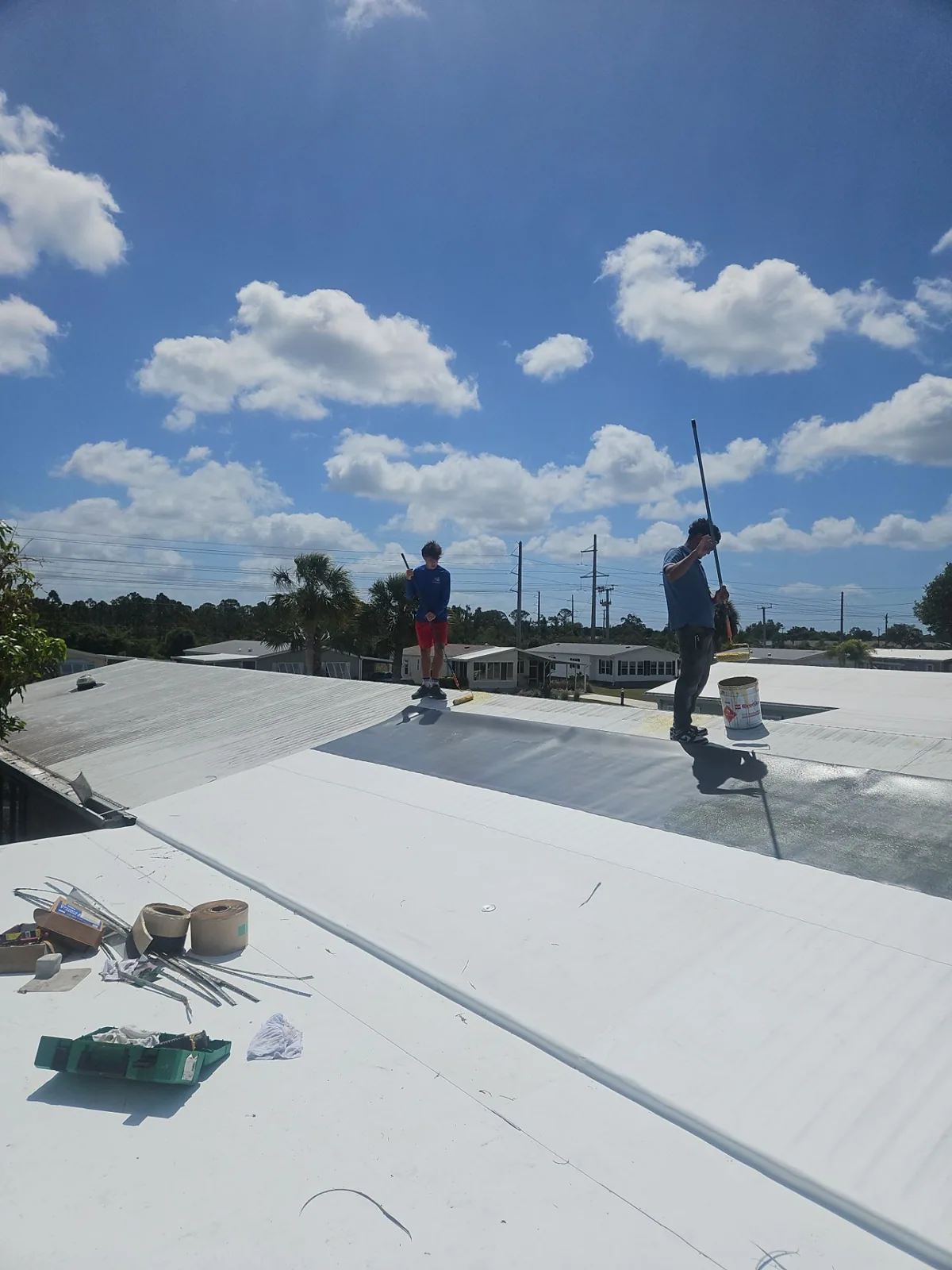
Silicone Roof Coatings in Denton, TX
A peeling coating at a drain is a condition to map before ordering another application. Identify the substrate, existing coating, moisture condition, and drainage around the area. In Denton, record the inspection date and the roof section so a restoration estimate can be compared with the actual condition.
Silicone roof coatings are liquid-applied systems used on prepared roof surfaces. Suitability depends on the existing assembly, adhesion, repairs, film condition, and product requirements. A commercial roof inspection can record those items and identify where a test patch is needed.
Identify the Existing Roof Surface
Start with the installation and maintenance file. Gather substrate data, earlier coating products, repair materials, test patches, and warranty terms. Map the surface by roof area and record where product identification is confirmed or unknown. A building can contain several assemblies or application phases. If older coatings show different colors or boundaries, map the changes before estimating. Appearance may indicate phases, but it does not identify product chemistry. Keep any lab result or manufacturer response with the test record.
Inspect for ponding, blisters, open seams, loose surfacing, rust, exposed reinforcement, and previous patches. Record each condition separately. A coating may hide an earlier repair or bridge a transition, so review details before treating the field as uniform.
SPF, metal, modified bitumen, and single-ply membranes have different preparation questions. The SPF roof review and TPO membrane overview provide comparisons, but product compatibility must be confirmed for the actual substrate.
Test Preparation and Adhesion
A restoration scope should state how the surface will be cleaned, what loose coating or failed material will be removed, and how repairs will be made before application. Identify a representative test area and the method for checking adhesion. The test should reflect the substrate and preparation proposed for the work.
Record surface moisture, contamination, existing film thickness where measured, and any manufacturer limits that apply. A test patch can answer a limited compatibility question; it does not validate every roof area. Document its location, date, result, and the decision that followed. Before pricing, record each roof section separately, including measured area, curb and penetration count, edge transitions, and surfaces excluded from application. State how the crew will protect drains and adjacent walls during preparation. These quantities make bid comparisons clearer and keep the coating boundary visible to the owner.
If the roof has concealed moisture or a soft substrate, coating over it may not address the condition. An assessment for coating restoration should separate surface preparation from repair to the underlying assembly.
Review Drainage and Film Build
Map drains, scuppers, overflows, low areas, and points where water remains after rain. Record blocked outlets, debris dams, coating separation, and thinning around details. A coating layer does not correct a low point or change the drain elevation unless the scope includes a designed assembly adjustment.
Check film condition at seams, penetrations, curbs, and field transitions. Confirm the specified number of coats, coverage rate, dry-film target, reinforcing fabric locations, and inspection method from the product requirements. Record the conditions that would delay application. Do not assume that the measured coating thickness is uniform across the roof. Record the test locations and instrument method. If the specified film target is not met, identify whether the area needs another application or a separate repair, and document the recheck before closeout.
A drainage assessment can document maintenance and design questions separately. The inspection record should show what was dry, wet, or inaccessible on that date.
Set Repair Limits Before Coating
Repair open seams, punctures, loose flashing, and damaged substrate using a compatible detail before the field coating proceeds. Identify the repair line and the material that will tie into the existing surface. At curbs and penetrations, confirm that the coating detail can accommodate movement and will not obstruct drains or equipment labels.
When water is active, locate and protect the affected interior area while the roof is reviewed. A stain can be distant from the entry point. Use dated photographs and a roof map to compare the report with the outside condition. A maintenance plan can schedule future drain, seam, and film observations apart from the restoration contract.
If repeated repairs or concealed moisture expand the scope, record the reason and compare a broader assembly option. Keep temporary protection separate from permanent restoration.
Compare Restoration and Replacement
Restoration may fit when the existing roof is stable, dry, and compatible with the selected coating after preparation. Replacement deserves review where attachment, deck, insulation, or moisture conditions are not suitable for a surface treatment. The recommendation should state the evidence and any unanswered test question.
For a replacement comparison, document roof layers, edge height, penetrations, drainage, and the current permit path. Denton's Downtown TIRZ is a defined area established to support downtown redevelopment through public infrastructure. That district designation does not identify roof age or ownership at a particular building.
A replacement scope should describe removal limits, temporary dry-in, protection, phasing, and closeout records. Keep it separate from the coating alternate and compare both on the same roof area and access assumptions.
Set the Denton Application Window
Set access, staging, drain protection, rooftop coordination, and the owner’s decision date. Long-term NWS records for Denton summarize summer air-temperature patterns and yearly rainfall. They are climate context, not a forecast or a reading of the roof surface; schedule from current site conditions and product limits.
Krum and Corinth are nearby incorporated cities. Confirm the property address and site contact before scheduling. Citywide context does not establish travel time, access approval, or availability for a specific project.
Protect nearby surfaces and drains from overspray or runoff. Identify where another trade may cross the work zone and how the coating area will be protected until it cures. If weather or access changes, document the delay and revised inspection date in the project file.
Keep the Coating File Traceable
Retain the roof map, substrate identification, test patch record, preparation records, coating product and lot information, scope version, access records, dated photographs, and exclusions. Label each photo by area and stage. Save readings and inspection results with the applicable product requirements.
At closeout, document repairs before coating, application conditions, completed details, and final film checks where specified. Record any surface that was excluded or could not be reached. Keep warranty correspondence with the record but do not treat a file as proof that a particular condition is covered.
If the roof is reviewed in a later budget year, the next assessor can compare the same locations and distinguish coating wear from a new substrate or drainage concern.
Commercial Roofing Questions
Can silicone coating be applied over an existing roof coating?
Only after identifying the existing product, checking preparation requirements, and testing compatibility and adhesion on a representative area. Record any excluded surfaces.
Will silicone coating correct ponding water?
A coating does not by itself change roof slope or drain height. Map the low area and assess drainage before including restoration in the scope.
What should an adhesion test show?
It should evaluate the proposed preparation and coating on the actual substrate. Document the test location, date, method, result, and any manufacturer direction.
Should open seams be coated over?
Repair and detail open seams with a compatible system before field application. State the repair method and tie-in so the coating does not conceal an unresolved defect.
What goes in a silicone coating closeout file?
Keep the substrate record, test results, product data, preparation records, application conditions, detail photos, final checks, exclusions, and follow-up items together.